Look at an ordinary evening
Wait until the time you normally use the room and notice where the light helps or gets in the way. Sit in your usual chair. Look for glare, reflections in a screen, a dark surface you need to use, and routes that are difficult to see. Do the same from the other seats in the room.
Write down the practical problem before choosing a lamp. A room that feels flat may need light in another position; a room that feels harsh may need a different fixture, suitable control or bulb choice. More lights are not automatically a better answer.
Give each light a job
Think about the light you need for moving around, the light needed for a task, and the light that makes the room feel comfortable. A reading seat and a dining surface may need different arrangements. One overhead fixture may still be useful while a movable lamp supports a specific everyday activity.
Begin with the places you use most. A suitable lamp beside a reading chair can be a focused improvement, while a small light in another part of the room can make the wider space feel more connected. Keep the plan tied to the room's actual routines rather than filling every corner.
Try another position first
Move an existing lamp to a place where it might be more useful. Check whether the shade hides the direct light from your seat and whether the switch is easy to reach. Try the arrangement during a normal evening before choosing another fixture.
Keep cables away from routes and use products according to their instructions. Avoid makeshift fittings or changing electrical parts as a styling experiment. For installed lighting, wiring or controls, ask an appropriate qualified professional to plan and carry out the work.
Read the fixture and bulb information together
When choosing a bulb, check the fixture's compatibility, the manufacturer's limits, the socket and the product's light output information. If you want dimming, check that the bulb, fixture and control support the same arrangement. A decorative photograph does not provide that information.
Look at how the light appears in your actual room when possible. The wall colour, shade and nearby surfaces all influence what you see. Use suitable samples or a retailer's return terms to compare choices, and keep the product details for the light that works.
Notice shades and nearby surfaces
A shade can affect the way light reaches a seat or wall, while a glossy surface may create a reflection that feels distracting. Check the lamp from the position where you actually sit. A fixture that looks attractive standing up may expose a bright bulb from a lower seat.
Let the surrounding materials support the mood. Timber, fabric and matte finishes can bring visual warmth without needing more decorative objects. Keep the manufacturer's required clearances and suitable use in mind, particularly where a light sits near fabrics, shelves or personal belongings.
Make a small room easier to use
In a compact room, choose a light position that does not crowd the surfaces you need. A suitable bedside lamp should leave room for everyday essentials, while a desk light needs to support the task rather than simply decorate the desk. Check the base size as well as the height.
Before buying, mark the lamp's footprint on the surface and see what remains. Consider where its cable will go and whether a drawer, door or seat can still move comfortably. Wall-mounted or fitted alternatives need appropriate permissions and installation; they are not the only way to free up a small surface.
Improve the light in a sensible order
For a no-buy refresh, test existing lights and remove visual clutter around the places they serve. For a small budget, choose the first lamp or suitable bulb around the clearest problem. For a larger project, plan placement and controls before ordering the decorative details.
Use Room Studio's lighting priority to create a suggested budget share. This is a planning envelope rather than a retail quote. Compare actual local prices, product specifications and any professional installation costs before deciding how much of the overall budget to commit.
Give the room time after dark
Use the new arrangement for several ordinary evenings. Notice whether you can read comfortably, reach the controls and move through the room. A cosy effect should also support what you need to do. Adjust the movable parts before assuming that another purchase is necessary.
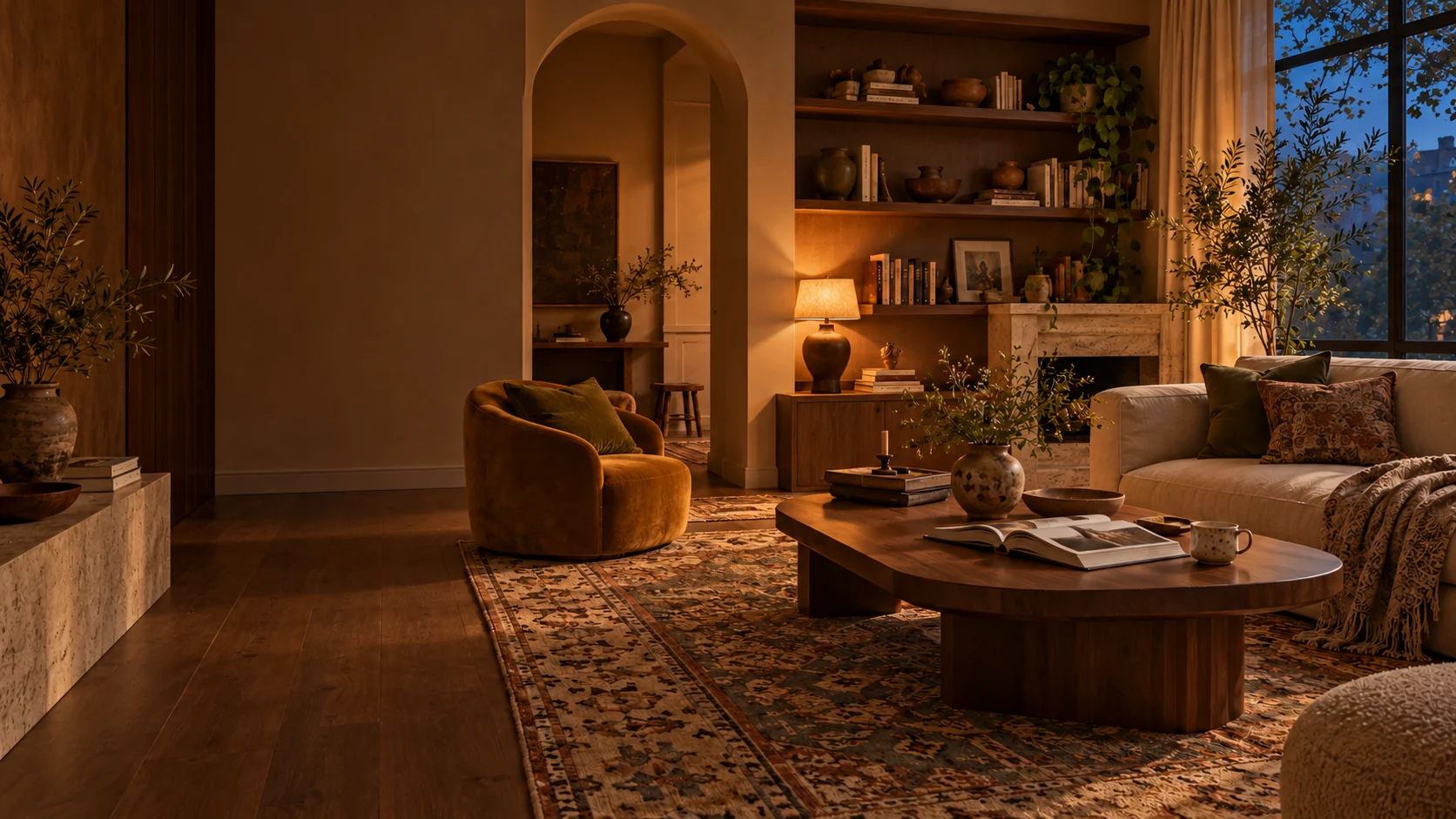
The daylight and lamplight scenes on this site are AI-generated mood references. They show how the same illustrative room can feel different after dark, rather than promising a particular real-world result. Use the idea to ask better questions about your home: where should the light go, and what everyday moment should it improve?