Start with the home you have
A rented home can have awkward storage, an unfamiliar wall colour or a light fixture you would not choose. Begin by separating what you can comfortably change from what needs the owner's agreement. Read the relevant terms of your lease and ask before changes involving paint, drilling, fitted items or electrical work.
Make a list of useful movable changes first. A lamp, a textile, a chair or freestanding storage can change daily life and move with you later. Keeping the limits clear at the start helps you put the budget into improvements you can actually use.
Choose a portable anchor
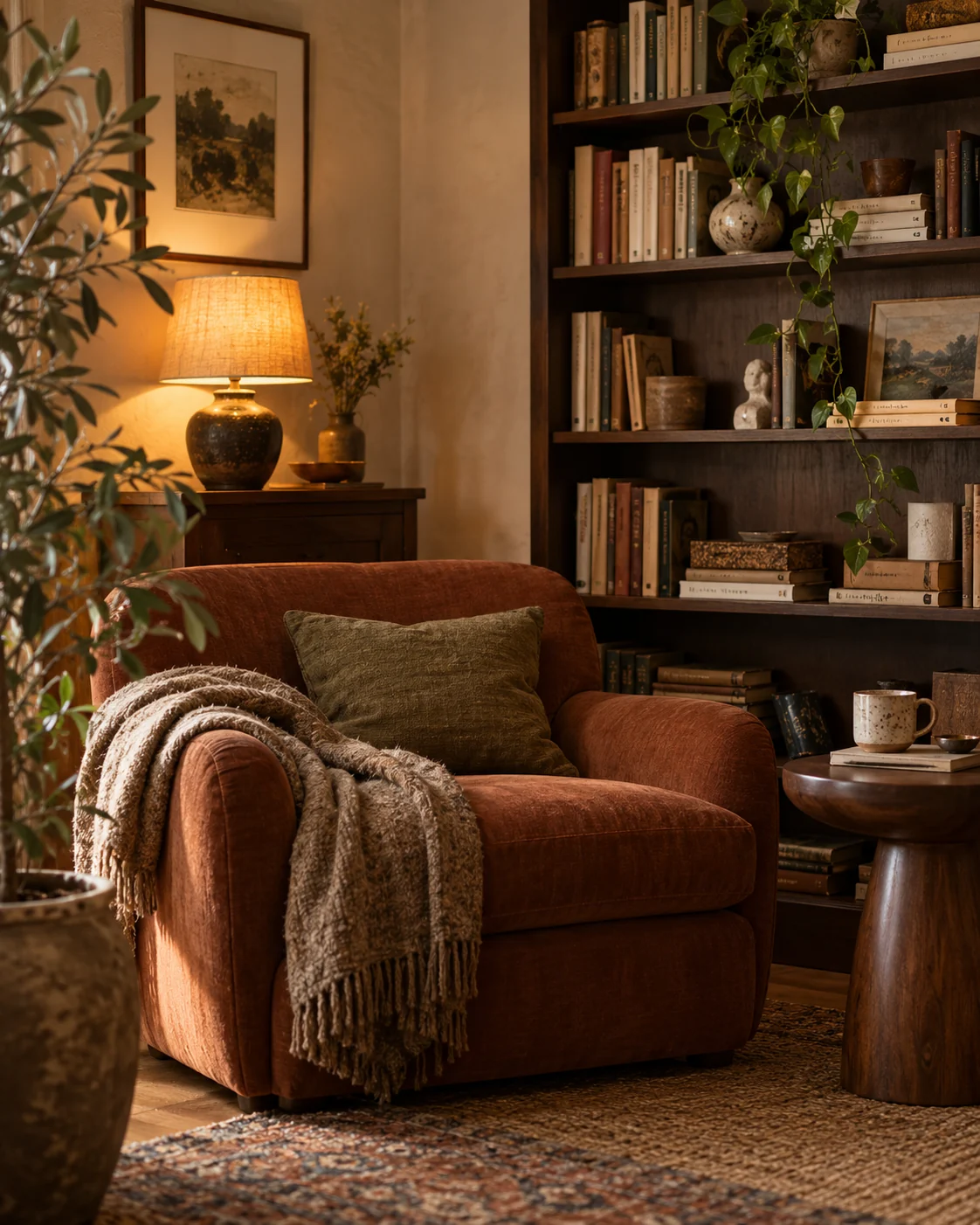
Find one piece that gives the room a personal starting point. It could be a chair you enjoy, a small rug, a familiar blanket or a wood side table. Build the first colour choices around it rather than trying to replace every element you dislike about the room.
Before adding a larger piece, measure the space and the delivery route. Consider where it might live in a future home. Flexible proportions and clear care information may be more useful than a piece chosen only for one unusual corner. Check actual product details rather than assuming something will be easy to move.
Make one corner feel welcoming
Choose the corner you use most: a seat beside a window, a desk or a bedside surface. Give it a useful light, a place for the essentials and a comfortable texture. A small area that supports a daily routine can make an unfamiliar room feel more personal.
Try moving an existing lamp before buying another. Keep cables out of routes and use fixtures according to their instructions. If the room needs installed lighting or an electrical change, involve an appropriate professional instead of treating it as a decorative experiment.
Use textiles with a clear purpose
Textiles can connect colours and make a room feel more inviting without altering the building. Begin with what you already have and choose the next layer around a practical need. A blanket for a cool seat, curtains that suit the existing fitting, or a washable cover may improve daily use as well as appearance.
Look at care instructions, exact sizes and the actual material description. Test colour references beside the room's existing walls and furniture. For a small budget, one useful textile in the right place can be a clearer decision than several accessories that do not solve a problem.
Let personal objects have room
A home can feel personal through a book, a photograph, a handmade object or something you brought from another place. Give these objects a little space so they can be seen and used. You do not need to turn every shelf into a styled arrangement.
For wall displays, check which methods the owner allows and whether the surface and attachment are suitable. A product described as removable can still need careful handling and may not suit every finish. Freestanding frames or an existing shelf can be a simple alternative while you clarify what is allowed.
Build storage around a routine
Notice where belongings naturally land after work or study. Create a small home for those items before choosing a decorative storage system. Group papers, cables, shoes or everyday clothing and measure what needs to fit. Keep frequently used items easy to find.
A lightweight tray or a basket you already own may be enough for the first experiment. If you need a taller storage item, check stability, the manufacturer's installation requirements and the permissions needed for its safe use. Appearance alone should not decide whether an item suits the room.
Keep a record of changes
Store product information and photos of the room before and after changes you are permitted to make. Keep removed original fittings safely if the owner asks for them to be restored. This practical record can make later decisions clearer without relying on memory.
When a change feels uncertain, pause and ask for clear information before spending. A rental refresh can progress through movable pieces while bigger questions are settled. There is no need to solve every part of the room on the same weekend.
Make the room yours at your pace
Start with one everyday moment you would like to improve, then live with the result. Perhaps the desk becomes easier to use, the evening light feels kinder, or a clear bedside surface makes the room calmer. Let those useful changes guide the next decision.
Use Room Studio's renter-friendly setting to collect a palette and a movable starting plan. Its suggestions are general design guidance; your lease, actual room and product instructions still matter. A home can feel like you through attention and familiar routines, even when its walls belong to someone else.