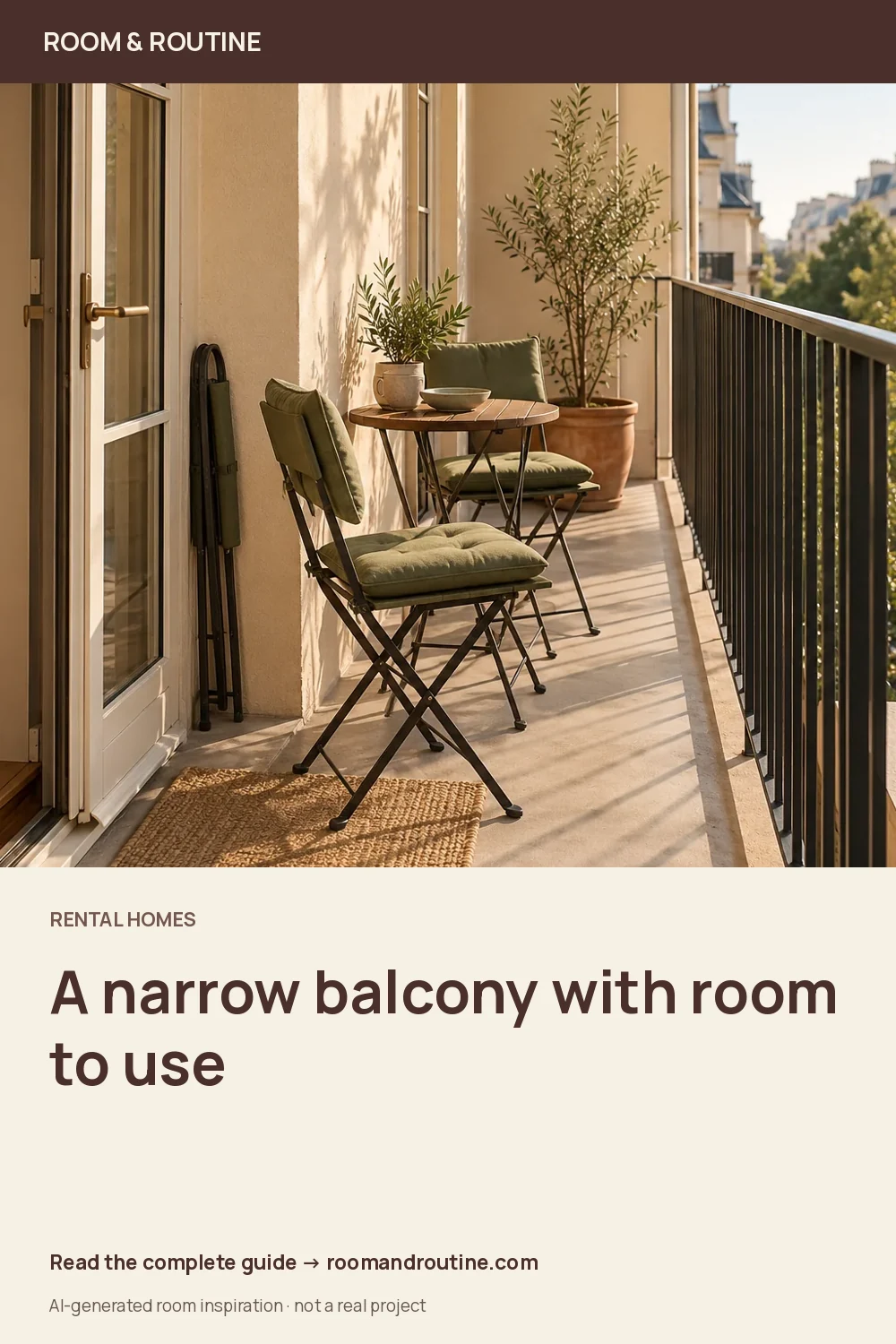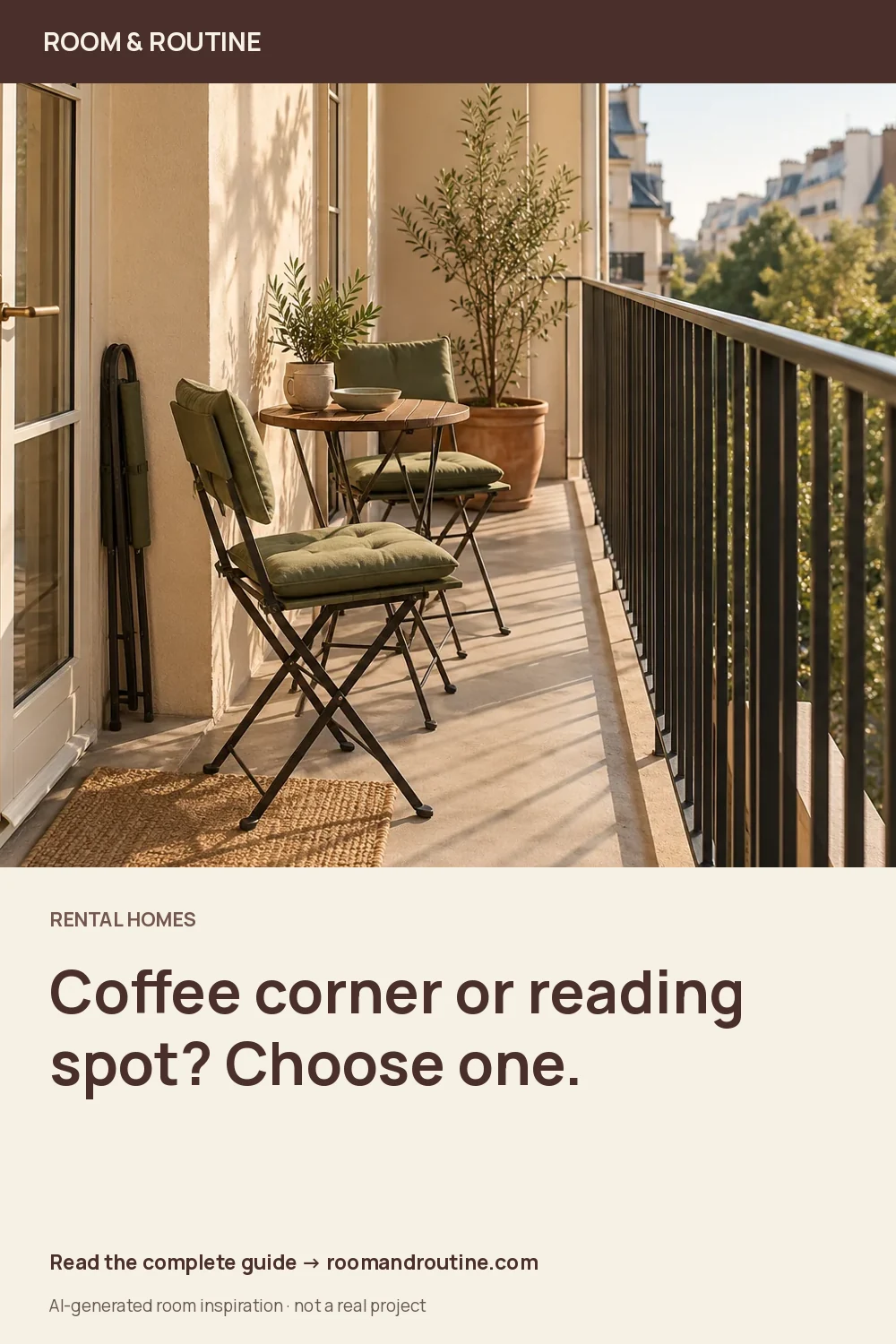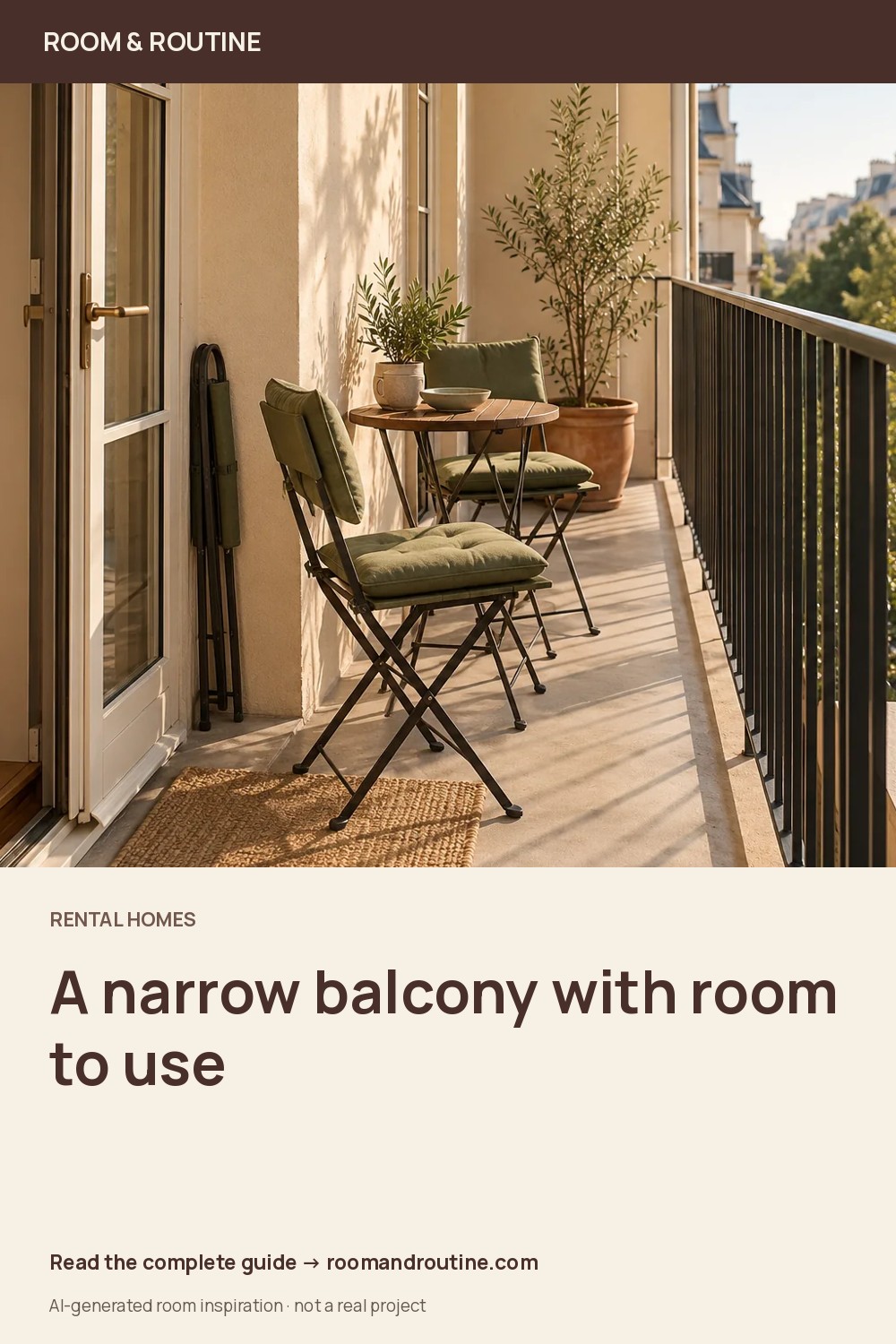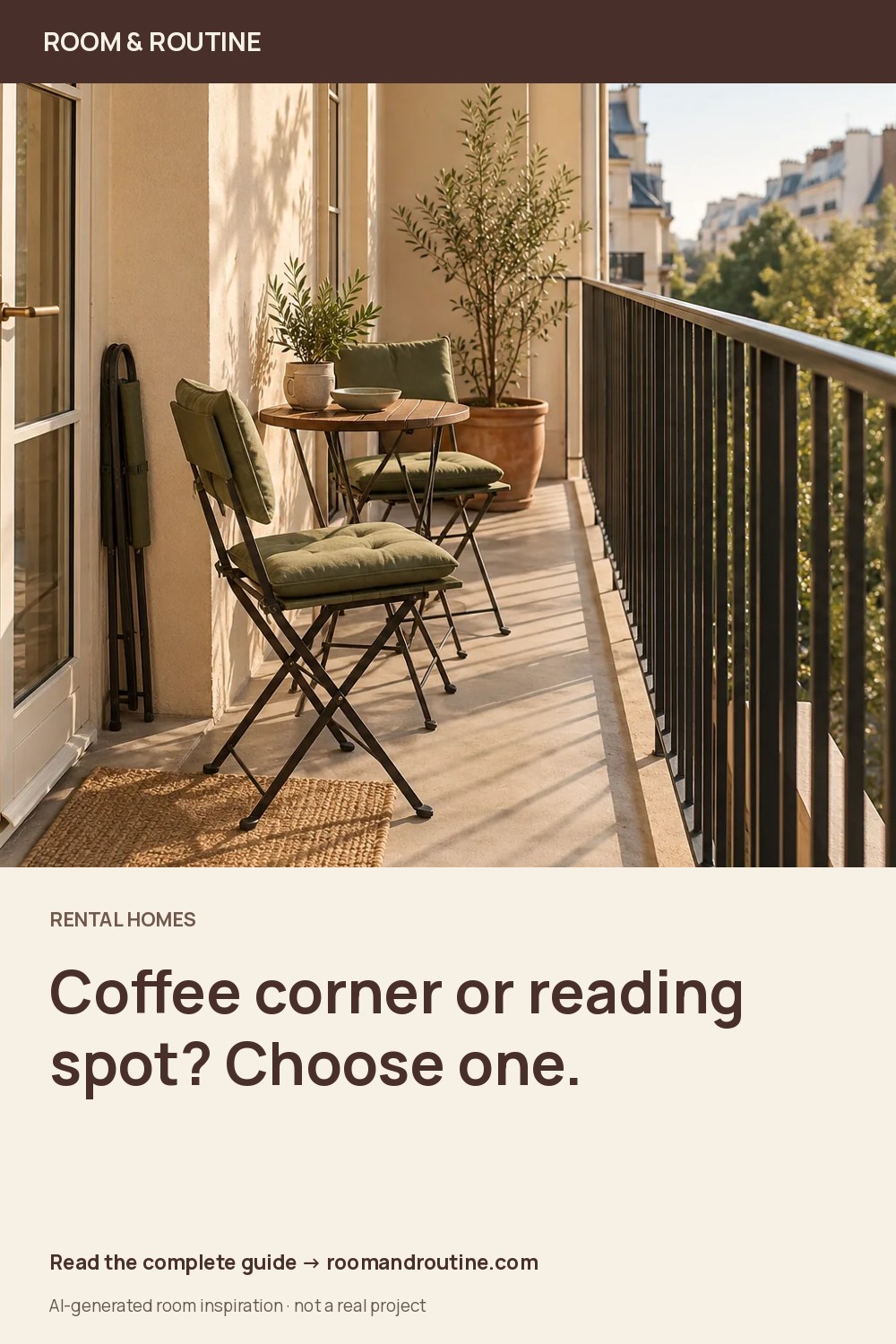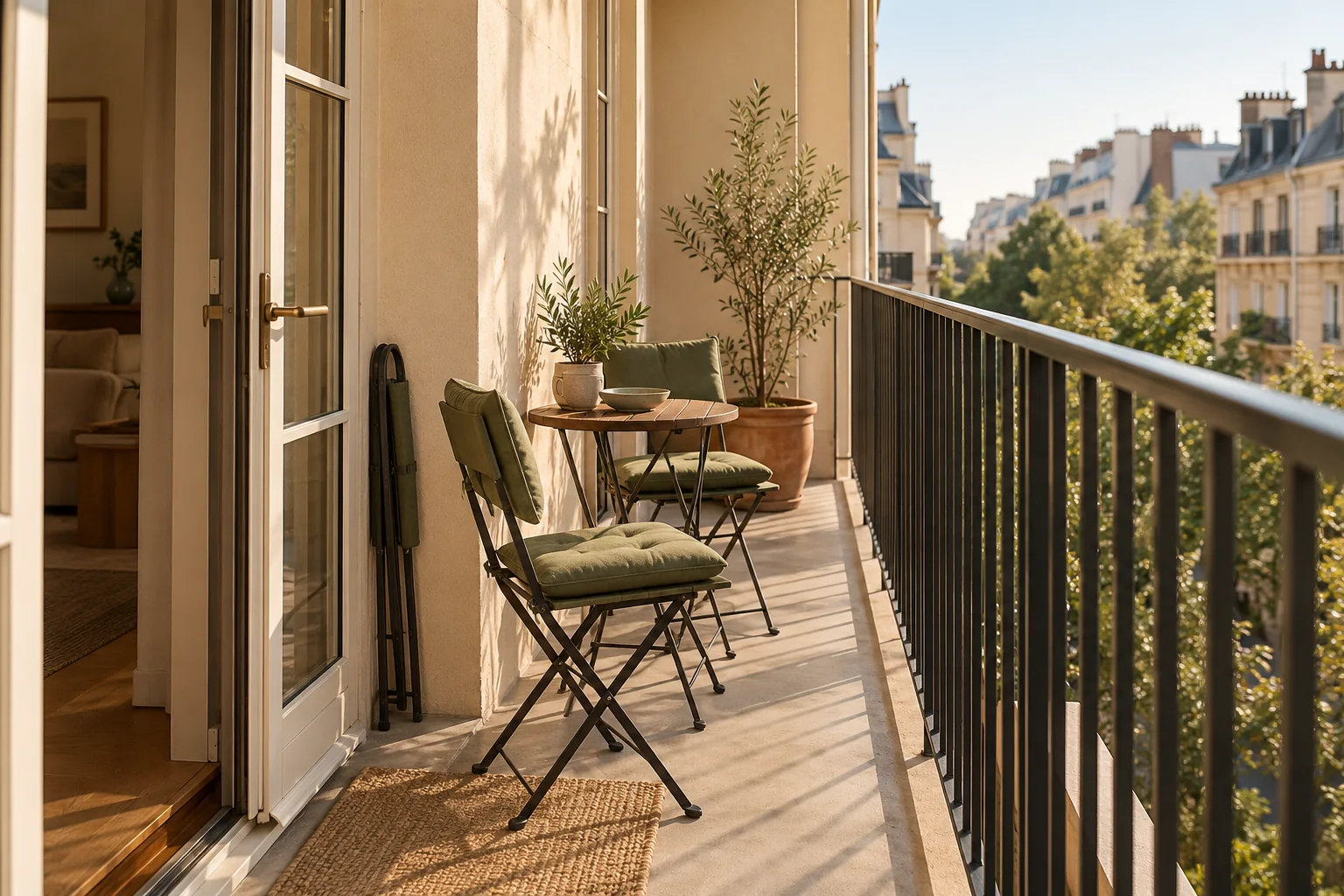
Start with the balcony you have
A narrow balcony can become a useful place for morning coffee or a quiet reading break. It does not have to hold an outdoor dining room, a garden and a lounge at the same time. Begin with the space, the building's rules and the routine you want to bring outside.
Check the lease or building guidance for restrictions on furniture, screening, plants and attachments. Keep drains, ventilation and any required access clear. A layout drawing cannot establish the balcony's load capacity or make a structural alteration acceptable. Ask the responsible building contact when those details are uncertain.
Measure the usable floor, then open the balcony door fully. Include its swing or sliding track, the threshold and any fixed equipment. Note where rainwater collects and where the wind feels strongest. Do not cover a drain to create a continuous decorative floor.
Choose one main use
Write a sentence: “I want to sit here with a drink before work,” or “I want to read outside for half an hour.” That sentence identifies the furniture you need. An occasional second person may need a folding chair, but an extra permanent seat can consume the only clear route.
| Main use | Minimum useful setup | What to leave out first |
|---|---|---|
| Morning coffee | One chair and a stable small surface | A second large table |
| Reading break | A comfortable suitable chair | Storage that makes moving the chair difficult |
| Occasional company | Two compact chairs with a tested route | A fixed bench if its depth blocks access |
Choose furniture intended for outdoor use and for the conditions in your location. A compact indoor stool is not automatically weather-resistant. If you bring it outside temporarily, keep that decision and its care requirements separate from a permanent outdoor setup.
Plan both the open and stored positions
Measure a chair when someone is sitting in it, including the movement needed to stand. A folded chair's dimensions belong in the plan too. Find an actual storage position where it will not fall, obstruct the door or become an obstacle inside the home.
For an example, imagine a balcony 110 cm deep and a chair with a listed depth of 55 cm. Subtracting leaves 55 cm, but that remaining strip is not automatically a usable path: sitting, standing, the table and the door may occupy part of it. Test the arrangement physically and follow any applicable access requirements.
Try putting the furniture along one side rather than facing two deep chairs across the width. A small table can serve one seat and move for the second. Avoid solving the space problem by attaching an unapproved table or planter to the railing.
You can use Layout Lab for a simple footprint comparison if the rectangle fits the tool's supported dimensions. Include the door movement yourself. The tool does not model railings, drainage, wind or building requirements.
Add comfort selectively
Try one cushion you can bring inside and a small pot in an appropriate stable position. Keep furniture and objects that could be climbed away from railings, especially where children visit. Do not use a decorative arrangement to conceal a damaged railing or other maintenance problem.
Use colour to connect the balcony to the adjoining room: repeat an olive cushion, a warm neutral or the tone of an existing pot. Repeating one detail is enough. The palette guide can help you work with what is already indoors.
A rug may soften the floor, but first check that it suits outdoor conditions and will not block drainage, stay damp or become slippery. If it is difficult to dry and clean, the plain floor can be the more useful choice. Comfort also comes from being able to step outside without moving several things.
Give everything a weather reset
Decide where textiles go when rain or strong wind is expected. Follow the furniture's storage and securing guidance, and bring lightweight loose items inside when needed. Do not improvise attachments to the railing or facade to keep an unsuitable piece outside.
Choose a routine you can complete in a few actions: cushions in one indoor basket, table cleared, chair stored in its planned place. If bringing everything inside takes a long time, reduce the number of items. Avoid candles, heaters or cooking equipment unless explicitly permitted and used according to the relevant safety guidance.
Try the routine before expanding it
- Open and close the door with furniture in place.
- Sit, stand and carry a cup without stepping around loose items.
- Check the clear route and all required access.
- Move the setup into its weather-storage position.
- Check the floor and drainage after rain.
Use the balcony this way for several days. If you repeatedly move the same object, it probably needs a different home. Add one detail only after the basic routine works. For other movable changes around the apartment, start with our renter-friendly home ideas.
Keep the useful part.
Save the full guide to Pinterest or download a vertical graphic. Room imagery is illustrative and AI-generated, not a photographed result.