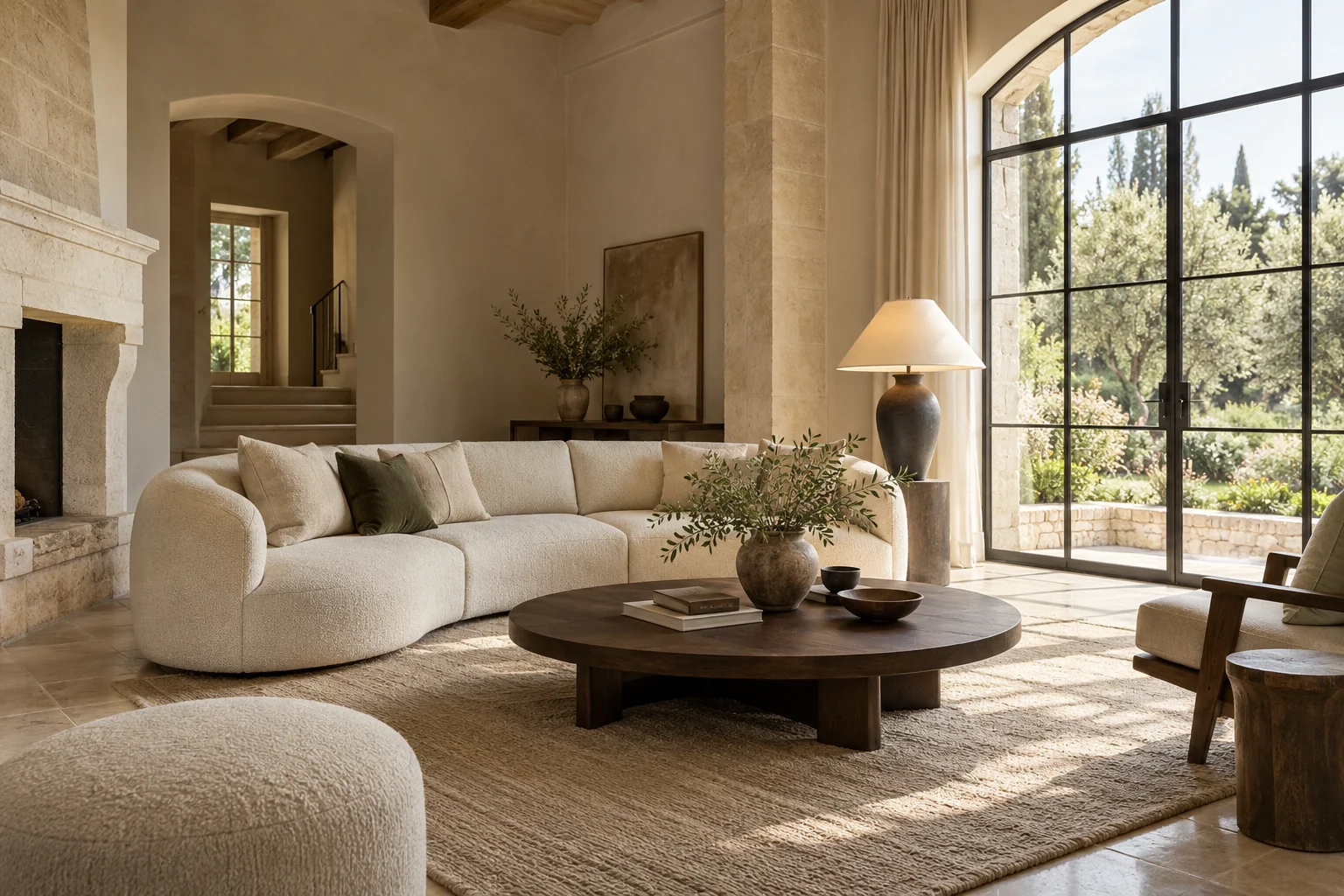
Start with a room that works
Choose the room you use most and describe the problem before you choose a style. Perhaps the seating faces away from the light, there is nowhere to set down a drink, or storage interrupts the route through the room. A useful plan begins with those everyday moments.
Measure the space and the pieces you want to keep. Record doors, windows, outlets, and the routes people actually use. A generous home and a compact apartment both benefit from comfortable movement and furniture that fits.
Refresh what you already have
Begin with a no-buy edit. Move unrelated belongings to their own homes, clear a practical route, and test the arrangement using the furniture you already own. Try the lamps in the places where you read or relax. Notice which change feels better after a few ordinary evenings.
For an affordable refresh, choose one small improvement around a real need: a lamp in a dark reading corner, useful storage, a comfortable cushion cover, or a curtain arrangement that suits the window. Work within a budget you can comfortably set aside. A lower price should not mean a lower standard for proportion, useful space, or thoughtful presentation.
Choose one lasting piece
If you have room in the budget, identify the item that would change the most about daily use. It might be comfortable seating, a well-proportioned rug, or storage that suits the room. Give that choice time rather than buying several decorative objects first.
Check the exact dimensions, construction, cleaning guidance, delivery route, and return terms. Sit on seating when possible and compare material samples in the light where they will live. A high price alone does not tell you whether a piece will work for your home.
Plan the whole room with intention
For a more substantial project, make a complete room plan before ordering. Establish the larger pieces, circulation, storage, and lighting together. Then use a smaller palette of materials and finishes to make the details feel connected.
Allow for delivery, fitting, specialist work, and a realistic contingency within the amount you have chosen. Where the project involves installed lighting or building changes, include the appropriate qualified professionals in the plan. Make the room comfortable for daily life rather than designing only around a photograph.
Let texture do some of the work
A restrained color palette can still feel rich when the materials bring variation. Linen, wool, timber, ceramic, and other finishes can offer different visual qualities. Use samples and the actual product descriptions to understand what you are choosing.
An affordable version might reuse a wood piece, change a textile, and keep a simple lamp. A higher-budget version might develop the same relationship through larger furniture and installed details. The design idea is the relationship between the elements, not a promise that one material or price level is always better.
Choose light around the way you live
Think about the light needed for reading, conversation, and moving through the room. Check the room at the times you use it most. A lamp in a useful position can matter more than another decorative object on a shelf.
For a complete lighting plan, compare placement, controls, glare, and the manufacturer's specifications together. Keep practical tasks and comfort in view. Decide which existing fixtures still do their job before replacing them.
Finish slowly and live with the room
Leave some space between decisions. Use the room before adding the final objects, and notice what still feels awkward. The best next purchase may be clearer after a week of living with the arrangement.
Save the dimensions, material information, care instructions, and the reason for each major choice. A room does not need to look expensive to feel considered, and a substantial budget does not require every corner to be filled. Start with everyday use, then give the details a clear purpose.
For a compact space, explore the complete 17-idea bedroom guide ↗