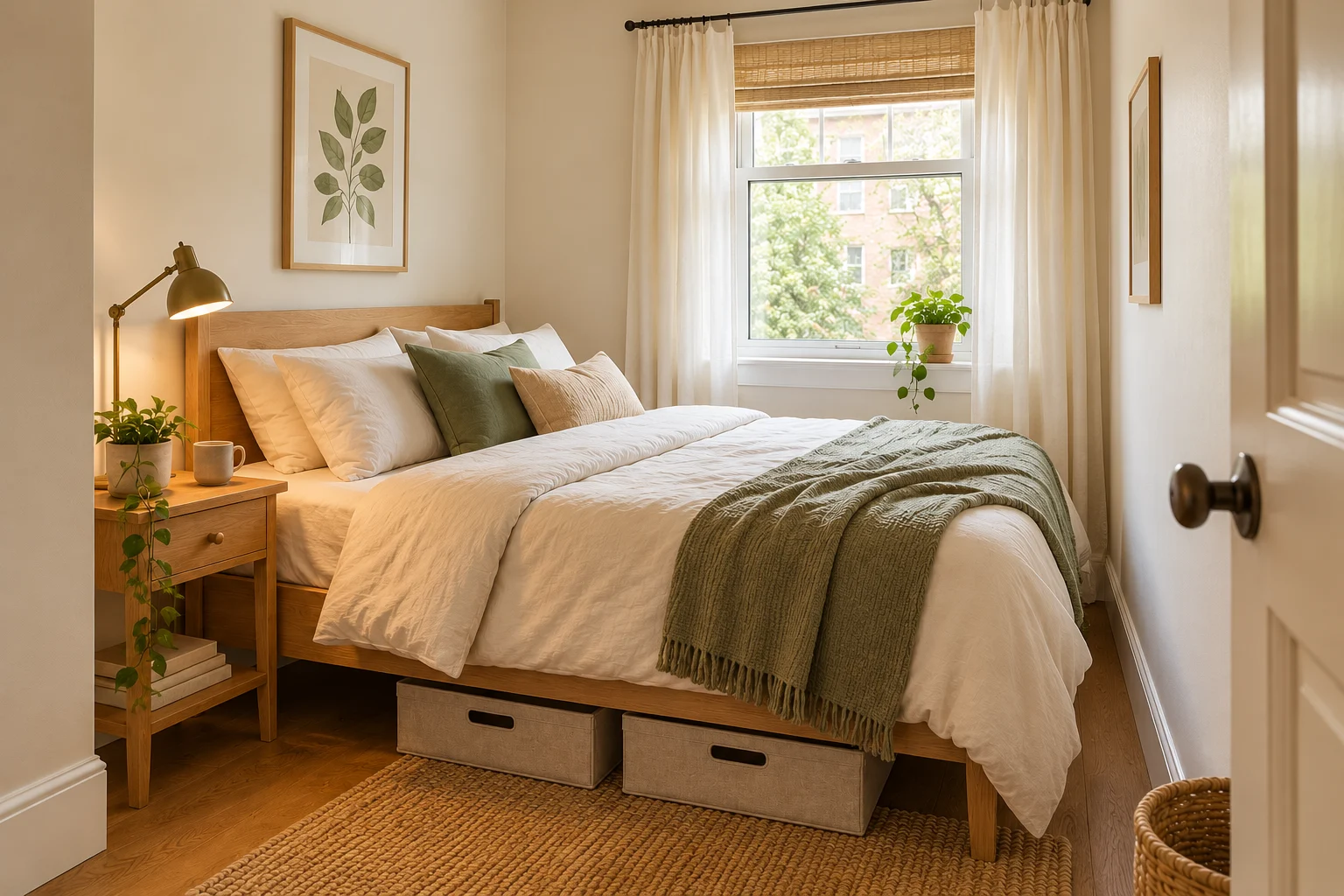
A small bedroom needs room for sleeping, getting dressed, and storing everyday belongings. When furniture blocks the walkway or every surface becomes a storage spot, even a cozy room can feel crowded.
Start with the layout and the items you already own. A clearer floor, a simpler bed, and storage that fits unused spaces can make the room easier to live in. Then choose a few affordable upgrades that solve a specific problem.
These 17 small bedroom ideas work as a menu: choose the ones that suit your room, your rental agreement, and your budget. You do not need to buy something for every idea.
Before you buy anything
Measure the room, the outside edges of your bed frame, and the depth of your wardrobe or dresser. Sketch the furniture on paper and mark where doors swing and drawers open. A storage box that fits under the bed is only useful if you can pull it out.
Next, choose your main problem: too little storage, a blocked walkway, a dark corner, or visual clutter. Spend on that problem first.
1 Clear a route around the bed
Move loose baskets, bags, and spare furniture out of the path between the door, bed, and wardrobe. Test a new arrangement before moving heavy pieces: mark the proposed edges with removable tape and walk through the room.
Keep the wardrobe usable and make sure the door opens comfortably. In a shared bedroom, consider whether both people can get into bed easily before pushing it against a wall.
2 Remove one piece that does not earn its space
A chair covered in clothes or a bench used only for spare cushions may be taking up valuable floor space. Move one optional piece elsewhere and use the room for a few days before deciding whether you need it.
Keep furniture that supports your routine. Removing your only practical work surface will not help if you then have to work on the bed.
3 Give bedside clutter one small home
Group your phone, glasses, and other nightly essentials in one tray or a bedside drawer. Put backup toiletries, spare cables, and paperwork in a separate storage spot.
A clear bedside surface makes the room look calmer and leaves space for the things you actually reach for at night. Try a tray or small box you already own before shopping.
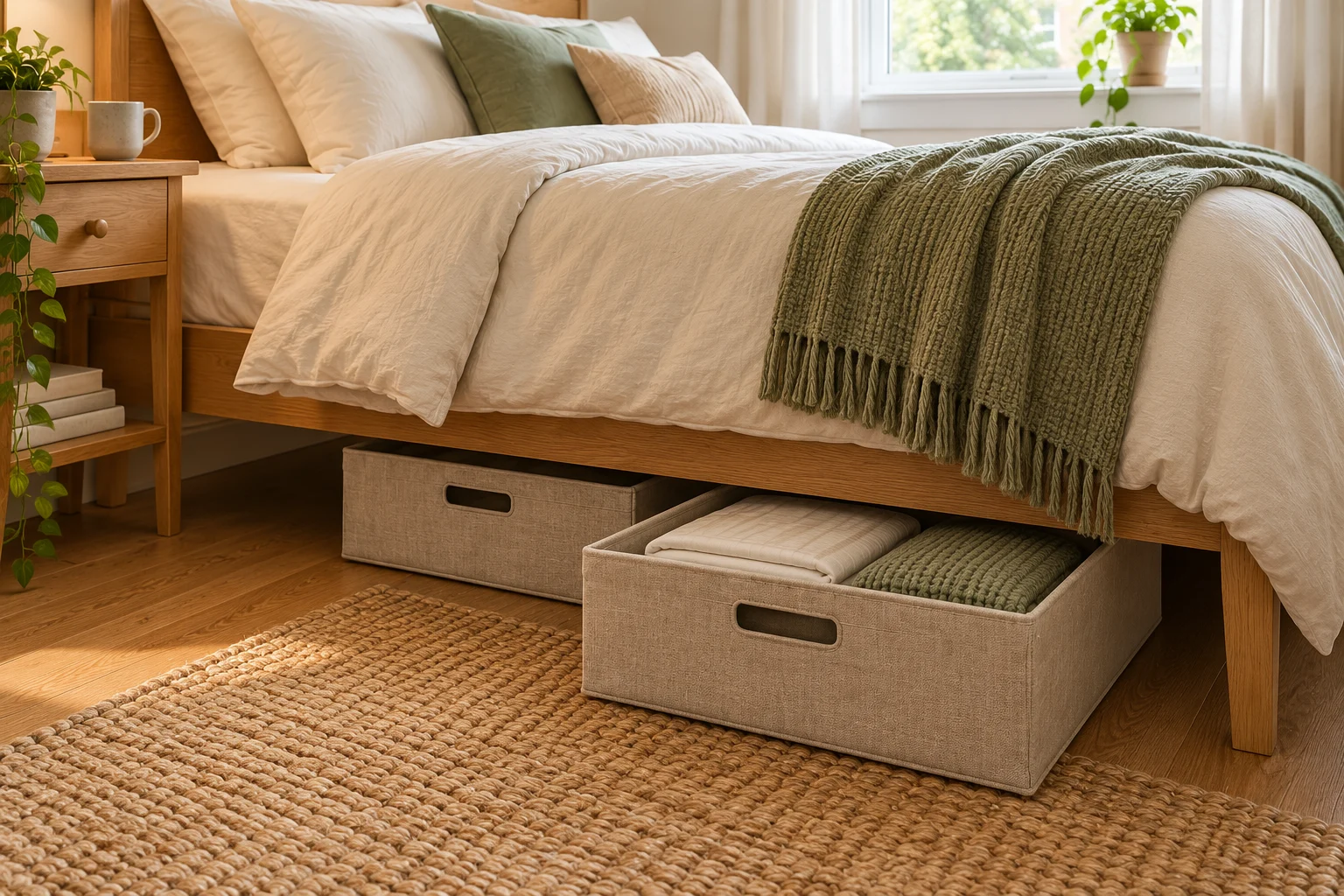
4 Put underbed space to work
Measure the clearance under your bed before buying shallow boxes or fabric storage bags. Use them for spare bedding, out-of-season clothing, or other items you do not need daily.
Label the end you can see and group similar items together. Leave room to pull each container out, and keep anything you regularly need near the accessible edge.
5 Choose a simpler bed frame when replacement is needed
If you already need a new bed, compare the outside dimensions of the frames, not just the mattress sizes. A thick frame, oversized headboard, or projecting footboard can use more space than expected.
An open frame can reveal more floor, while a storage bed can replace separate storage furniture. Choose the option that solves your problem; a working bed does not need replacing for appearance alone.
6 Keep large surfaces in a lighter palette
Soft white, warm cream, and light neutral shades are options for walls, bedding, or curtains when you want an airy look. Compare paint samples in daylight and under your evening lighting before committing.
If painting is not permitted, start with bedding and curtains. You can keep darker accents without covering every large surface in a strong color.
7 Repeat one accent color
Choose a color you enjoy and repeat it in two or three small details, such as a pillowcase, an art print, or a lampshade. Sage green, muted blue, and terracotta are examples, not requirements.
Repeating a color helps different belongings look intentional. Build the palette around something you already own so the refresh does not turn into a shopping list.
8 Simplify the bedding
Because the bed occupies a large part of the room, its appearance affects the whole space. Try one main duvet or comforter, the pillows you use, and an optional throw.
Store spare decorative cushions elsewhere and avoid layers that trail onto the floor. Wash, rearrange, or reverse existing bedding before buying a complete new set.
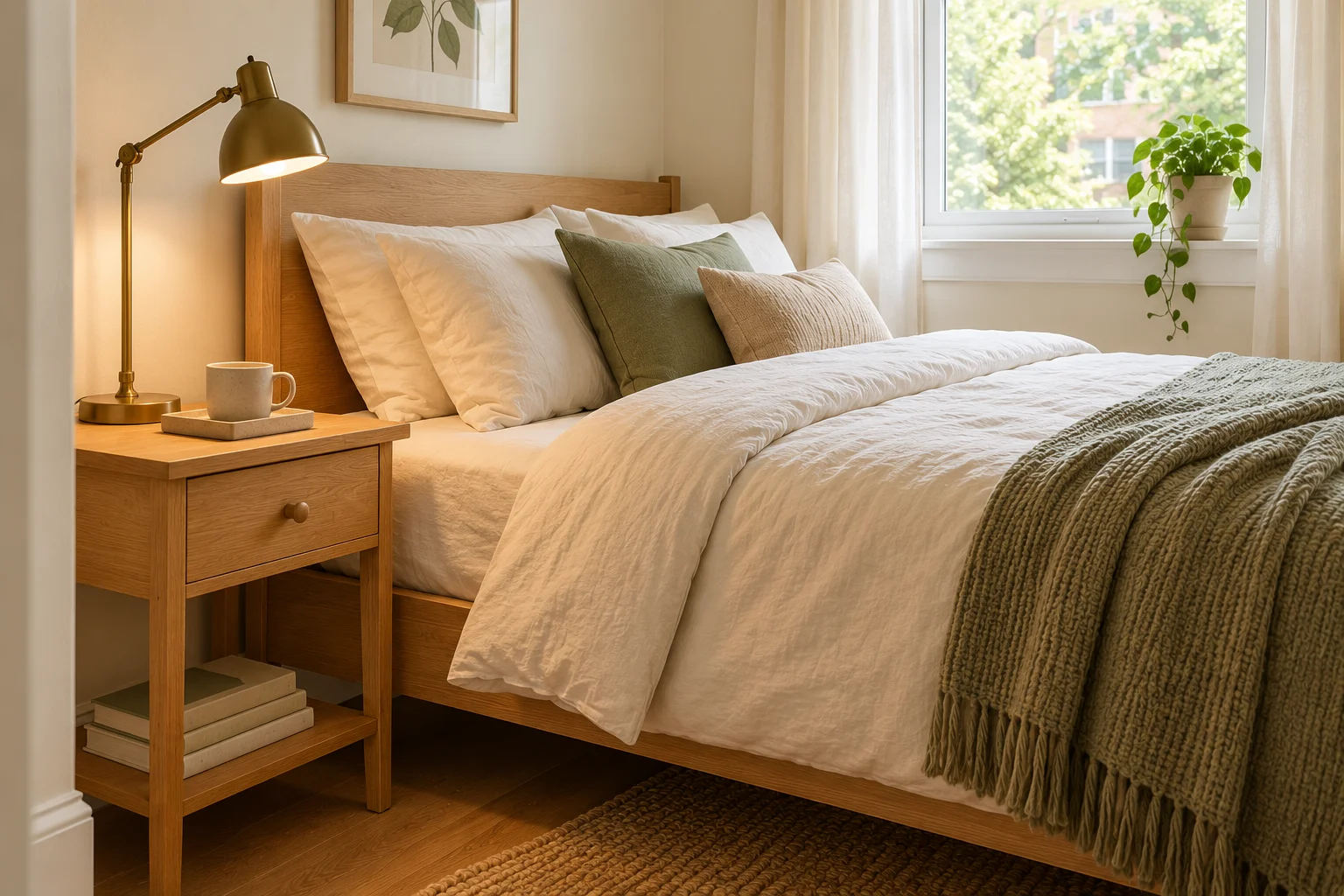
9 Use a bedside surface that fits your essentials
A narrow side table or sturdy stool may be enough if you only need a lamp, phone, and glass of water. If you need enclosed storage, a compact table with a drawer may work better.
Measure the available width and choose a useful height beside your mattress. Keep the surface stable and large enough for whatever you plan to place on it.
10 Let a desk serve as a bedside table
If you need a workspace, try placing a compact desk beside the bed so it can also hold your nightly essentials. Keep one end clear and choose a chair that tucks underneath.
Check the height and the route to the bed before moving furniture. A shared surface works best when you can switch between work and bedtime without clearing a pile of belongings.
11 Make more of the window
Where the wall and your lease allow it, placing a curtain rod above the window and extending it beyond the sides can let the panels sit clear of the glass when open. This reveals more of the window and draws attention upward.
Choose curtains for the privacy and darkness you need while sleeping. Keep fabric clear of heaters and buy the length that fits your actual installation.
12 Position a mirror where it reflects light
A mirror near a window or on an adjacent wall can reflect daylight and give the room a more open appearance. Try different positions and check what you see from the bed and doorway.
A mirror facing a cluttered shelf repeats that clutter. Choose a size that fits the wall and secure it using hardware suitable for its weight and the wall surface.
13 Use height for occasional storage
Keep everyday items within easy reach and use higher shelves for lighter things you access occasionally. A narrow shelving unit may provide the storage you need without using as much floor area as a wide cabinet.
Follow installation and anchoring instructions. In a rental, check permission before drilling; adhesive hooks should not be treated as supports for a loaded shelf.
14 Try the back of a door
An over-the-door organizer can hold accessories, small clothing items, or other lightweight essentials. A few hooks may also give tomorrow's outfit a place without adding a chair.
Check that the door closes with the hooks installed and that the organizer does not catch on furniture. Keep the load within the product's stated limit.
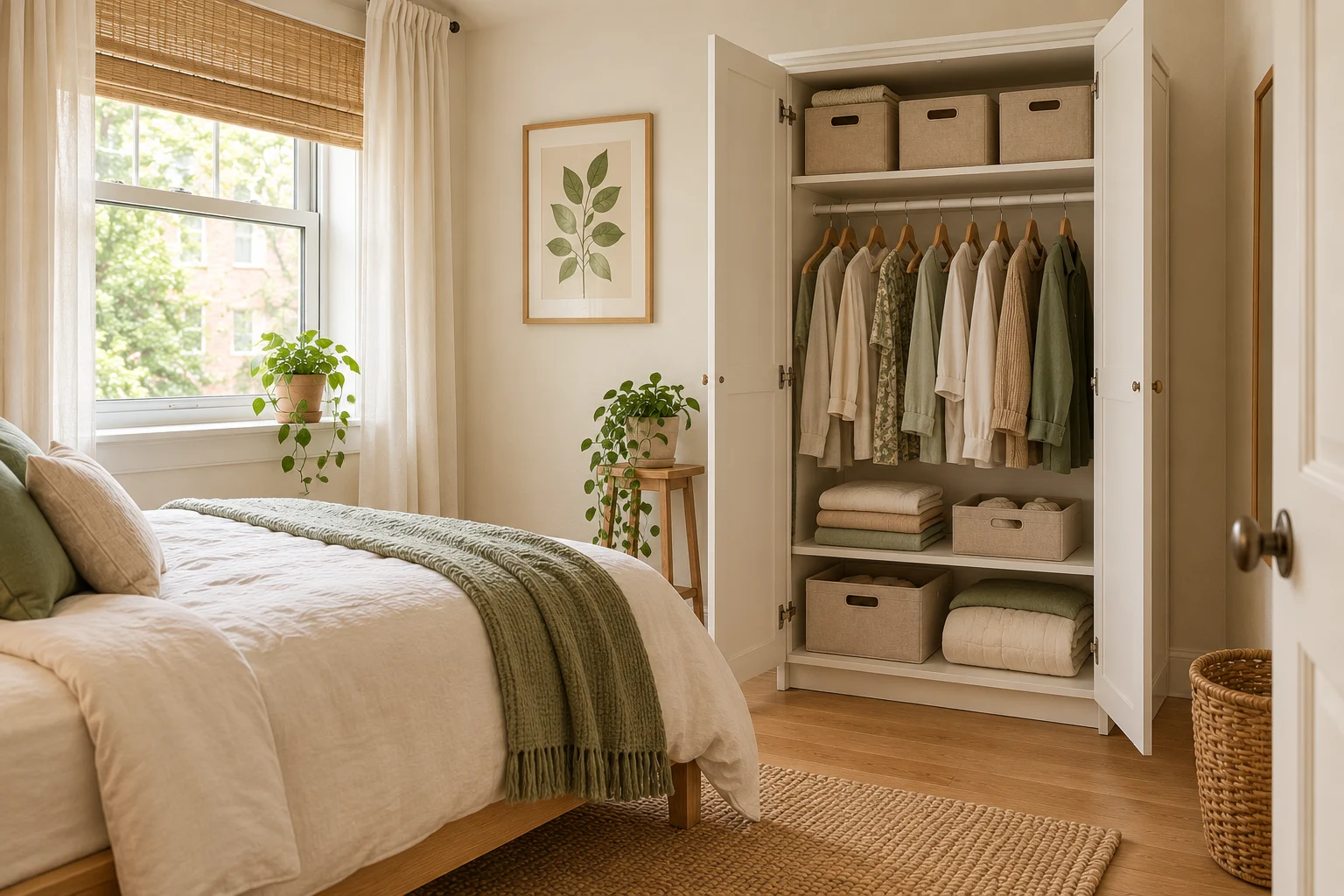
15 Keep wardrobe storage easy to use
Group clothing by type and give spare bedding or accessories their own labeled container. A clear shelf or drawer is easier to maintain when you can see what belongs there.
Put frequently used items in the easiest positions to reach. Buy organizers only after measuring the shelf or drawer and checking which belongings need a separate home.
16 Add light to the corner you use
If the room feels dim, place a compact lamp where you read, get dressed, or work. An adjustable lamp can direct light onto that task without requiring another large piece of furniture.
Choose a position near a suitable outlet and route the cord away from the walkway. Test the light from the bed before deciding whether you need an additional lamp.
17 Choose one rug that suits the layout
If you want a rug, measure the usable floor area and test its outline before buying. One well-placed rug can visually connect the bed and nearby furniture without adding several small floor accessories.
Make sure it allows doors to open and does not curl into the walking route. A rug is optional: a clear, clean floor can already make the room feel more spacious.
A small bedroom refresh with a 100 dollar budget
Keep the existing bed, rearrange the room, and choose only a few upgrades. The following is a sample $100 allocation. These amounts are spending caps, not verified retail prices; adjust them to the products and prices available to you.
| Upgrade | Spending cap |
|---|---|
| Underbed containers | $25 |
| Curtains or a bedding refresh | $35 |
| A compact lamp | $20 |
| A door organizer | $10 |
| Suitable hardware or a contingency | $10 |
| Total spending limit | $100 |
If your storage already works, move that allowance to the upgrade you need most. Spend less when an existing item can do the job.
Frequently asked questions
What should I change first in a small bedroom
Start with the walkway and access to your wardrobe. Clear those areas, then choose storage or decoration that supports the layout. A new color scheme cannot fix furniture that prevents a drawer from opening.
Can I improve a rental bedroom without drilling
Yes. Rearrange furniture, use measured underbed storage, simplify the bedding, and try suitable freestanding pieces or door organizers. Check the lease and product instructions before changing walls or installing hardware.
Do I need to buy all 17 upgrades
No. Choose two or three ideas that address your main problem. Use the room for a week, notice what still feels inconvenient, and make the next change only if it will help.
Which part of your bedroom needs the most help: storage, lighting, or the layout? Save these ideas for your next room refresh and share your biggest small-bedroom challenge in the comments.