A rental work corner should be useful while you live there and practical to take with you. That does not require shelves fixed to the wall or a permanent fitted desk. A stable work surface, suitable seating and a modest storage routine can create a settled setup with fewer changes to the property. The main challenge is fitting the task rather than decorating the remaining corner.
The two original concepts show a conventional freestanding desk and a purpose-built folding workstation. They are distinct approaches to portability, not a promise that every compact desk supports a full workday. This guide focuses on a corner that stands on its own furniture supports and respects required fixing, electrical and equipment instructions.
Start with the limits of the rental and the work
Check the rental agreement and any property rules before changing surfaces, fixed joinery or electrical installations. Reversible-looking adhesives can still damage paint, so do not assume that avoiding screws makes every attachment permitted. If the plan needs a required furniture anchor, discuss the appropriate installation instead of finding an unsupported substitute.
List the tasks you actually perform: screen work, reading, writing, calls, drawing or packing small items. Lay out the equipment for the busiest regular task on an existing suitable surface. Measure that arrangement rather than choosing a desk first and discovering there is no place for the mouse or reference paper. Daily usefulness comes from that real task space.
A self-supported rental workstation
Why this arrangement is useful
The desk and equipment fit without adding wall shelves or tall surrounding storage.
Try the idea in your room
- Mock up the occupied chair and busiest task before buying.
- Use furniture exactly as assembled and supported by its instructions.
- Keep appropriate power accessible without chained extension leads.
Find a corner with a working route
Mark the desk footprint and the chair in its seated and pulled-back positions. Test doors, windows, wardrobe access and any route through the room. A desk beside the sofa should not turn the main passage into a chair manoeuvring space. Include the full chair base, especially where casters can reach a rug edge or floor transition.
Check daylight at the time you normally work. Facing a bright window can create a difficult contrast around the screen; a window behind you can reflect in it. A side-light position may be more useful, but test it with the actual screen and room shading. Do not block a necessary control, vent or radiator access just because the wall looks empty.
Choose independent furniture rather than improvised supports
| Option | Useful quality | Limit to verify |
|---|---|---|
| Conventional freestanding desk | A stable everyday work surface | Intended load, leg space and delivery fit |
| Purpose-built folding desk | Easier occasional storage or moving | Locks, support frame and useful open dimensions |
| Desk-supported cable basket | Organizes leads without fixing to the wall | Attachment method and clearance beneath the top |
| Low mobile organizer | Stores an active kit near the chair | Parking, wheel instructions and load |
Do not replace proper supports with an ordinary storage box, adhesive shelf or loose board between furniture. A desk should be intended for the load and task. Check the manufacturer's assembly instructions and any required stabilizing components. An unfixed appearance does not establish safety if the product itself requires securing.
Arrangement: a steady desk beside the window
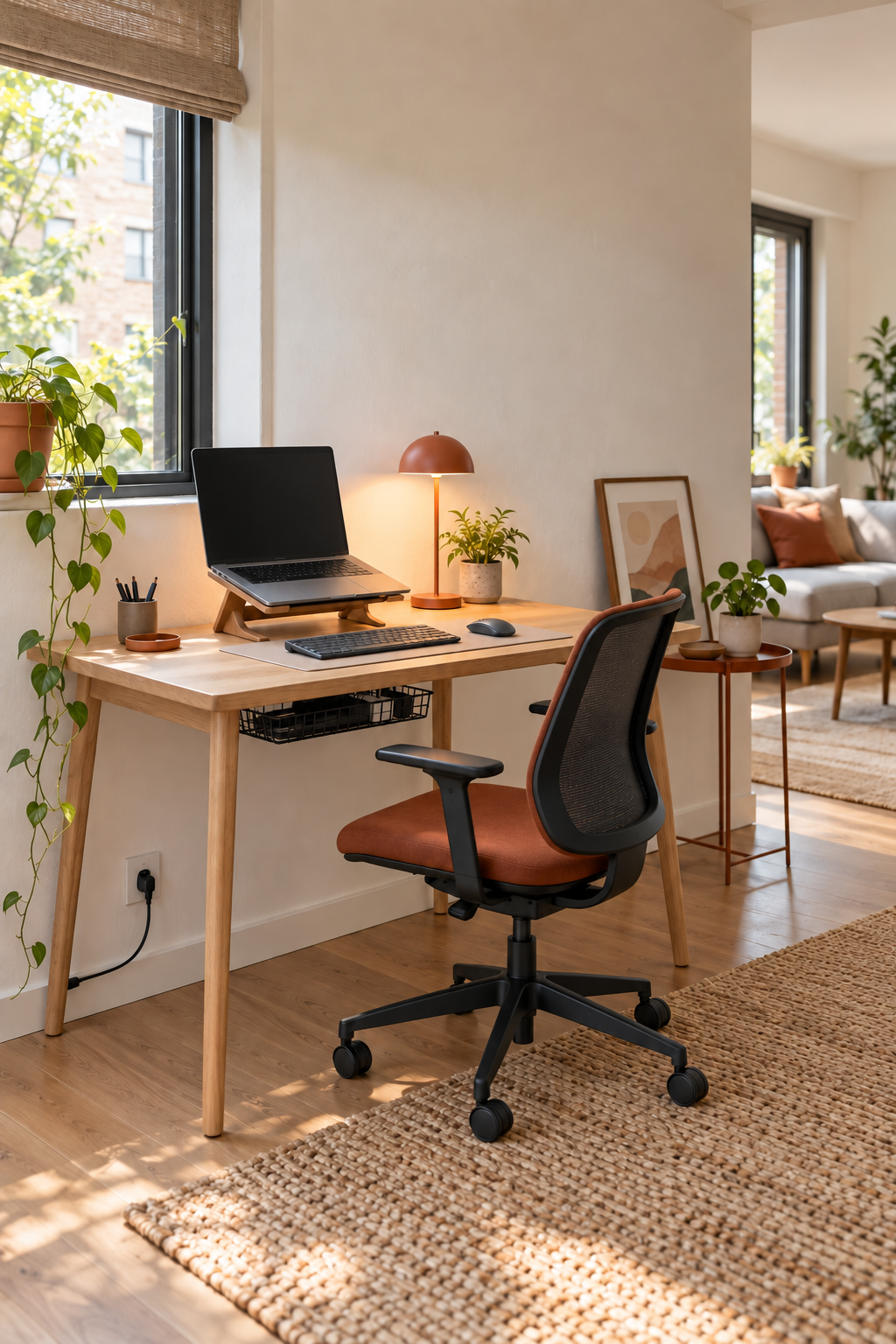
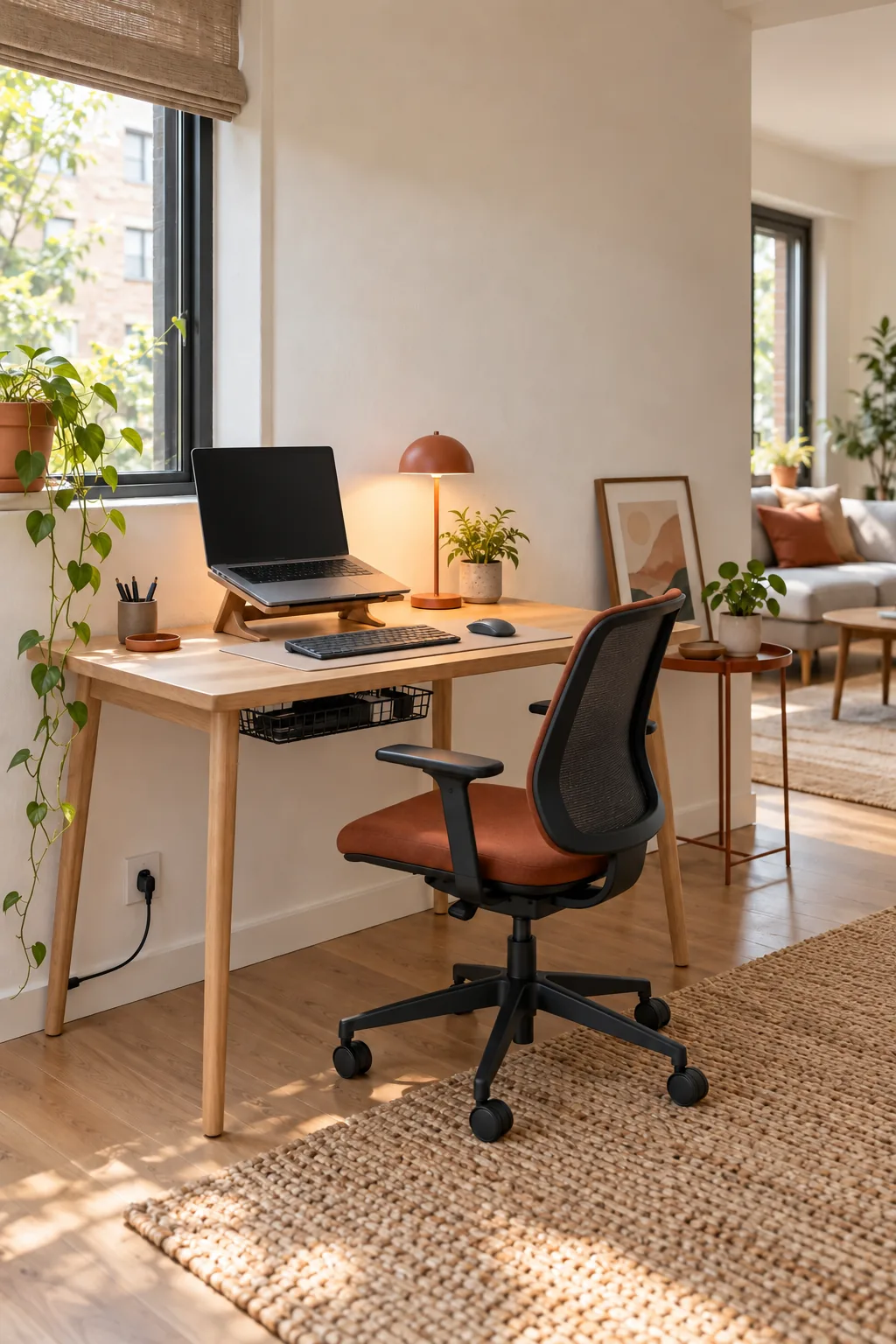
The first concept uses a freestanding wooden desk, adjustable chair and a laptop stand with separate input devices. A desk-mounted basket holds suitable leads without a wall attachment. The room wall remains clear, and an accessible socket sits beside the setup. Storage is limited, leaving knees and the surrounding route available.
- Place the desk after testing the occupied chair and screen light, then assemble it using its exact instructions.
- Arrange the work kit on the top with the most-used items in your own reachable zone.
- Attach any cable basket only using a method permitted for the desk, with clearance for knees and equipment ventilation.
Keep decorative objects on the outer edge or a suitable separate low surface. Plants and open drinks should not sit where a movement can spill onto equipment. A frame resting on a low shelf needs a stable supported position, not a place where a chair or opening door can knock it over. A functional bare wall is an acceptable result.
Arrangement: a purpose-built folding desk and portable kit
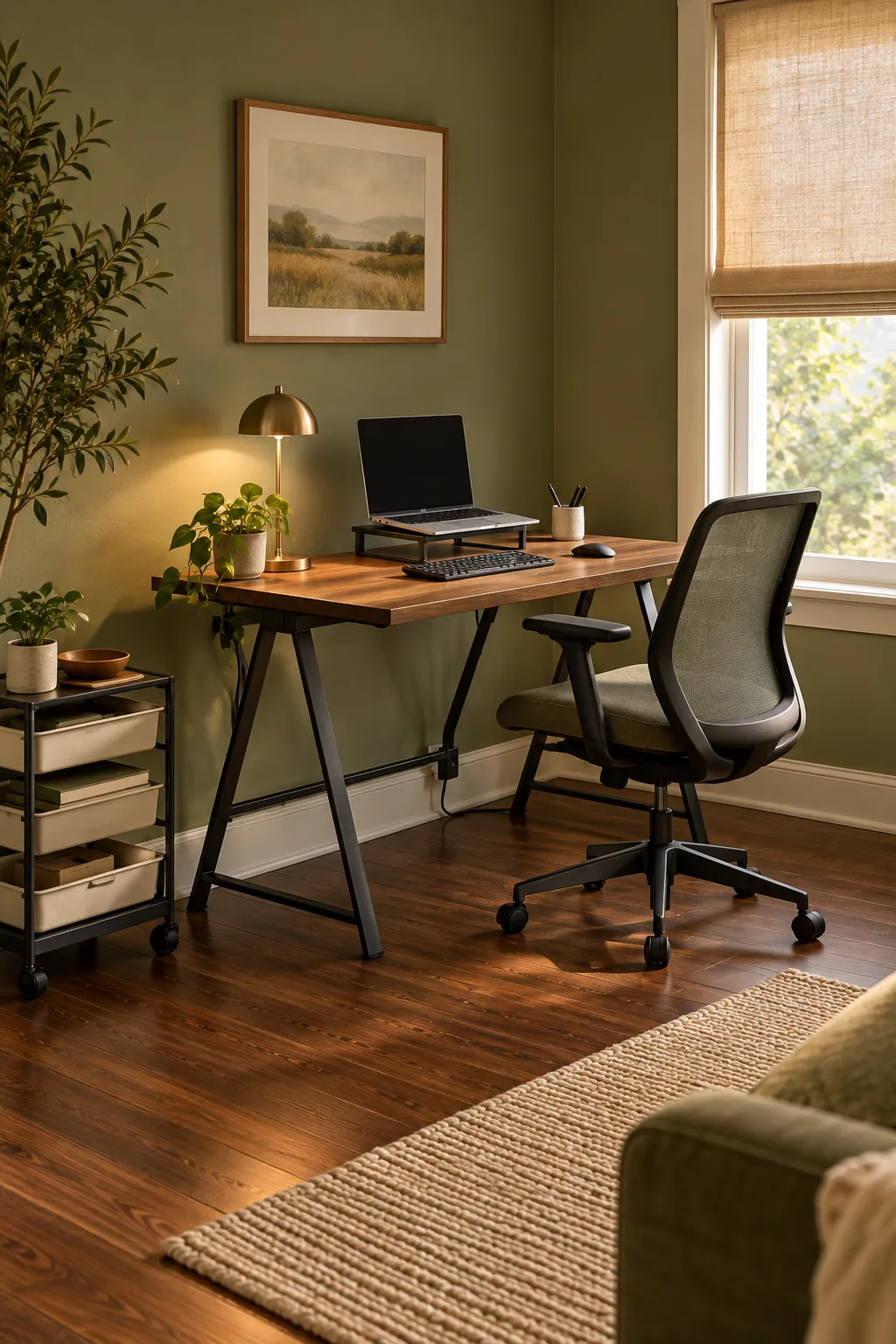
The second concept has a folding desk with its intended support frame fully open, alongside a low wheeled organizer. It is useful when the work area must later pack away or move to another rental. The top still has enough space for the actual screen and input task. The organizer sits beside the desk rather than under the writer's knees.
- Check the desk's open dimensions, locking mechanism and loading information before purchase.
- Complete a realistic work session with the frame fully set up, including any separate keyboard and mouse.
- Create a storage routine that removes equipment before folding the desk and parks the organizer outside circulation.
Do not fold the frame with devices or a lamp balanced on the top. Follow its process for opening, locking and closing, keeping hands clear of moving parts. If the desktop flexes, the frame rocks or the latch does not work as intended, stop using that setup and address the product's condition. Portability should not require accepting an unreliable work surface.
Fit the chair and equipment before adding storage
OSHA's working-position guidance emphasises supported posture and changing position. These are ergonomic references for assessing the user, not a universal rental-furniture standard. Check your actual seat, foot support, input reach and screen view together rather than selecting the desk solely by appearance.
For sustained employed work at home, follow the assessment appropriate to your employer and location. A no-drill corner is still a workstation when used that way. If the available desk cannot accommodate an ordinary task, use a different room position or surface instead of adding layered trays that put the keyboard, mouse and papers at incompatible levels.
Keep power accessible and out of movement
Choose a location near appropriate existing power where possible. Route leads along the desk arrangement, away from casters, hinges and walkways. Do not pinch a cable between furniture and the wall or hide it beneath bedding. Keep plugs accessible so equipment can be disconnected and inspected according to its instructions.
Electrical Safety First's UK guidance advises avoiding overloaded and chained extension leads. Use locally appropriate equipment and its marked rating, not an improvised chain to reach the corner. Fixed electrical changes need suitable qualified help and the required rental permission. Decorative concealment should never make damaged leads or hot equipment harder to notice.
Make storage portable without creating a tip-over problem
A shallow project tray, a pouch and a small low organizer can cover the active work without filling the wall. Keep finished archives elsewhere. Choose containers that fit the actual documents, and check any wheeled unit's parking and loading instructions. The storage should move out of the way without carrying an unstable pile on top.
For taller storage, follow the exact required securing instructions. CPSC's Anchor It guidance stresses following furniture securing instructions to prevent tip-overs. If a product needs wall anchoring and it cannot be installed appropriately, choose a suitable different product. Do not treat its weight, a wide-looking base or removable adhesive as proof that required securing can be omitted.
Spend on the part that limits your task
Start with existing suitable furniture where possible. A separate input device, an appropriate task lamp or a correctly sized document tray may solve more than a new decorative desk. Test the corner for several sessions and note what repeatedly gets moved. Buy the missing functional part, not a matching set that introduces more storage than you need.
For second-hand furniture, identify the model and check joints, fittings, surface condition and instructions. Do not rely on a desk that has missing structural components. Measure the delivery route, disassembly needs and the next move. Keep the assembly information and any spare specified hardware together so the work corner remains usable after relocation.
Leave the room ready for its other use
At the end of work, return papers to the active tray, save the next task and deal with equipment according to its instructions. Park the chair clear of the main route. If using a folding desk, clear and close it correctly; if using a fixed desk, leave only the kit that genuinely needs to remain. Avoid turning the chair into a bag shelf.
Check floor pads, cable attachments and furniture condition periodically as appropriate for the products. Reassess if you add a monitor, change chair or move to another room. A no-drill setup is successful when it makes daily work and the room's other activities easier, while respecting the property and the actual requirements of its furniture.
Planning references reviewed on 23 October 2026
- OSHA: Good working positions: Supported posture and changing position during screen work.
- Electrical Safety First: Extension leads and adaptors: Avoiding overloaded or chained extension leads; UK electrical context, local products and rules may differ.
- CPSC: Anchor It!: Furniture tip-over prevention and following manufacturer securing instructions.
- HSE: Workstations and assessment: Review the whole workstation, task, furniture and individual requirements for regular display-screen work.
- Electrical Safety First: Home office: Avoid overloaded sockets and daisy-chained extension leads.
Practical questions
Can I avoid anchoring a tall unit because drilling is prohibited?
No. Follow the specific product's required securing instructions. Discuss a permitted appropriate fixing or choose a suitable different storage solution. Tall furniture is not proved safe by weight, appearance or an improvised adhesive restraint.
Are adhesive shelves a good desk substitute?
Not unless the exact system is designed and rated for that task and its installation is permitted. A decorative shelf or hook rating is not approval for a worktop. Use a properly supported desk instead of creating a surface from uncertain attachments.
Is a folding desk enough for full-time laptop work?
Only if its stable open surface, chair fit and equipment arrangement suit the user and work. Portability alone does not establish suitability. Test real tasks, follow loading and lock instructions and complete any applicable workplace assessment.
Keep the useful part.
Keep one visual reminder of this guide. The illustration suggests a direction; the practical steps and fit checks above help you adapt it to your own room.