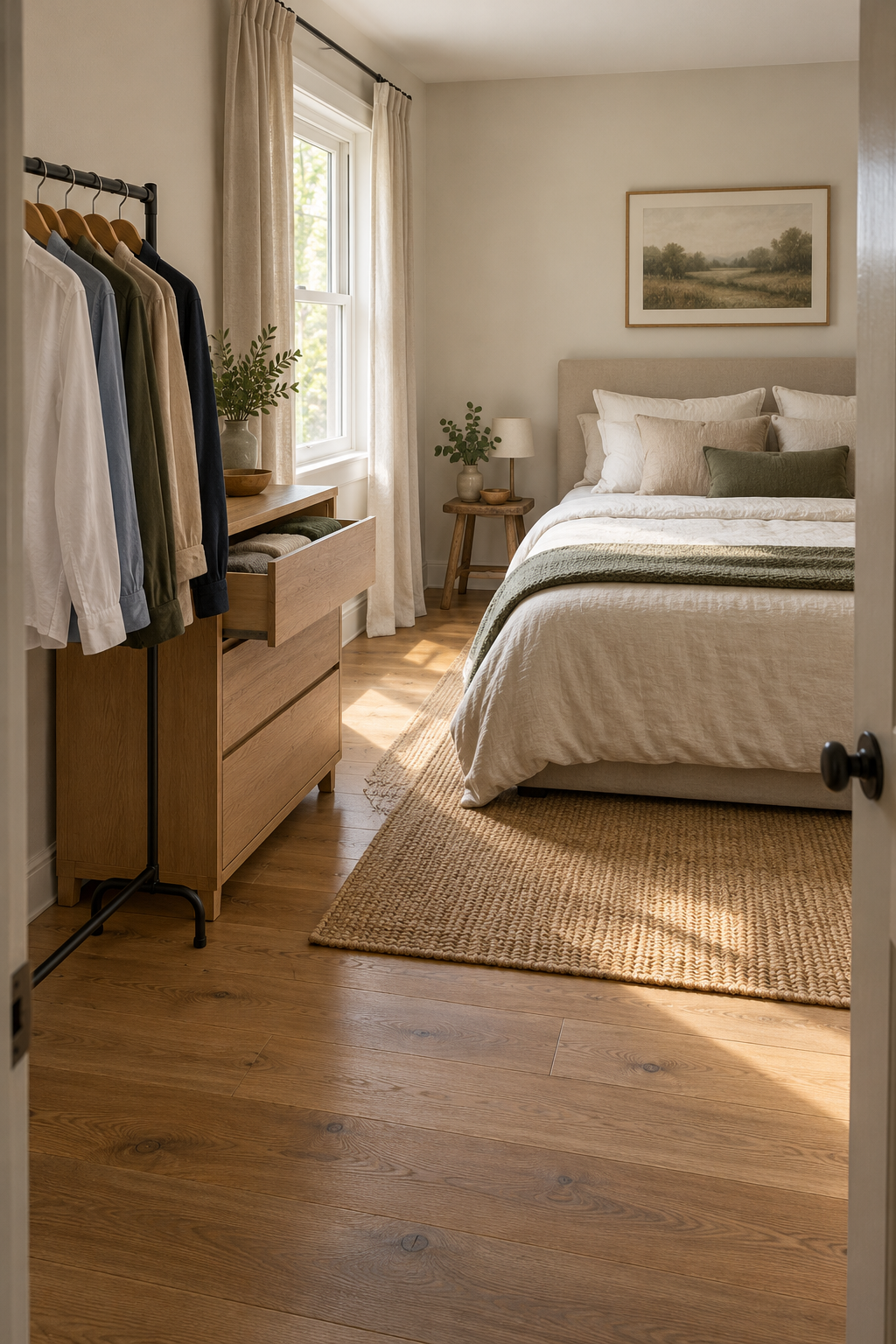
A bedroom without a wardrobe needs a place for the clothes you wear, not simply a substitute tall cabinet. Hanging shirts, folded jumpers, shoes, small accessories and laundry ask different things of the room. A rail may handle one of those jobs well and leave the others unresolved. Choose a combination around your actual belongings and the space needed to get dressed.
Start with the routine and measure the room
First sort the clothes already in use into hanging, folded, occasional and waiting-for-wash groups. Keep a small separate place for items you plan to wear again. Count what needs to fit, rather than buying enough storage for an imagined future collection. Measure the widest filled hanger and the longest garment, not only the metal rack. A rail that fits between two walls can still project into the aisle once clothes hang from it.
Draw the door swing, bed frame, skirting, sockets, windows, heating and the complete storage footprint. Add the space for an open drawer, a pulled-out box and a person standing in front. Try retrieving an outfit while another person uses the bed. If access fails, change the arrangement or reduce what lives there. These illustrations are concepts, not measured layouts; they establish neither a product's capacity nor safe installation.
| Daily need | Useful starting option | What to test |
|---|---|---|
| Mostly hanging clothes | Short rail plus folded storage | Garment projection, rack load and access beside the bed |
| Mostly folded clothes | Low shelves or drawers | Usable interior space and reachable stacks |
| Occasional clean items | Under-bed boxes or a storage bench | Opening space, dry storage and easy retrieval |
| Shared daily routine | Separate small stations | Both people dressing and opening storage at once |
Pair a short rail with a low chest
Why this arrangement is useful
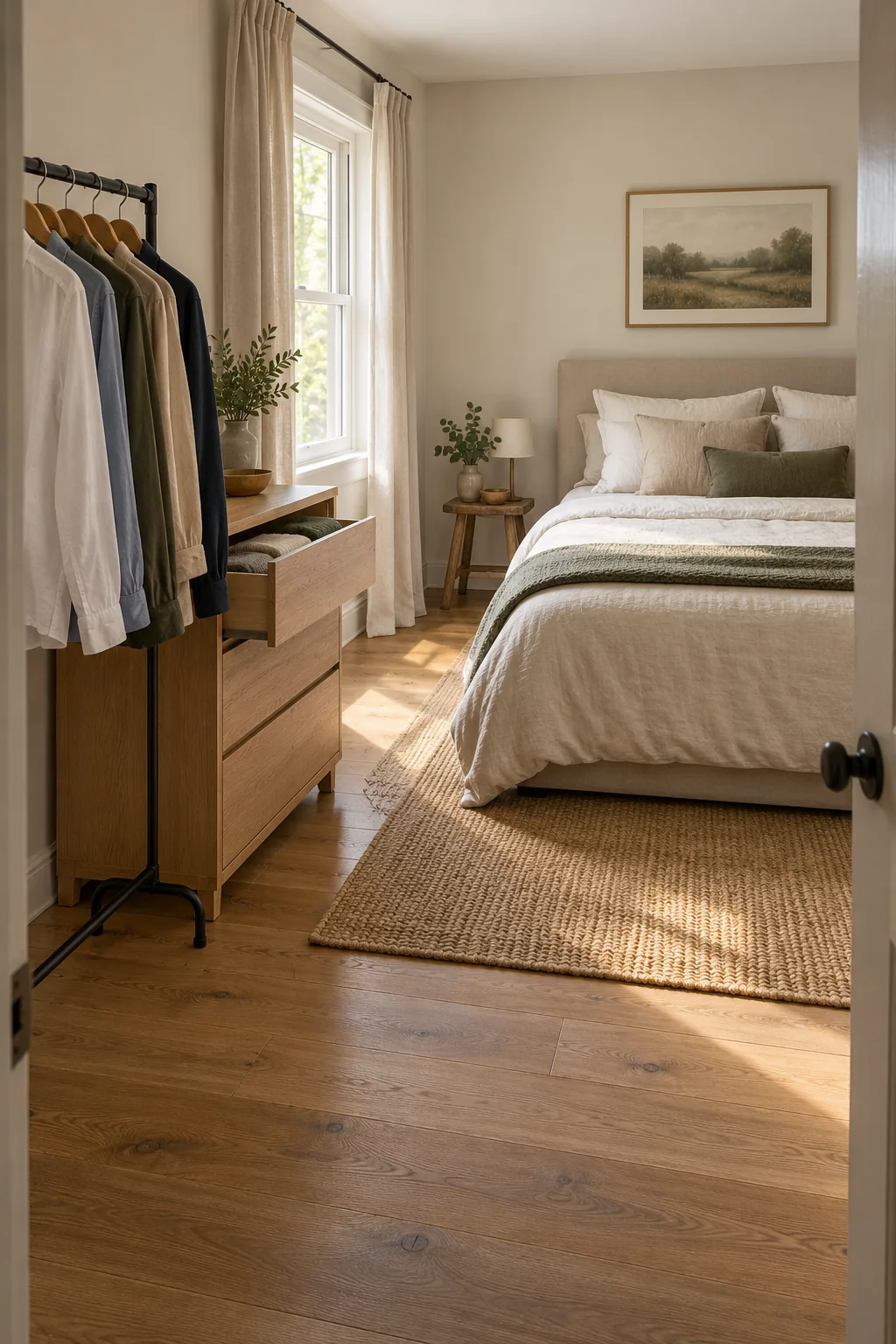
A rail and chest split hanging from folded storage in one dressing area. The useful decision is the combination of jobs; it depends on garment depth and open-drawer access, not the appearance of the room.
Try the idea in your room
- Sort current hanging and folded clothes before choosing the storage mix.
- Measure filled hangers and the deepest drawer fully open.
- Trial retrieving an outfit beside the bed and retain the arrangement only if the route works.
1. Pair a short rail with a low chest
This combination separates the clothes that benefit from hanging from those you actually fold. It is useful when you own a modest hanging selection and already have drawers. Keeping the two jobs beside each other gives one dressing area, while the bed can stay on the opposite wall. The image suggests the relationship; the rack and drawer fronts must still work together in your room.
Try this arrangement
- Put only the current hanging selection on the rail and measure the filled rack.
- Use one drawer for everyday small items and another for folded layers; divide by routine rather than colour.
- Open the deepest drawer fully and retrieve a garment without moving the rail.
2. Use open shelves for a mostly folded routine
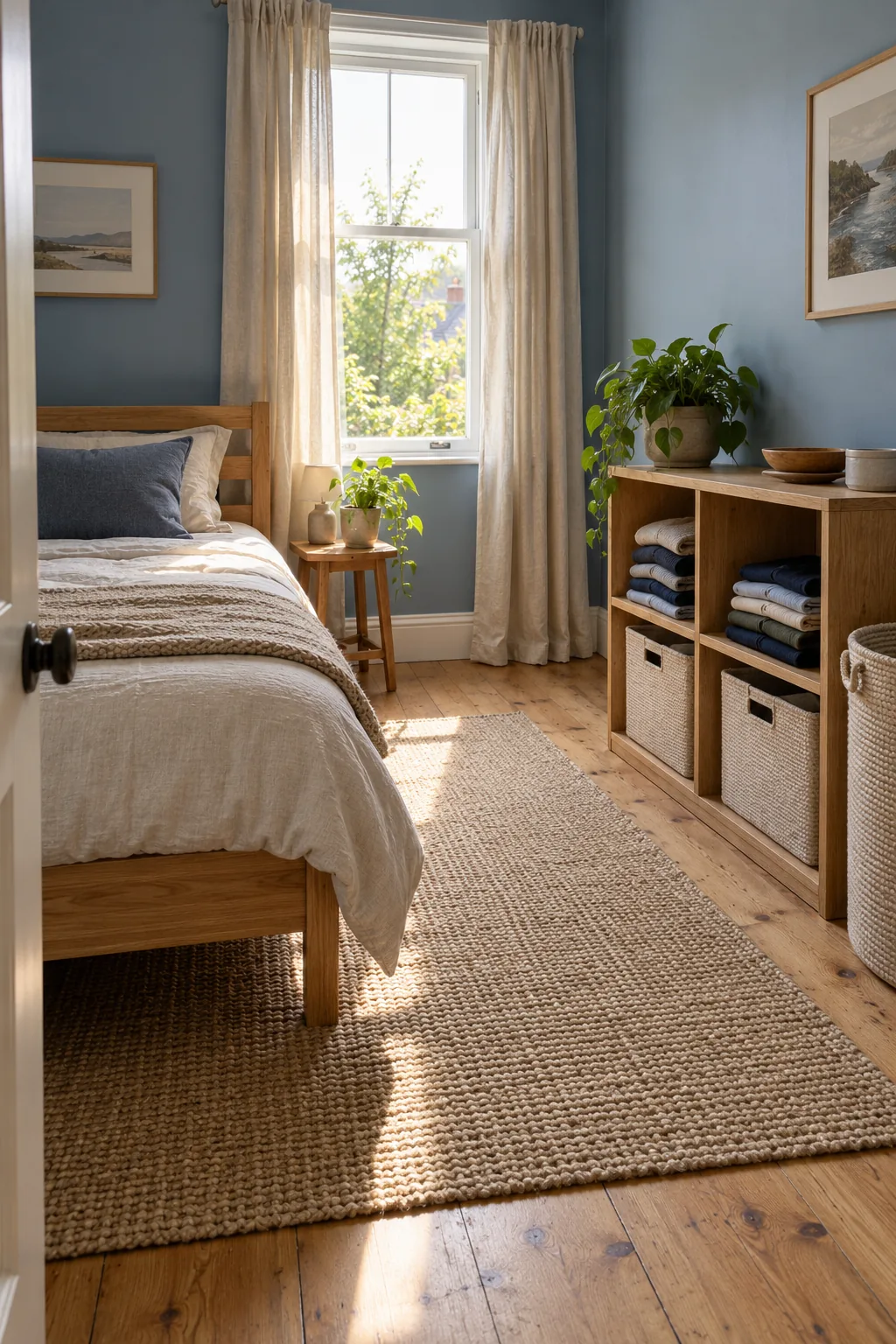
If most everyday clothes are T-shirts, knitwear or sports clothing, a low open shelf may serve better than a large rail. Separate baskets can contain socks and other small items without turning every shelf into a loose pile. This arrangement is also a way to test an existing shelving piece before committing to new furniture.
Try this arrangement
- Fold a representative stack and compare its depth with the usable shelf interior.
- Give each reachable cubby one category and keep frequently worn items at the easiest level.
- Use a basket for small pieces, leaving enough room to lift it out.
3. Conceal a rail in an existing recess
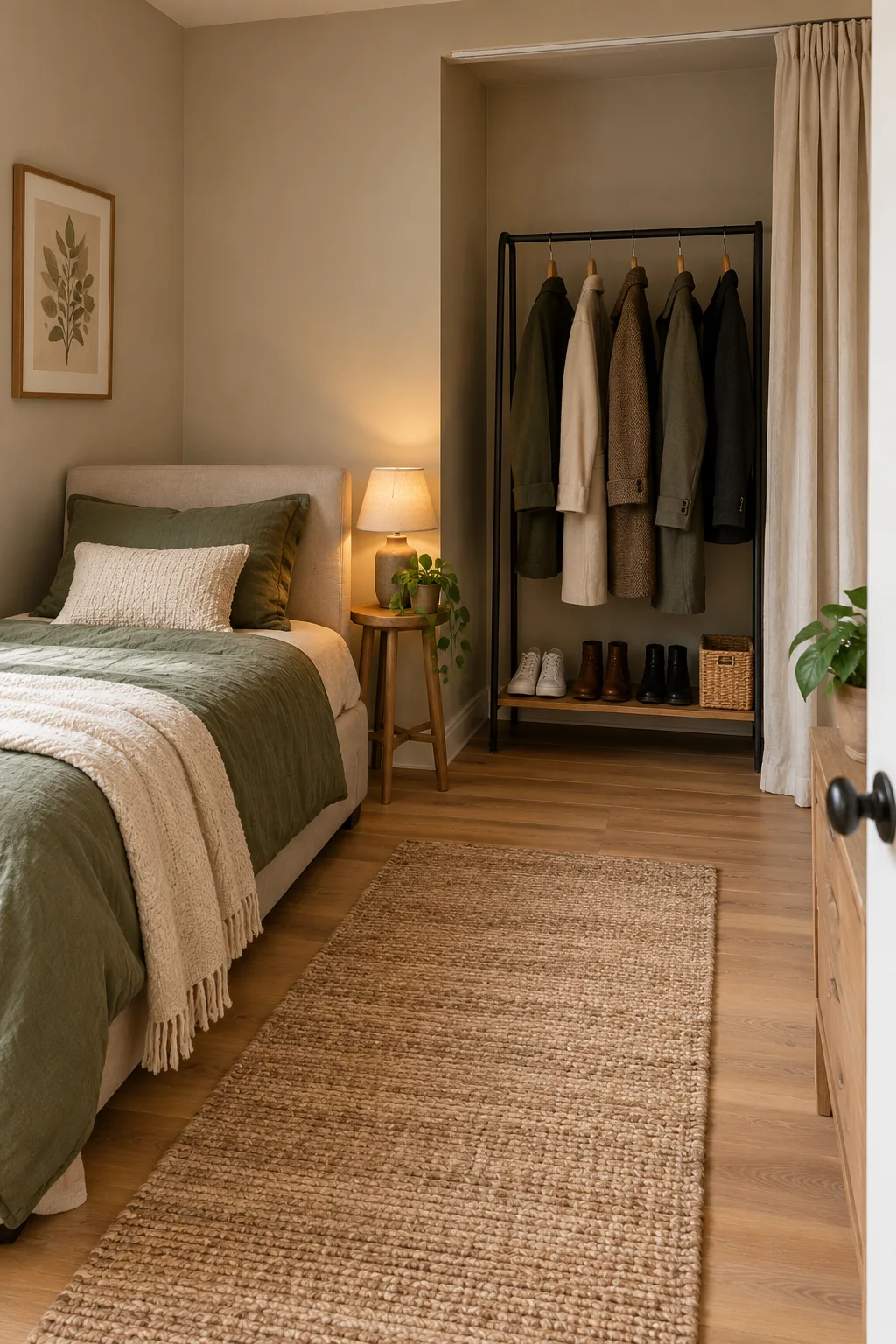
An existing alcove can contain a clothes rack without filling the main room with a new cabinet. A curtain softens the view when you are resting and opens to show the whole hanging area when getting dressed. This is a use for a recess you already have, not a recommendation to create a new structural opening.
Try this arrangement
- Measure the recess with skirting, track and curtain stack included.
- Place the actual rack inside, load it modestly and check that garments do not rub the curtain.
- Open the curtain fully before choosing where folded clothes or shoes will sit.
4. Use under-bed boxes for occasional items
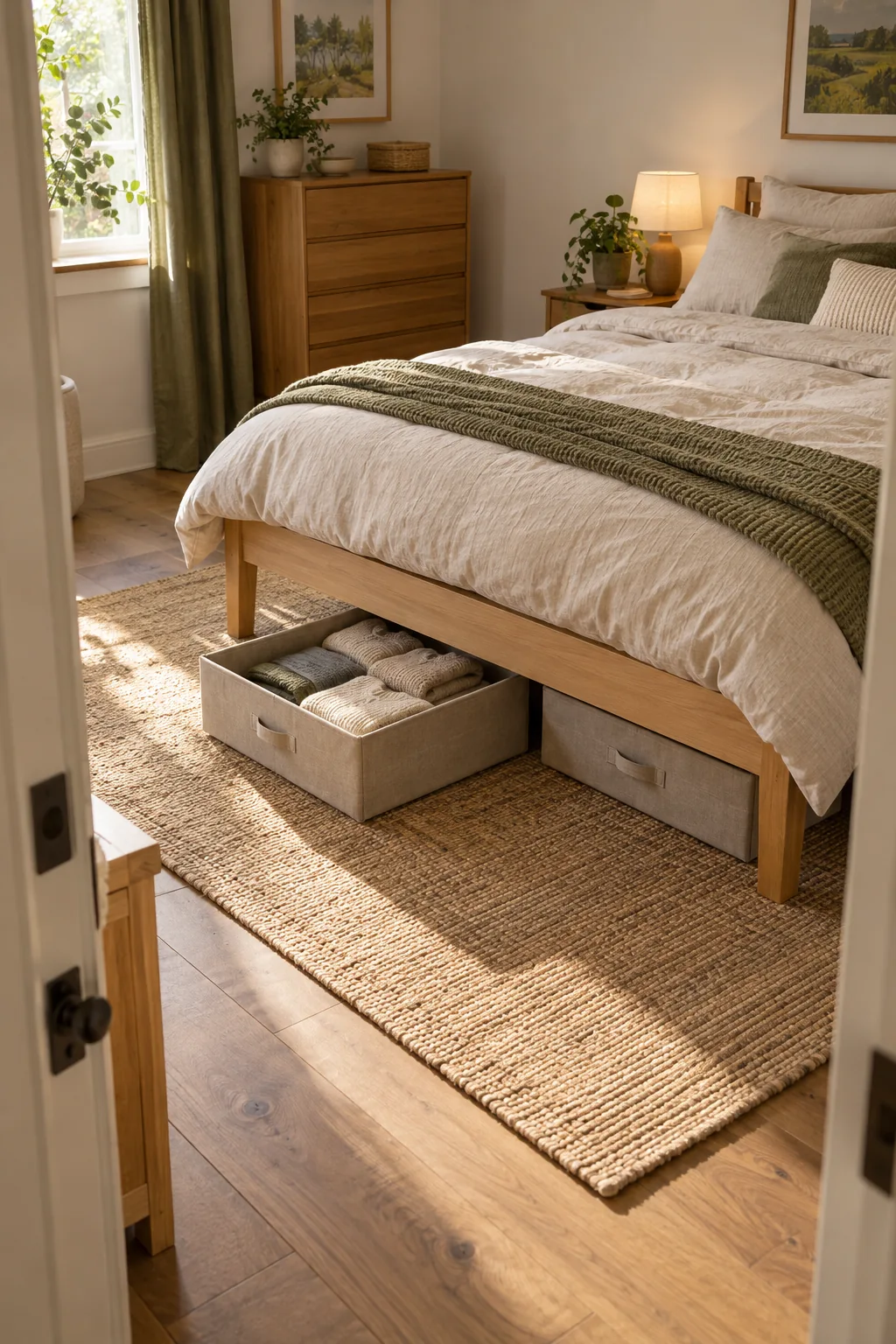
The space beneath an existing raised bed can hold clean spare clothing without adding a tall unit. It is especially useful for items that are not needed every morning. Keeping daily clothes in a separate chest avoids having to kneel, pull boxes out and remake the room each time you get dressed.
Try this arrangement
- Measure the clear gap beneath the actual frame, including supports and floor variation.
- Choose a box that can be lifted or slid out without catching the bed structure.
- Store clean, dry occasional clothing by a useful category and return the box after retrieval.
5. Give a rolling rail a real parking place
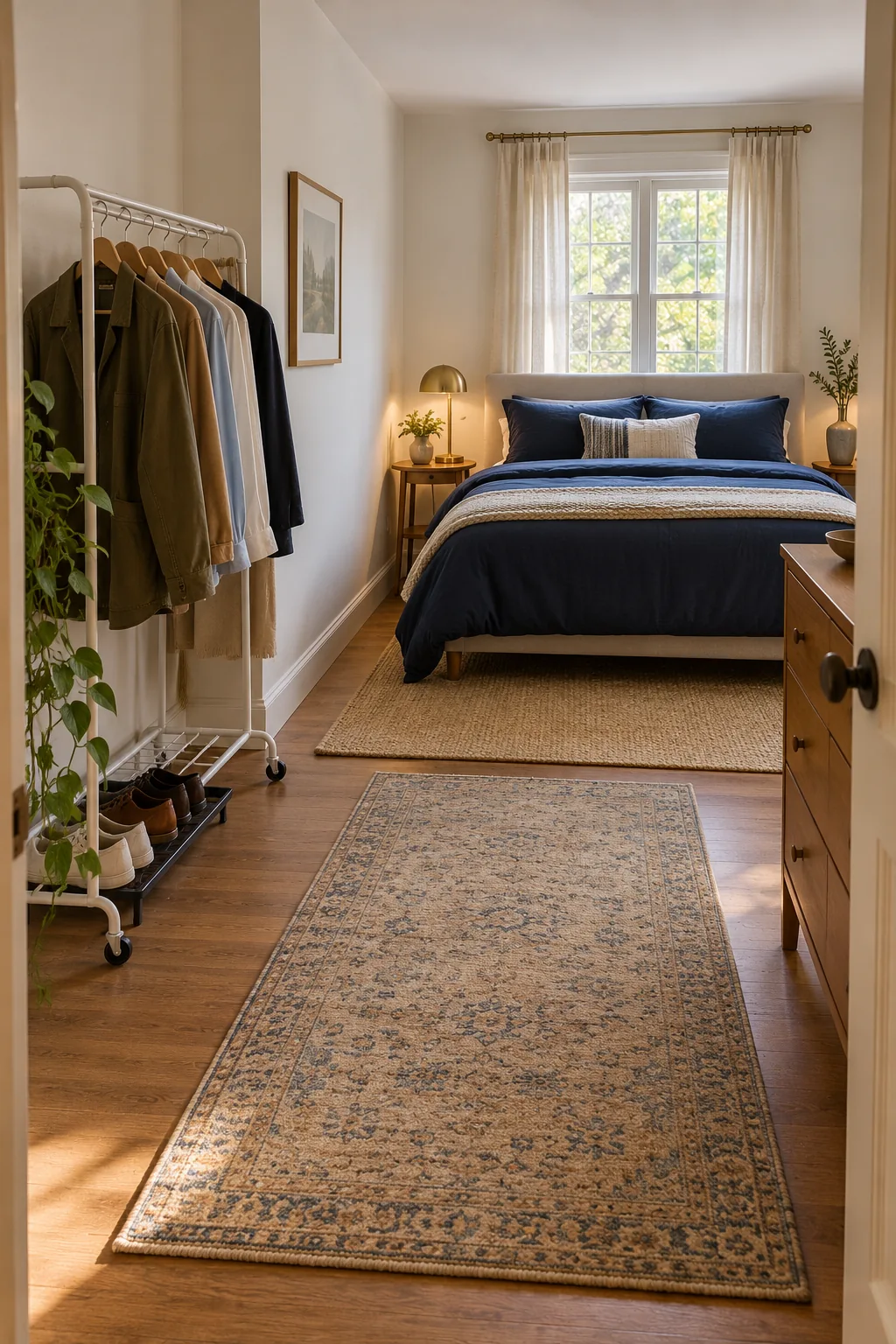
A movable rack can suit a rental or changing room, but its mobility is not a substitute for floor space. It works best with a defined stored position where the filled rack does not occupy the doorway or bedside route. The long room in the concept lets the daily path and storage pocket read separately.
Try this arrangement
- Choose a parking position using the loaded rack footprint, including its feet and clothes.
- Check the castor and load instructions, and use wheel locks where the rack provides them.
- Keep shoes in a modest separate tray so they do not spread across the floor.
6. Divide a shared clothing routine into two zones
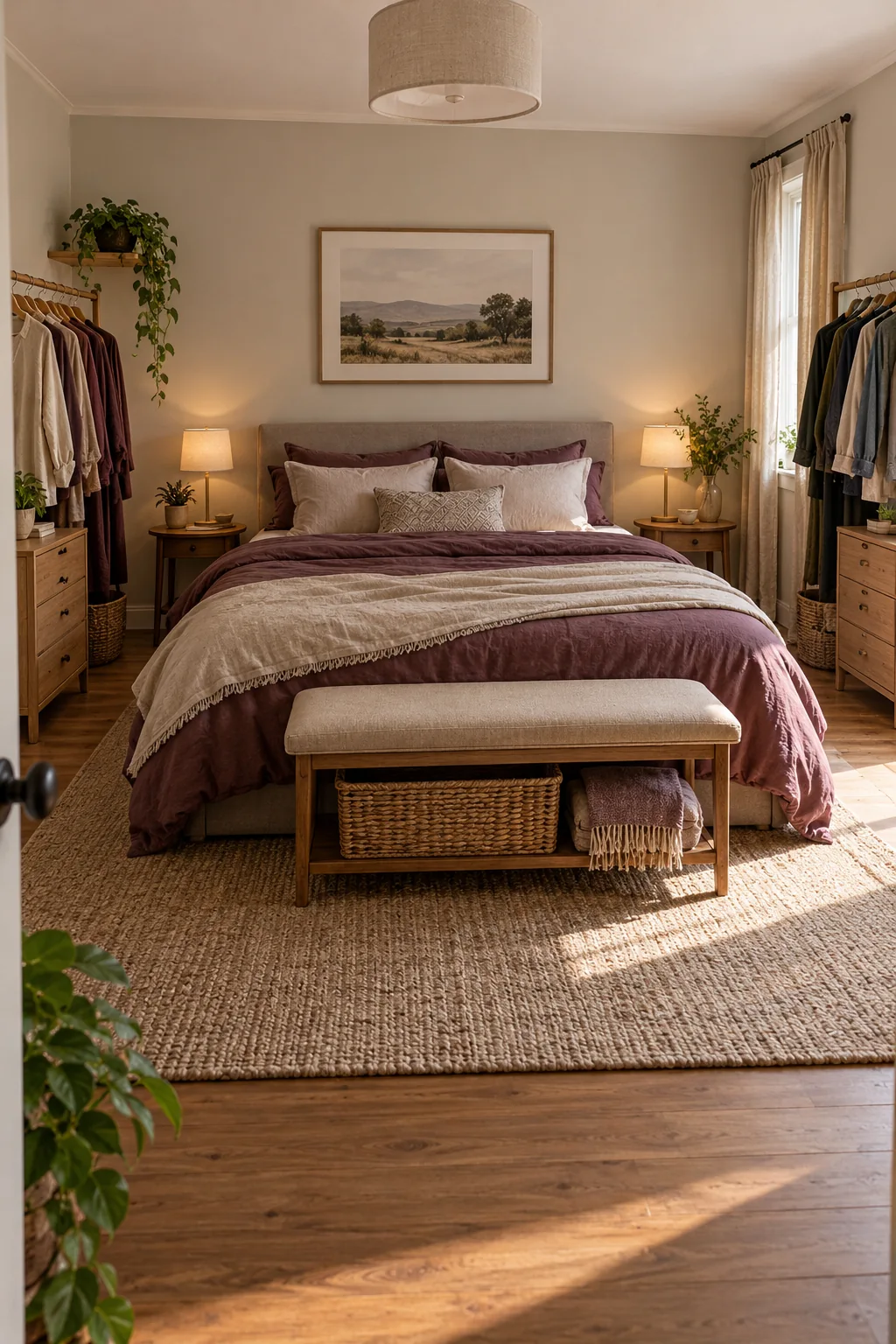
Two small defined clothing stations can make a shared adult bedroom easier to use than one mixed rail. Each person knows where everyday hanging and folded items return. The stations need not hold equal amounts; give each the space required by the actual belongings while protecting access to both sides of the bed.
Try this arrangement
- Sort each person's current clothes separately before assigning the storage.
- Give both stations a reachable folded area as well as the hanging space actually needed.
- Test getting dressed together, with drawers open and the bed in ordinary use.
7. Use a storage bench for spare folded clothes
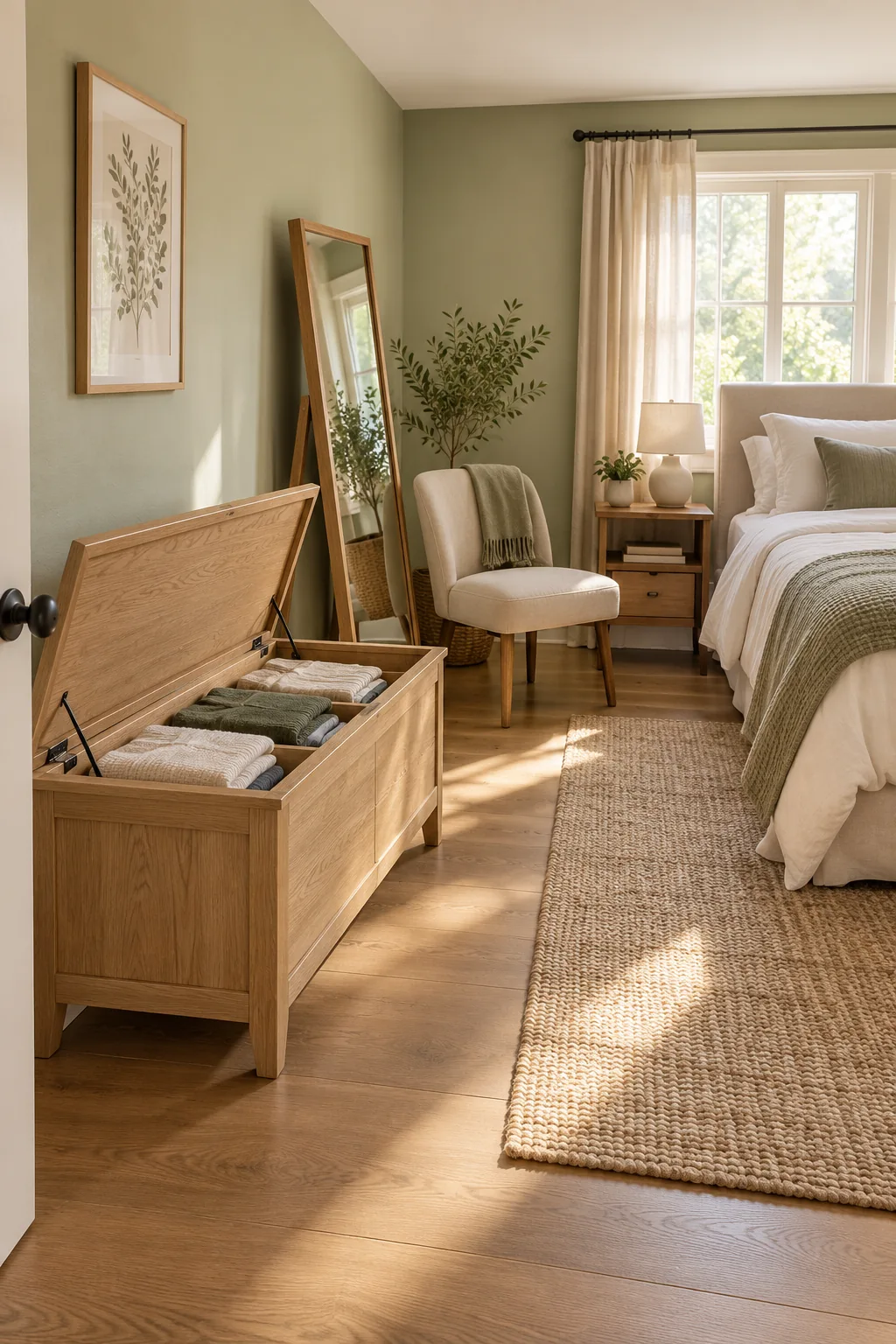
A bench designed to store belongings can combine occasional clothing storage with a dressing area. It suits spare folded layers that you do not need while someone is seated on it. The concept places the bench beside a separate dressing chair, so its storage lid and the main sleeping area have different jobs.
Try this arrangement
- Check that the actual bench is designed for the intended storage and, if needed, sitting.
- Sort spare clothing into shallow groups that can be lifted without emptying the whole bench.
- Open the lid fully with the nearby chair and bed in place before choosing the final position.
8. Separate clean, rewear and laundry storage
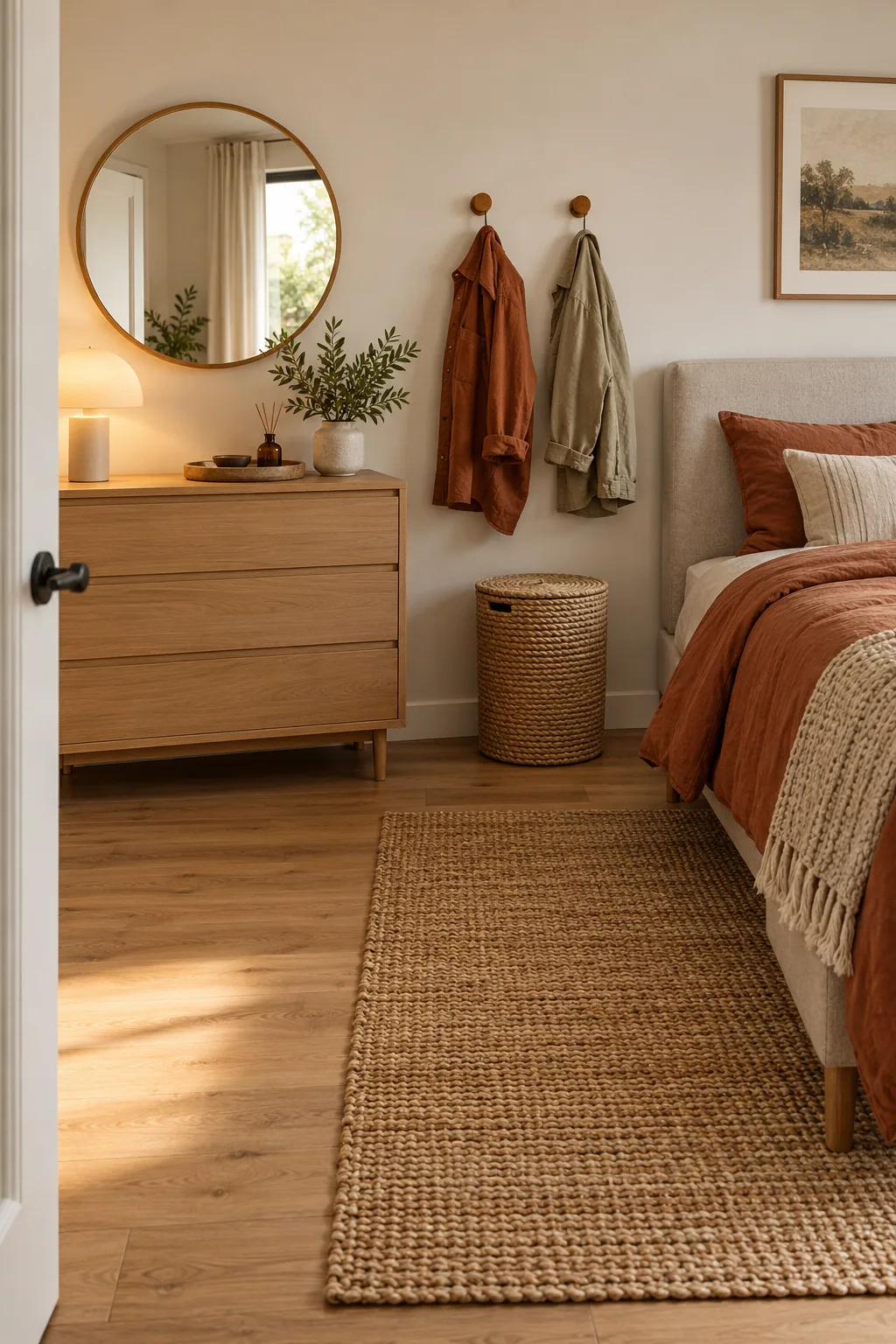
A chair covered in clothes often signals that three different routines have no defined place. Drawers can hold clean folded items, a small hook area can hold clothing intended for another wear, and a hamper can contain laundry. Keeping those jobs separate is more useful than adding another general-purpose basket.
Try this arrangement
- Clear the chair and sort its contents by clean, rewear and laundry status.
- Reserve just a few suitable hooks for the current rewear selection.
- Return clean folded pieces to drawers and move laundry to the hamper at the end of dressing.
9. Build a small daily dressing station
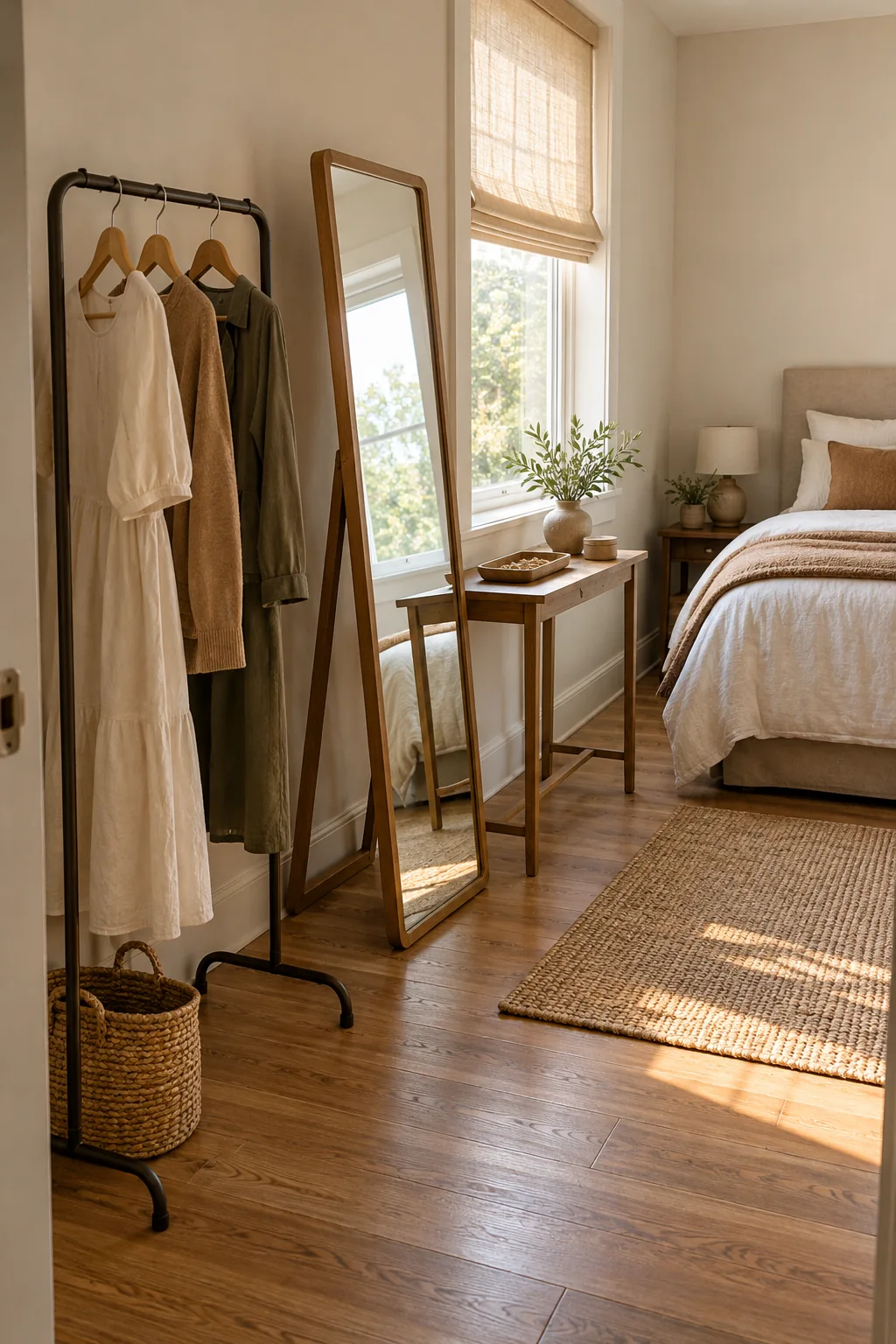
A compact rail holding a few planned outfits can make dressing easier where the rest of your clothes are stored folded elsewhere. A mirror and modest accessory tray give the routine a clear place without treating the corner as a new walk-in wardrobe. This arrangement prioritises daily use over maximum storage volume.
Try this arrangement
- Choose a few current outfits that genuinely need hanging and keep the rest in their normal storage.
- Position the mirror where you can stand in front of it without blocking the bed.
- Place everyday accessories in one reachable tray and return them after use.
10. Rotate seasonal clothes rather than crowding daily storage
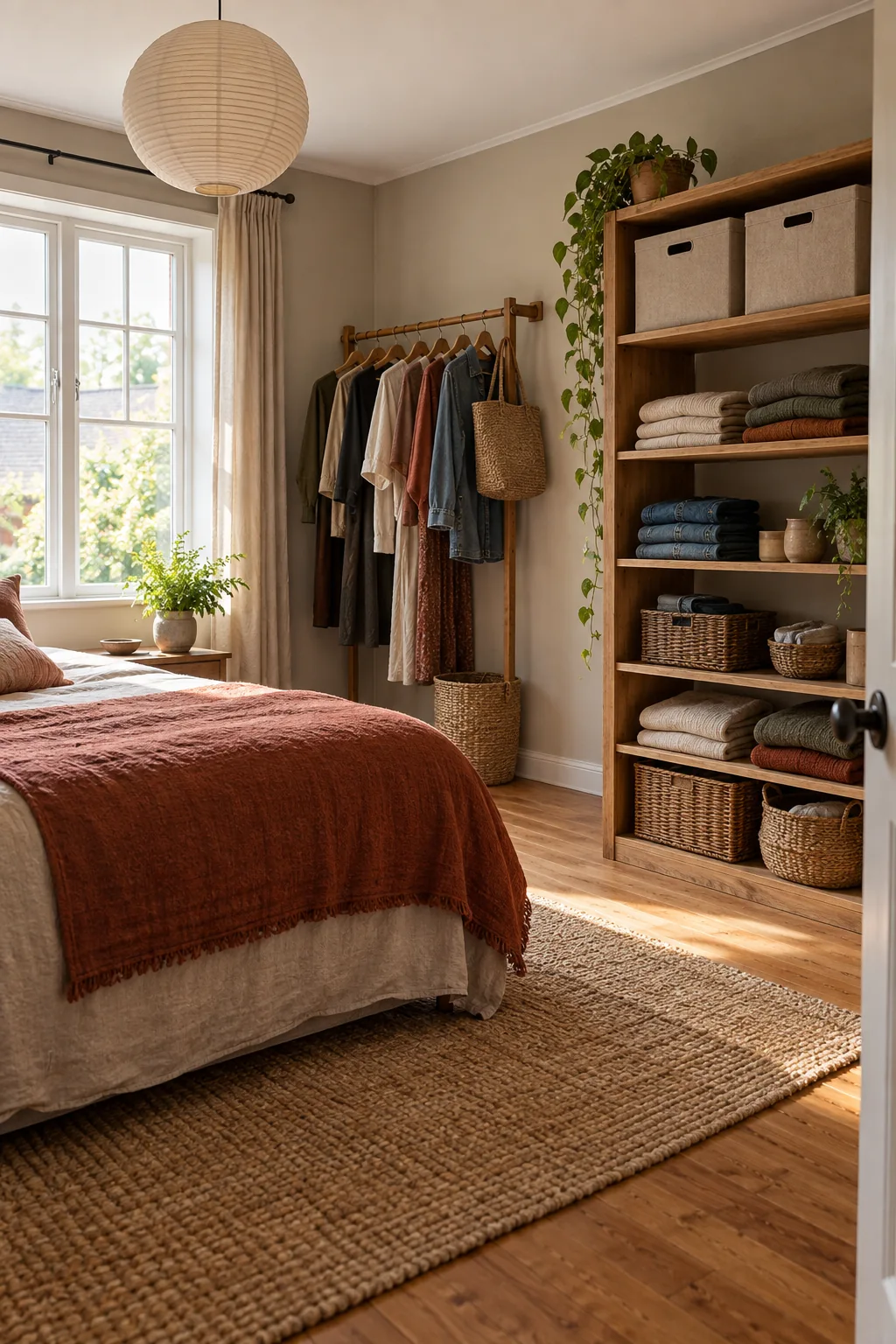
Storage works better when current clothes are easiest to reach and occasional clean items have a separate home. Open shelves can hold everyday folded pieces lower down, while closed boxes protect an occasional category from becoming a visible pile. A separate hanging rail deals with the current garments that should not be folded.
Try this arrangement
- Choose the clothes that suit the current season and your real weekly routine.
- Keep that group within comfortable reach; move clean occasional pieces into manageable closed boxes.
- Review the selection when your routine changes, rather than stacking new purchases on top.
Trial the routine before buying
Trial one combination with the furniture you already have. Get an outfit out, return it, open the door, change the bedding and put laundry away. Note the step that requires shifting another object. Fix that obstacle before adding baskets or decorative accessories. When a storage category remains crowded, reconsider how much belongs in this bedroom rather than adding another rack to the remaining walkway.
For a low-cost first step, edit a current rail, repurpose a suitable basket or give an existing drawer a clearer job. Buy a new piece only after its interior capacity, delivery route, opening space and securing requirements are understood. Use the small-bedroom layout guide for the overall room and the no-buy refresh guide for a trial that starts with what you own.
Continue with small-bedroom layout guide, no-buy refresh guide, bedside alternatives.
Planning references and how they were used
Primary sources checked 13 October 2026. The room scenes and example-by-example advice are original editorial concepts. These sources inform planning and product checks; they do not certify the layouts or represent products pictured.
- IKEA clothes racks and daily organisation — Primary reference for the open-storage category and maintaining a useful daily selection, not the capacity of these concept designs.
- IKEA ÄLGANÄS product and securing guidance — Example of a clothes rack that must be wall-secured. Check the requirements of the actual product you use; the illustrated racks are generic.
- CPSC Anchor It guidance — Primary furniture tip-over guidance: follow manufacturer securing instructions, including for clothing-storage furniture.
Practical questions
Can a clothes rail replace a wardrobe?
It can replace the hanging part for a suitable collection, but folded clothes, accessories, shoes and laundry still need places. Compare the loaded rack and the remaining storage jobs rather than its empty frame.
Can I use open storage in a rented bedroom?
Possibly, if the actual furniture is suitable and its securing requirements can be met with the owner's permission where needed. Freestanding appearance does not mean a product needs no wall fixing. Choose another solution if required securing is not permitted.
Which clothes should go under the bed?
Use accessible, suitable containers for clean, dry occasional items and follow the bed and container instructions. Keep daily clothes elsewhere if pulling a box out is awkward. Do not obstruct required air movement or the route to the door.
Keep the useful part.
Keep one visual reminder of this guide. The illustration suggests a direction; the practical steps and fit checks above help you adapt it to your own room.