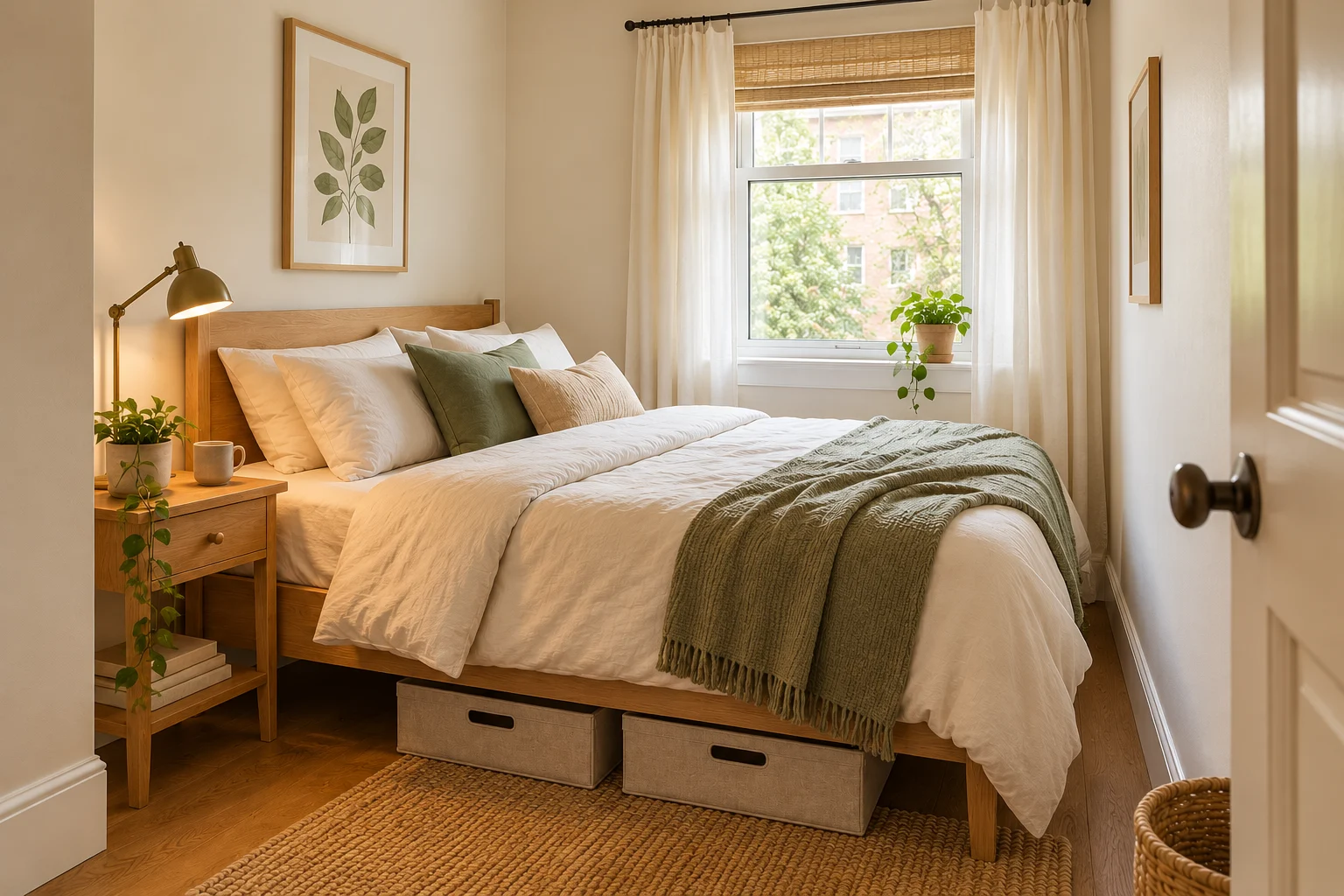
Name the things you actually need at night
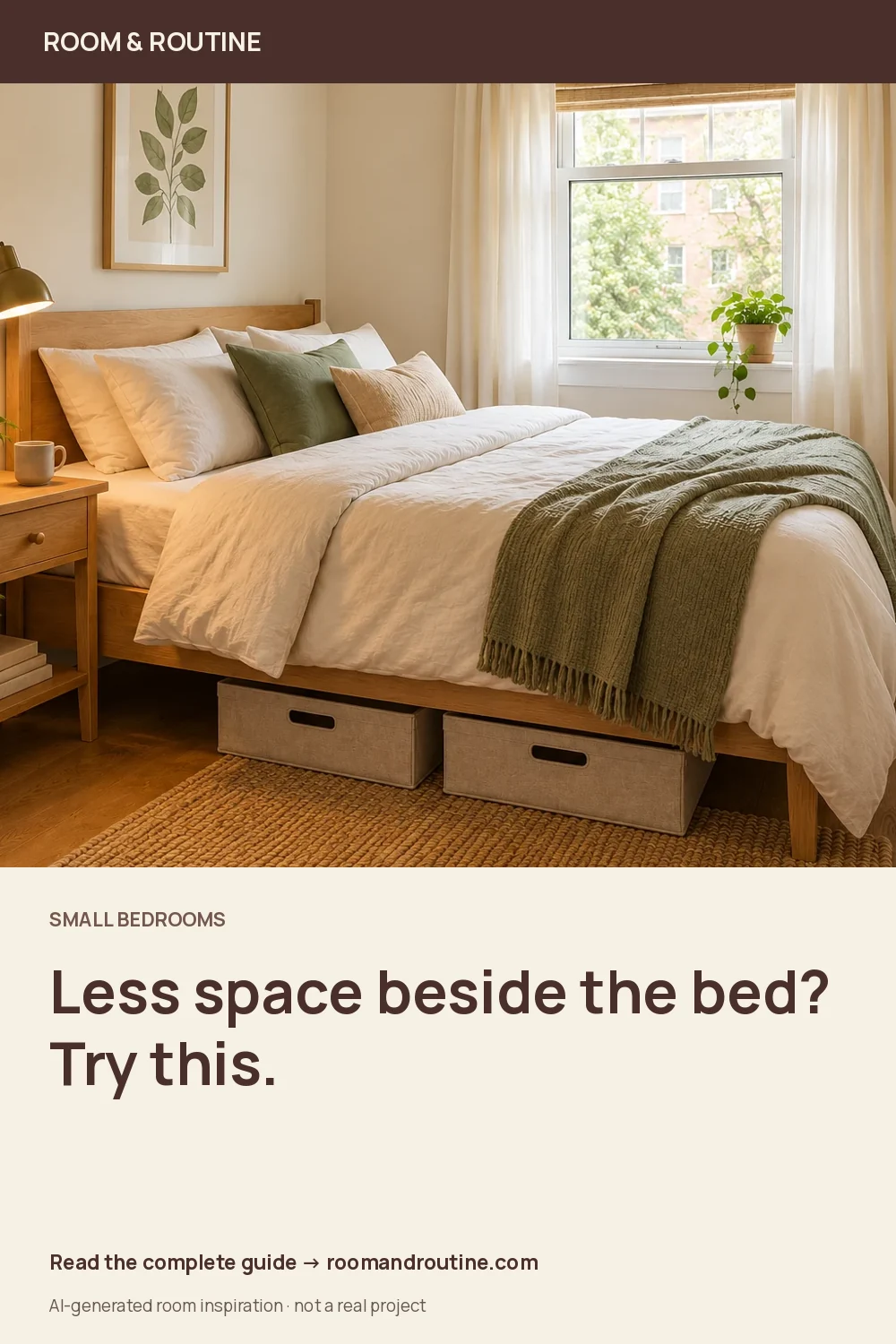
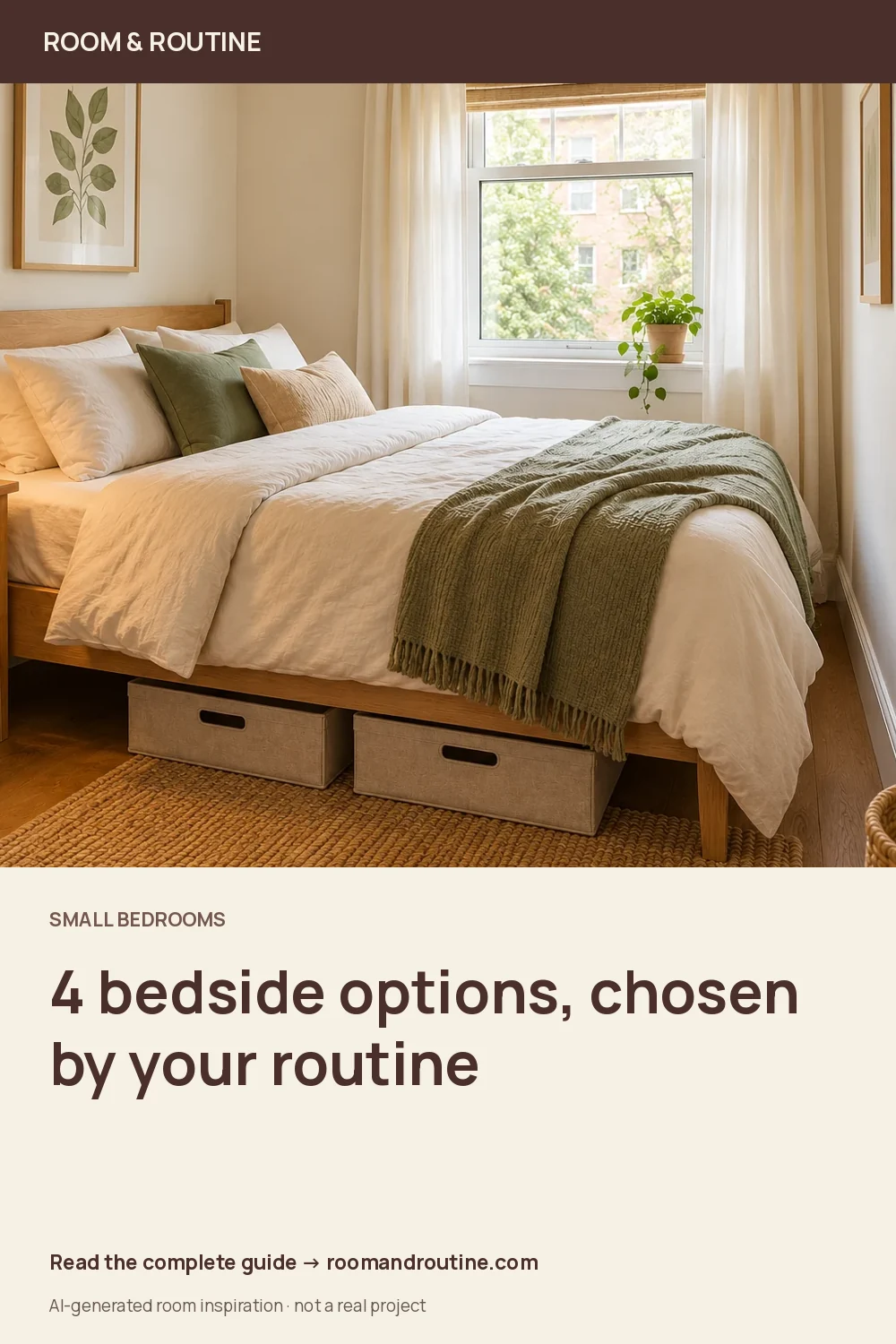
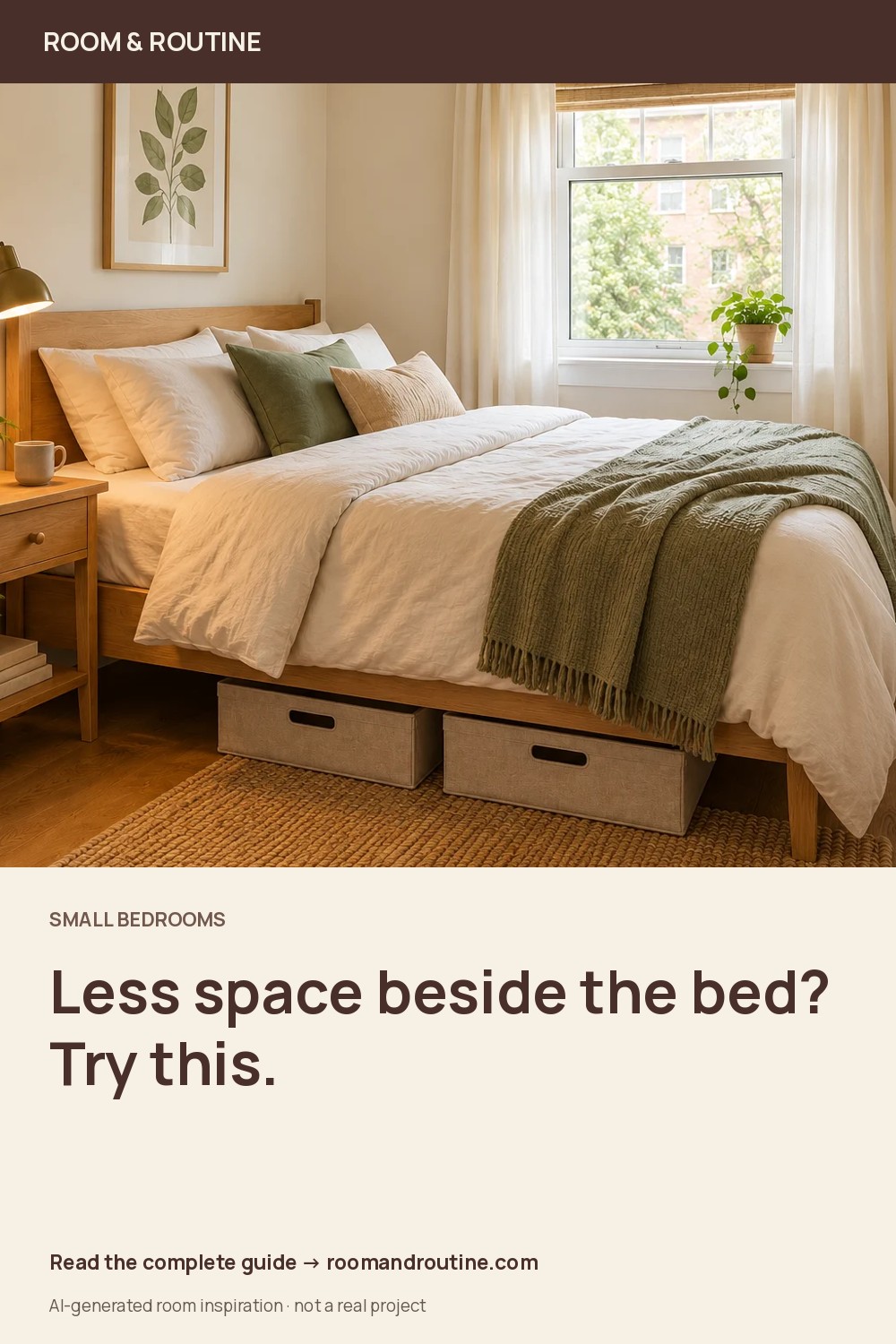
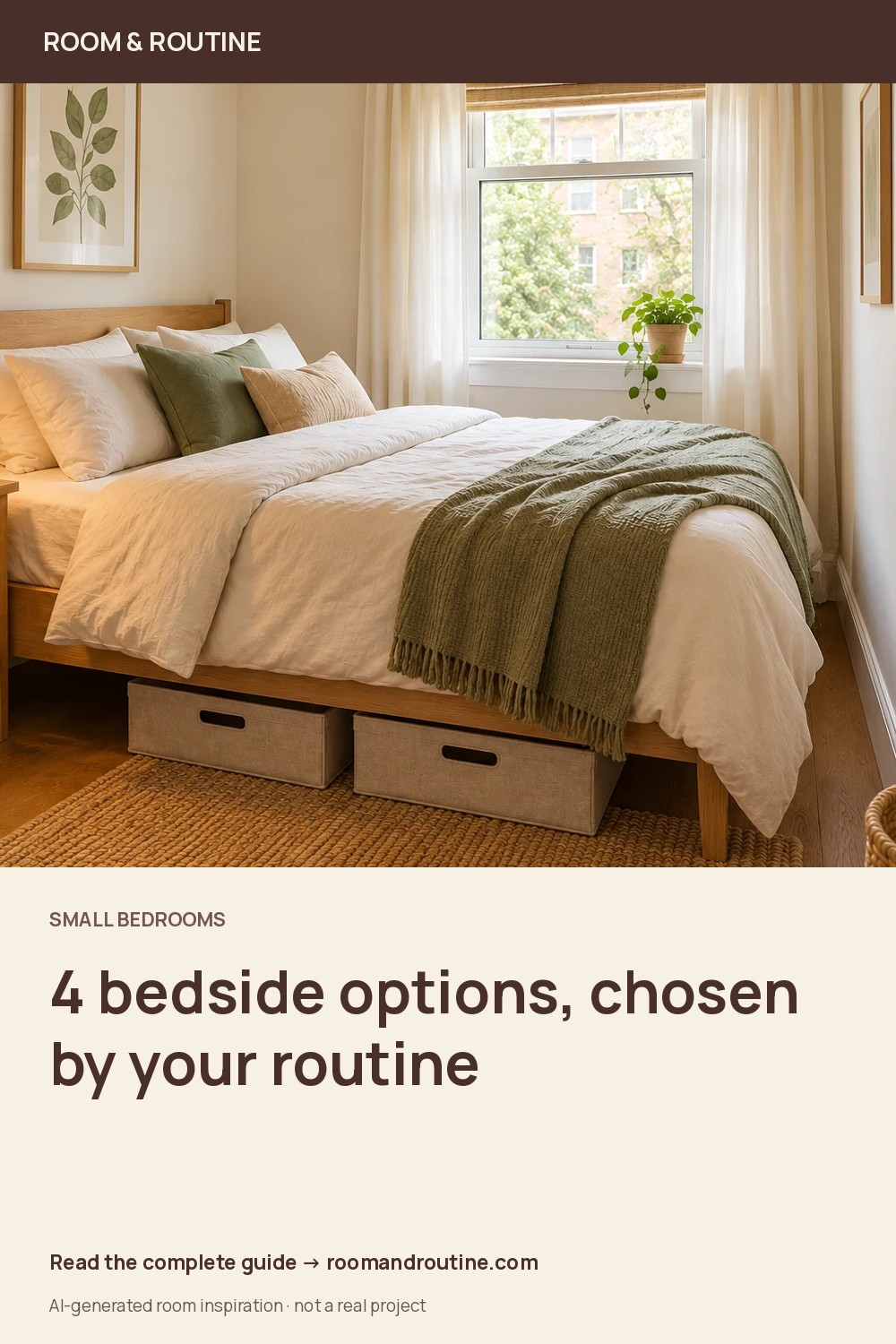
A small bedroom does not always have room for two conventional bedside tables. That does not mean every nightly item needs to end up on the floor. Start with your routine: what do you reach for after getting into bed, and what can live elsewhere?
Make a short list for each person using the bed. It might include glasses, a book, water and a light control. A phone charger, tissue box and several unread books can quickly turn a small surface into permanent overflow. Keep the current book nearby and move the waiting pile to another shelf.
If medication or medical equipment needs a specific arrangement, follow its instructions and your care guidance. A decorative storage idea should adapt to those needs. The same applies to children, pets and anyone who needs clear access at night.
Measure reach as well as width
Measure the available gap at the floor and at the top of the mattress. Include the bed frame, bedding overhang, skirting and any sockets. A table can fit below the bed edge yet sit too far from your hand to be useful.
Try the proposed height with a stable existing surface. Lie in your normal position and reach for a book or glasses. Test sitting on the edge of the bed and standing up. Aim for a position that works for you rather than following a fixed height rule taken from a room photograph.
Check wardrobes and drawers in their open positions. If the bed has under-bed drawers, include their opening depth. A new bedside piece should not remove access to storage you already use. Our small bedroom guide can help you consider these decisions as part of the whole room.
Compare four alternatives
| Option | Best starting use | Check before choosing |
|---|---|---|
| Slim freestanding table | A few items needing a flat surface | Stable base and usable top size |
| Sturdy stool | A temporary no-buy trial | Flat secure surface; no loose stacked items |
| Bed pocket | A book, glasses or other suitable light items | Compatible fixing and access without tangling bedding |
| Wall shelf | A fixed surface where installation is permitted | Wall suitability, permissions and correct mounting |
A stool is useful when you already own one and want to test the position. It is less helpful if its rounded or sloping top makes a glass unstable. Do not stack stools, boxes or books to manufacture the right height. Choose a stable piece with a surface suitable for the items placed on it.
A bed pocket can free the top surface, but it is not a substitute for a safe place for every object. Check the maker's instructions and avoid storing hot chargers, loose cables or liquids in an unsuitable fabric pocket.
A wall shelf frees floor area but brings an installation decision. For a rental, get the required permission and use suitable fixings. If a product requires mounting, do not skip that step. Adhesive products also depend on compatible surfaces, loads and removal instructions.
Let the two sides of the bed differ
One side might have enough room for a small drawer unit while the other needs a narrow table. Matching function can matter more than matching width. Repeat a wood tone, colour or lamp detail if you want the pair to feel related.
Keep each person's routine independent. If one person reads and another only needs glasses, their surfaces need not hold the same things. Avoid borrowing the other side's space so often that it becomes a source of clutter. A defined tray or small drawer can make the boundary clear.
Make the lighting choice separately
A table lamp can consume most of a narrow top. Compare its full base with the space needed for your other items. A compatible clamp light or existing wall light may save surface space, but check the product's mounting and use guidance rather than assuming it fits any bed frame.
Try the light while someone is lying on the other side. Aim and shade it to reduce unwanted glare. Keep switches reachable and cables out of walking routes; do not run them where bedding, moving drawers or furniture will pinch them. Our evening lighting guide helps separate reading light from the room's overall mood.
Run a bedside trial
- Place only the nightly essentials on the proposed surface.
- Test reach from your usual sleeping position.
- Open nearby doors and drawers fully.
- Check the night-time route and cable position.
- Move anything unused for a week to its proper storage place.
Keep the option that makes the routine easier, even if it is a simple piece you already own. If the surface still overflows, first reduce the number of items kept beside the bed. A larger table cannot solve a routine that keeps adding things without removing them.
Keep the useful part.
Save the full guide to Pinterest or download a vertical graphic. Room imagery is illustrative and AI-generated, not a photographed result.