Direct answer: Store clean towels fully dry in a suitable dry cupboard, cabinet or bedroom basket outside the shower and splash area. Keep used towels on their own appropriate drying arrangement, and choose a clean-storage location that can be reached easily without blocking a hallway.
The advice starts with the existing room, product instructions and a practical household routine. The images are original AI-assisted concepts for planning, not photographs of completed projects or technical installation drawings.
Separate clean storage from drying after use
A clean towel and a towel that has just been used need different homes. The clean reserve benefits from a dry suitable storage position; the used towel needs its appropriate drying or laundry routine. Combining both in a beautiful basket can hide that difference. Start by identifying how towels travel through the household: where a clean one is collected, where it hangs after use, where laundry waits and where washed dry towels return. The storage furniture should support that route rather than make each stage look identical.
Consider keeping the clean reserve outside the bathroom if the room has frequent splashes, little suitable storage or moisture conditions that make dry textiles difficult to maintain. The closest dry location may be a hallway cabinet, bedroom shelf or dressing-area basket. It does not have to resemble a hotel linen cupboard. Choose a place people can find before a shower and return to after laundry. If towels constantly wait in a pile on the bed because the official location is awkward, the location needs improvement.
Keep the reserve on the dry side
Why this arrangement is useful
A nearby hall cabinet can preserve access while separating storage from splashes.
Try the idea in your room
- Choose a suitable dry location that leaves the hallway clear.
- Measure shallow folded groups and follow cabinet installation instructions.
- Keep used towels on their separate drying or laundry route.
Choose a dry location that is also reachable
Inspect the proposed area for damp, leaks, dust and ordinary access. Do not use the floor directly beside the shower as clean reserve storage merely because a basket fits there. EPA's moisture guide explains that recurring moisture needs its cause addressed. A new cabinet cannot make a damp location suitable. Report rental leaks or unresolved water problems to the responsible building party, and keep clean textiles elsewhere while suitability is reviewed.
Measure the cabinet or shelf's internal dimensions and the path to it. Include door swing, basket removal and the space needed to fold or return a towel. A deep cupboard can hold many towels but make rotation inconvenient. A shallow shelf gives a clearer view of the reserve. An open basket can work in a dry bedroom, although it may need more dust care than enclosed storage. Choose the tradeoff that suits the household's actual room conditions and cleaning routine.
| Location | Useful arrangement | Check |
|---|---|---|
| Dry hall outside bathroom | Low shallow linen cabinet | Doors and removed towels do not block the corridor |
| Dry bedroom dressing area | Modest baskets under an appropriate bench or shelf | Clean reserve stays separate from used clothing and towels |
| Shared dry cupboard | One recognisable towel shelf or group | Other products and storage conditions are suitable for textiles |
| Persistently damp area | Another suitable location while the cause is resolved | Storage furniture is not a moisture repair |
Arrangement A: a low hall linen cabinet
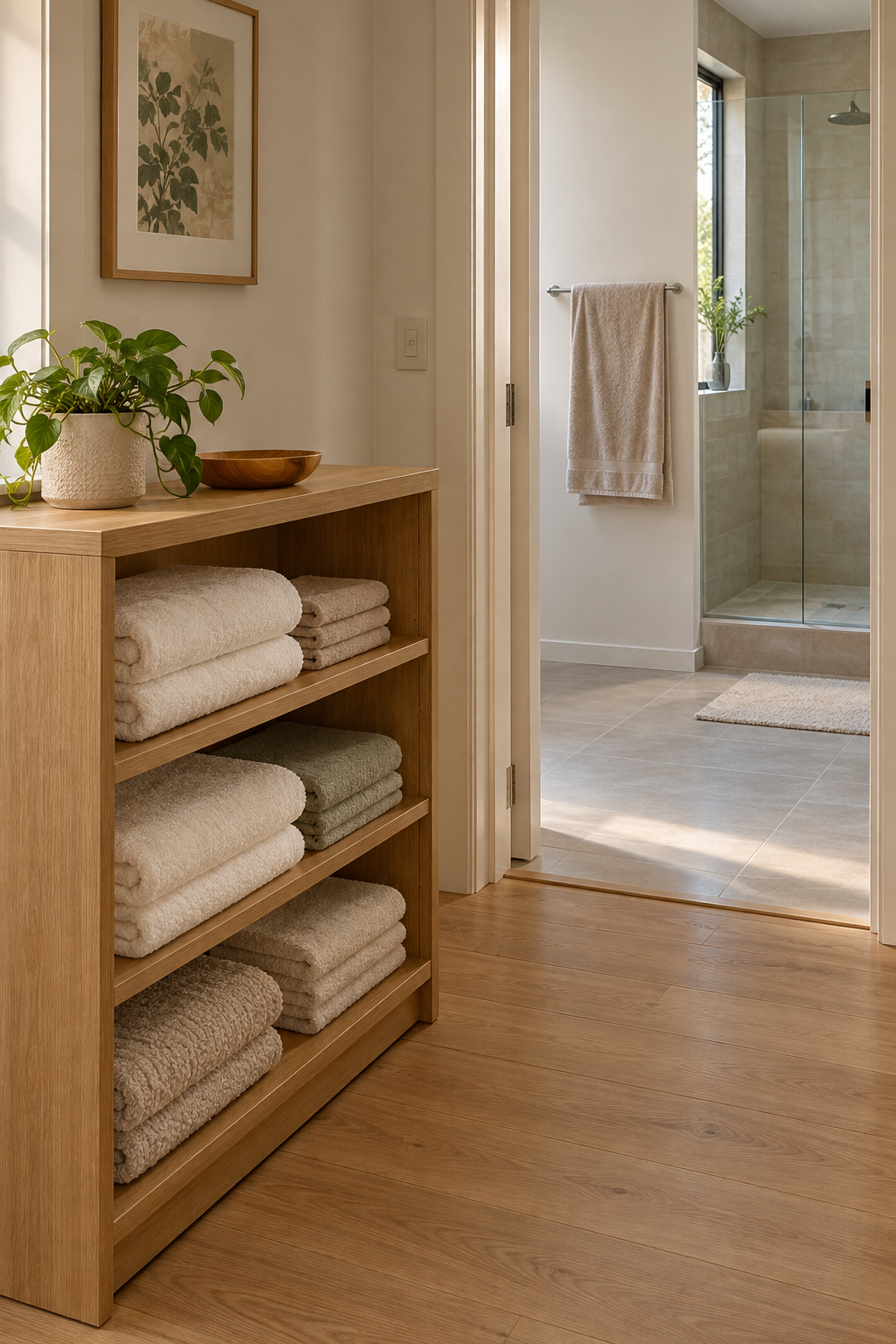
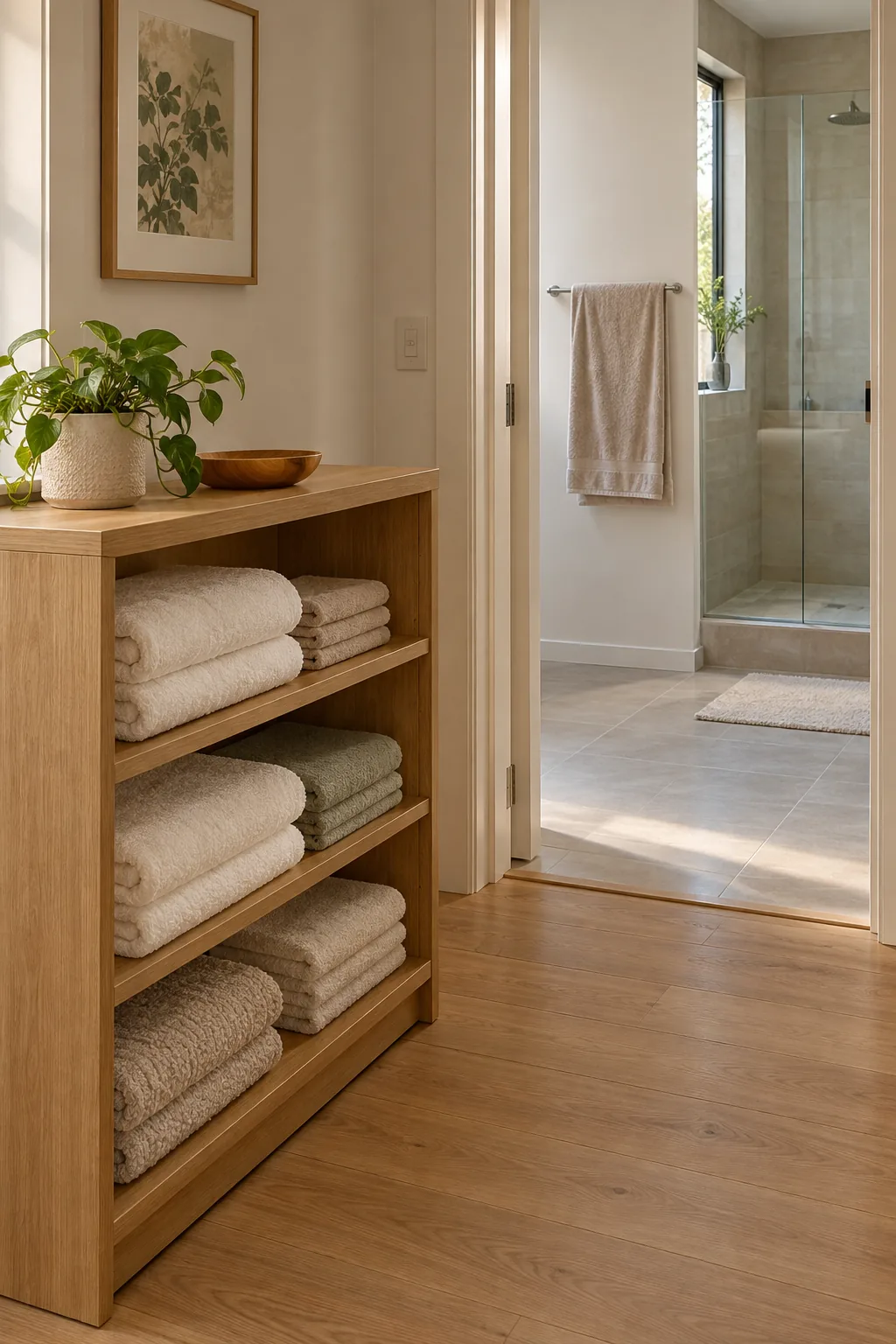
The first concept positions the clean towel reserve outside the bathroom doorway. Shallow shelves hold manageable folded groups, while a used towel has its own rail inside the bathroom. The useful separation is visible: clean reserve outside, post-use drying inside. In your room, keep the hall route clear with the cabinet closed and when a towel is removed. Choose a stable suitable unit and follow its securing and shelf-load instructions. A narrow hallway is not the place to add furniture that requires everybody to squeeze past it.
Group towel sizes according to how they are used. Bath towels can have one shelf, hand towels another and suitable guest linens a separate small group. A modest stack is easier to remove from than a tightly packed tower. Fold to the shelf depth rather than copying a special decorative fold that makes the towel difficult to use. Leave some hand space above and beside each group. If the stack falls whenever a towel is removed, make it lower or give the category more appropriate width.
Arrangement B: clean towels in the dressing area
The second concept places two shallow baskets beneath a low bench in a dry bedroom corner. A fresh towel on top is ready to carry to the bathroom. This arrangement can suit a home with no hall cabinet or an ensuite whose dressing area offers better textile storage. The bench is only a storage surface unless its product instructions also approve sitting on it. Keep baskets within the furniture footprint and leave the walking route clear. Used towels should not return to the clean reserve basket.
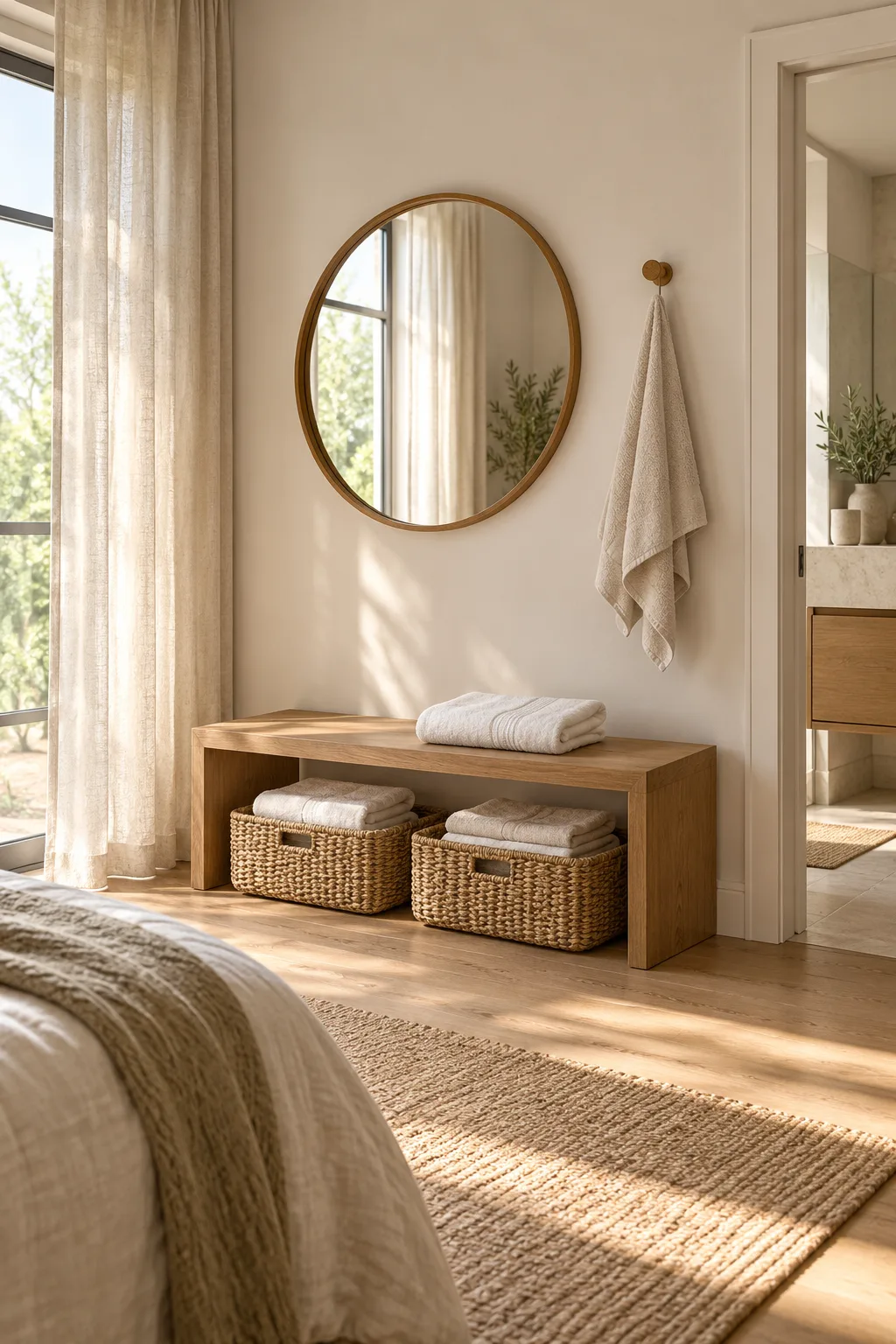
One basket can hold the everyday reserve and another a suitable small guest group, or they can separate household members if that makes retrieval easier. Avoid adding extra categories merely to fill matching containers. A lightweight shallow basket is easier to lift than a large deep one full of heavy towels. Keep the material suitable for the room and contents. Check beneath and behind the basket during cleaning so that a tidy front does not conceal dust or moisture in the storage position.
Set the reserve from the laundry routine
There is no universal towel number for every household. Consider how many people use the bathroom, how often towels are laundered, how long the normal drying process takes and whether guest towels are genuinely needed. The reserve should cover the household's routine without occupying storage needed for other essential items. If clean towels repeatedly run out, the problem may be a slow wash-and-return step rather than a need for a much larger stock. If many towels remain untouched, reduce the reserve or assign them another appropriate use.
Make the active set easy to distinguish from the reserve. A clean towel taken for immediate use can go to the appropriate bathroom position; the stored reserve stays outside the wet area. Follow towel care labels when laundering and dry completely before folding into clean storage. Do not store a nearly dry towel hoping a closed basket will finish the task. When washing is delayed, keep used towels in an appropriate laundry arrangement separate from clean supplies. The clean-storage location should not become the overflow hamper.
A realistic wash, fold and return sequence
- Identify the appropriate drying position for a towel after use, separate from clean reserve storage.
- Send used towels through the household laundry routine according to their care labels.
- Make sure they are fully dry before folding or returning them.
- Fold each category to its actual shelf or basket size without overpacking.
- Return the clean set promptly, checking that the next user can find a fresh towel.
Choose a rotation habit that does not demand careful counting. For example, put freshly laundered towels behind the existing clean group if the shelf is easily accessible, or alternate which modest stack is used first. This is an organising suggestion rather than a hygiene rule. Avoid digging through deep layers to reach an older towel; arrange the shelf so the rotation is simple. If you are unsure about textile care, follow the garment-care information or seek appropriate guidance for the actual material.
Make a shared reserve understandable
In a shared home, tell everyone where clean towels live and what the categories mean. A clear written label can be useful in the real cupboard, even though the original scene images intentionally contain none. Ask people to take from the intended group and put used towels in the agreed drying or laundry place. If a guest uses the home occasionally, leave a modest fresh set in a convenient dry position before their arrival rather than maintaining a large permanent display beside the shower.
Keep towel storage distinct from household cleaning supplies. A cabinet that happens to fit both is not automatically suitable for combining them. Follow product storage directions and avoid scents, liquids or chemicals that could spill onto textiles. The clean reserve does not need decorative fragrance to prove freshness. If it smells musty, inspect the towels and storage conditions instead of concealing the problem. The best visual sign of a useful reserve is clear categories and easy retrieval, not numerous matching bottles on top.
Choose folding and containers for ordinary use
A flat fold works well on shallow shelves because the next towel is easy to see. A roll can be convenient in some baskets, but it should not force tight compression or make the towel hard to unfold. Test the actual sizes rather than assuming bath sheets behave like smaller hand towels. Keep each group modest and leave room to grip it. If the shelf is tall, do not stack to its ceiling simply because the towels physically fit; a lower stack is less likely to collapse during retrieval.
Use covered storage when dust is a repeated problem and the textile conditions remain suitable. Open baskets can be easier for children or adults who find cupboard doors cumbersome, but suit them to the household's needs. CPSC's furniture-safety guidance stresses following manufacturer securing instructions. Do not substitute a decorative tall unrestrained unit for a small accessible towel group. Approved fixings and an appropriate location come before storage style, especially where children may climb.
Budget priorities and a monthly review
Begin by moving the clean reserve to a suitable existing dry shelf and reducing the pile to useful categories. A new furniture purchase may be unnecessary. If you need a basket, measure its internal size and removal space, then buy one before a full set. Spend on suitability and stability rather than towel-display accessories. Replace damaged or unsuitable storage when needed, but do not enlarge the reserve just because a larger cabinet has unused shelves.
Common mistakes include mixing used and clean towels, storing textiles slightly damp, letting baskets protrude into a walkway and placing a decorative stack in the shower splash area. Another is folding in a way that fits the photograph but not the shelf. At a monthly review, check which towels remain unused, whether clean ones arrive back promptly and whether the storage location stays dry and easy to clean. The room should offer a predictable clean-to-use-to-laundry route, with storage that supports each stage.
Planning references reviewed on 28 October 2026
- EPA: A Brief Guide to Mold, Moisture and Your Home: Moisture prevention and reporting leaks; storage furniture cannot repair damp conditions.
- CPSC: Anchor It!: Follow manufacturer instructions for securing furniture and televisions against tip-over.
Practical questions
Can clean towels live outside the bathroom?
Yes, a suitable dry hallway or bedroom location can be practical. Keep retrieval easy, reserve towels fully dry and used towels on their separate appropriate drying or laundry route.
How many spare towels should I keep?
Base the reserve on household use, laundry frequency, drying time and genuine guest needs. There is no universal number. A smaller reliable wash-and-return routine can work better than a large poorly managed pile.
Are rolled towels better than folded towels?
Choose what fits the actual shelf or basket and remains easy to retrieve. Rolling is not a universal improvement; shallow folded groups often give a clearer view, particularly for larger towels.
Keep the useful part.
Keep one visual reminder of this guide. The illustration suggests a direction; the practical steps and fit checks above help you adapt it to your own room.