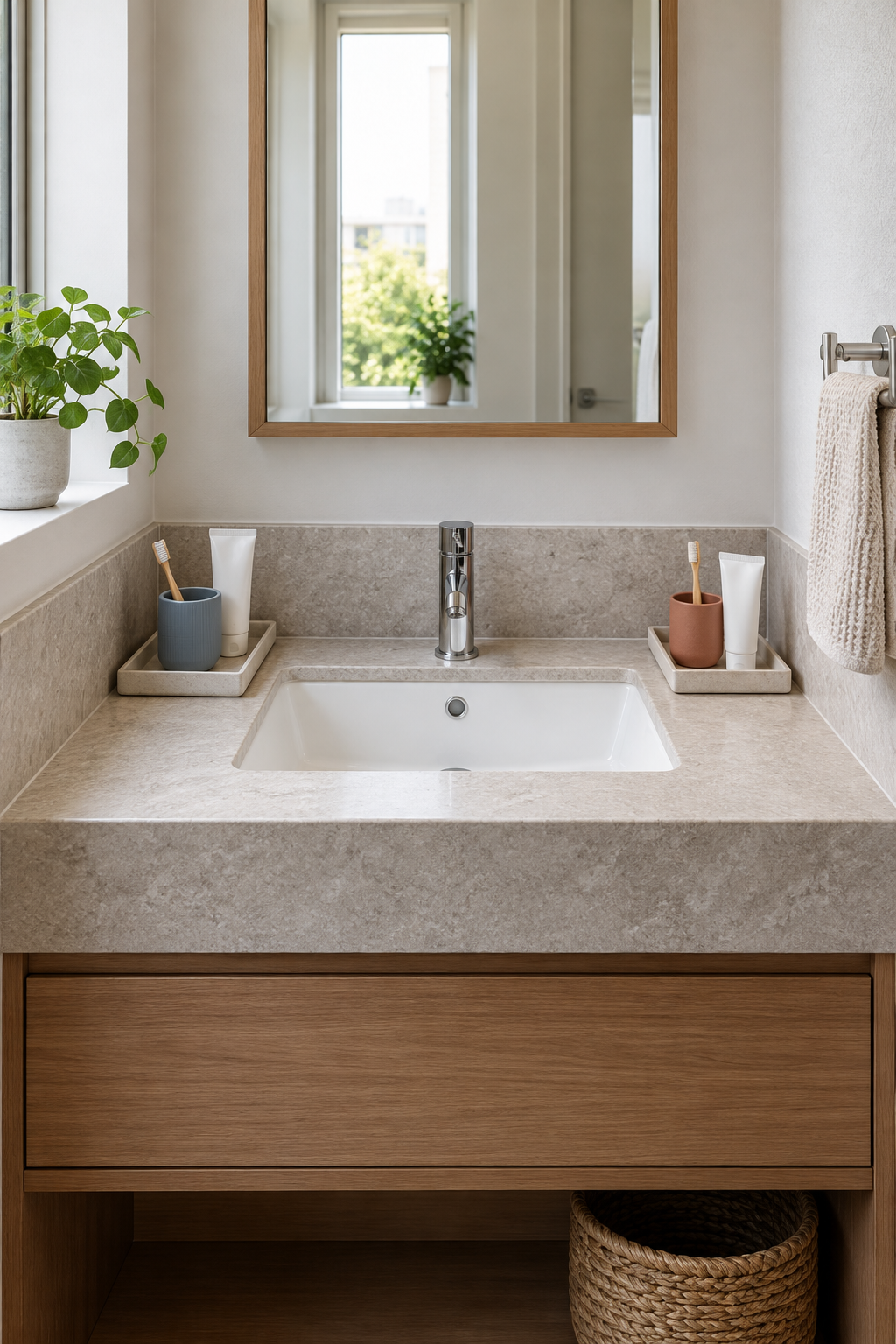
Direct answer: Give each person a modest daily kit and keep the basin, tap and main splash area clear. Use either separated washable trays on a wide-enough counter or portable caddies stored away from the sink, then agree who returns items and wipes the surface after use.
The advice starts with the existing room, product instructions and a practical household routine. The images are original AI-assisted concepts for planning, not photographs of completed projects or technical installation drawings.
Design the counter around the next person's turn
A shared bathroom counter has to work for more than the person who last used it. The aim is to leave the basin available, daily items recognisable and cleaning straightforward. Start with the moments that cause friction: one person's products spreading into another's area, a brush left beside the tap, or spare supplies crowding the rim. These are workflow problems as much as storage problems. A larger organiser can make them worse if it occupies the surface that everybody needs.
Observe a normal morning and evening without changing everything at once. Write down which items actually need the bathroom and which can live in a dressing area or another appropriate place. Keep only the daily essentials in the active kit; backstock, occasional grooming tools and unsuitable storage items can leave the counter. Let each person choose the contents of their kit within an agreed space. A shared system lasts longer when everybody understands it than when one person constantly rearranges the others' possessions.
Keep the middle shared
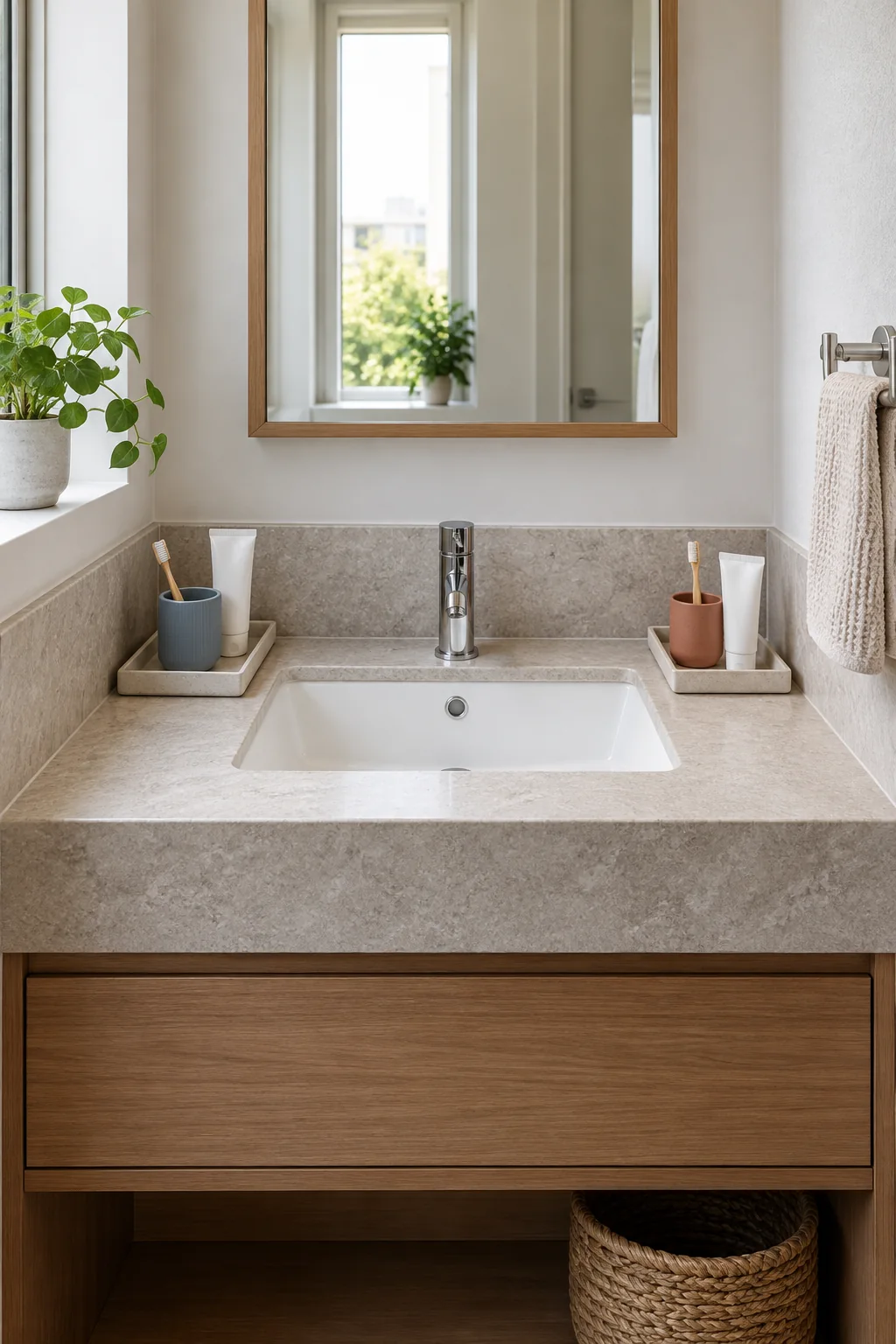
Why this arrangement is useful
Small side kits make personal items recognisable without dividing the whole counter.
Try the idea in your room
- Measure the dry flat areas beside the basin and test modest tray footprints.
- Choose only the daily items for each kit.
- Lift trays when cleaning and return items after use.
Choose between stay-put trays and carried caddies
Measure the flat dry counter area on either side of the basin. Include tap movement, the place a hand reaches for a towel and the surface needed for wiping. A tray that fits beside the basin may still catch constant splashes or block a soap dispenser. Test an existing small plate or container footprint before buying a tray. If there is no useful dry area, portable kits are often the better answer. The basin rim should not become a platform for several tall bottles.
| Bathroom condition | Arrangement to try | Tradeoff |
|---|---|---|
| Wide counter with two usable side areas | One modest washable daily tray per person | Each tray still needs lifting for cleaning |
| Pedestal sink or narrow rim | Portable personal caddies stored elsewhere | The kit must be returned after each use |
| Several people sharing one sink | Small kits plus agreed off-counter positions | Not every person's kit can remain beside the basin |
| Persistent splash or moisture problem | Reduce exposed storage and address the cause | An organiser cannot fix a leak or damp room |
Arrangement A: separate daily trays with a clear middle
The first concept uses two small trays, one on each side, while the basin and tap remain unobstructed. Distinct cups help identify whose daily items belong where without covering the counter in labels or dividers. In your home, ordinary labels can be useful if colours are not enough. The key feature is the generous clear middle. Avoid choosing trays so wide that their edges touch the basin or make it difficult to wipe between them and the splashback.
Limit each tray to the items used during the typical visit. Keep containers closed according to their instructions and do not mix personal grooming tools simply to make the display symmetrical. A small kit may be sufficient even when the person owns a larger collection. Store the rest in an appropriate drawer or dressing area. Choose a tray that can be cleaned using methods suitable for its material, and check the cupboard or counter instructions before adding a mat that may trap moisture beneath it.
Arrangement B: portable kits beside a mostly empty sink
The second concept keeps the pedestal sink clear and gives personal caddies defined homes on a separate narrow shelf. The active kit comes to the task, then returns to its dry storage position. This arrangement suits a counter with very little flat space or a household with more people than counter zones. The shelf must not obstruct the doorway, toilet access or cleaning route. A stable suitable unit and appropriate securing instructions matter more than matching the bathroom's colour palette.
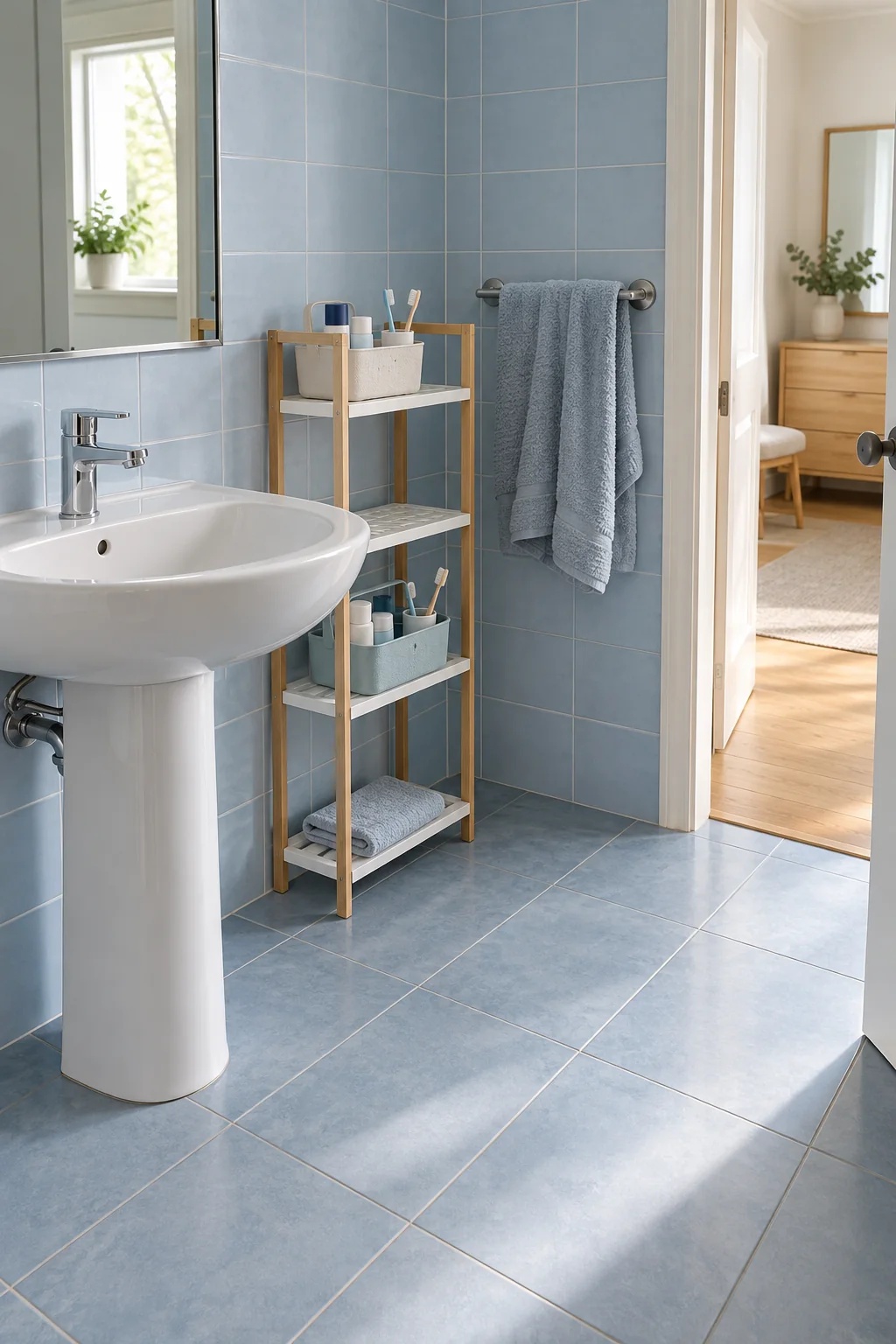
Choose caddies that are light enough to carry with their actual contents and easy to place without spilling. Avoid tall top-heavy bottle groups in a small shallow basket. Leave space around the handle and give each kit a single recognisable position. A caddy that can be picked up with one hand is useful; one requiring a lid, several clasps and a shuffle of other containers can discourage returning it. If the kit repeatedly stays on the sink, simplify the return step or move its home closer.
Agree a reset that can happen after ordinary use
The daily reset should leave the next person a usable sink. Return personal items, remove loose hair or packaging appropriately and wipe splashes using a method suitable for the surface. Keep a suitable clean cloth available in a defined place, and put used damp cloths into their proper drying or laundry routine. Avoid making a counter routine depend on a hidden collection of cleaning products. It should be easy to explain in a sentence and simple enough to perform during a rushed morning.
Decide who handles the deeper scheduled clean separately. Daily tidying and product cleaning are different tasks; do not promise that a quick wipe disinfects the room. Follow chosen cleaning-product labels and surface instructions. EPA's household-product guidance stresses original labelled containers and not mixing incompatible leftovers. Keep chemicals in appropriate storage with the household's access needs considered. Do not decant them into attractive bathroom jars beside toothpaste to simplify the display.
A small experiment before a full reorganisation
- Clear the counter once and identify the flat usable area around the working basin.
- Ask each person to choose a modest daily kit and move occasional items to appropriate storage.
- Test tray footprints or portable caddy positions with containers already available.
- Agree the return and splash-wiping step, plus a separate deeper-clean responsibility.
- Review the arrangement after a week at the busiest time of day.
Assess the experiment by ordinary behaviour. Is the basin easier to use? Can someone lift their kit without moving another person's items? Is the counter quicker to wipe? These questions are more useful than whether every container matches. If the routine creates repeated arguments over space, make the active kits smaller or store them off the counter. Assigning every centimetre permanently can be less flexible than sharing one clear surface and using carried kits.
Keep backstock from becoming daily clutter
A new tube does not need to stand beside the one already in use. Give suitable spare supplies one off-counter location and check it before buying more. Keep packaging where it carries important product information and follow the storage instructions. Separate categories that do not belong in this moisture-prone room. This guide does not advise storing medicines in a vanity or changing any product's original container; use the directions that apply to what your household owns.
FDA cosmetic shelf-life guidance notes that bathroom moisture can make it easier for bacteria and fungi to grow. Keep cosmetics closed, follow their storage and disposal directions, and move products that need drier storage out of the room rather than treating the tray as protection.
Use a simple restocking signal. When the active supply runs low, check the spare location and replace it when needed. A shared note can help prevent three people buying the same product. Personal kits can remain separate even when a few household supplies are shared. Do not make a common soap or towel position difficult to reach just to preserve symmetrical trays. Put shared items in a mutually convenient place that does not crowd the working basin.
Protect the clear counter from moisture and powered tools
Keep powered grooming equipment away from the wet basin and use it only according to its safety instructions. This layout is not a method for finding a safe outlet distance or installing bathroom electrics. Store cooled tools appropriately elsewhere when the room cannot support their use. Inspect under trays rather than assuming a neat top means a dry counter. EPA's moisture advice explains that recurring dampness needs its source addressed; report rental leaks rather than covering the evidence with an organiser.
A frequently damp tray may need a different position or fewer exposed items. Keep used towels on an appropriate drying arrangement separate from clean kit storage. Avoid stuffing a damp cloth underneath a spare-products basket because the surface looks tidier that way. If the bathroom never dries between uses, review the room's ventilation and moisture situation with the appropriate building party. More shelves will not correct unsuitable conditions, and a musty storage basket is a reason to investigate rather than add fragrance.
Spend on the one friction point that remains
Try no-purchase changes first: reduce active items, give each kit a position and clear the middle. Then buy one properly sized washable tray or portable caddy only if the experiment shows a need. An existing shallow box may work for dry storage outside the splash area, while a bathroom tray needs material suited to its conditions. Avoid buying a large set before the household has agreed the routine. A small successful arrangement can grow cautiously; an elaborate unused one creates another shared chore.
Common mistakes include allocating daily space to every product owned, letting spare tubes become permanent counter residents and using a tray that cannot be lifted comfortably. Other failures are expecting one person to maintain everybody's kit and turning the reset into a long cleaning session. At a regular household check-in, ask what is repeatedly left outside its zone. Simplify that return path. A shared bathroom counter works when ordinary use restores it for the next person without requiring constant supervision.
Planning references reviewed on 26 October 2026
- EPA: Household Hazardous Waste: Original labelled chemical containers, label instructions, incompatible leftovers and local disposal.
- EPA: A Brief Guide to Mold, Moisture and Your Home: Moisture prevention, bathroom ventilation and reporting leaks; organisers cannot repair damp conditions.
- FDA: Shelf Life and Expiration Dating of Cosmetics: Bathroom moisture can affect cosmetic storage; follow product storage and disposal directions.
Practical questions
How many items should each person's counter tray hold?
Use the smallest daily kit that supports their normal visit. There is no universal item count; the tray must leave the basin, tap and wiping area usable. Keep occasional products and suitable backstock elsewhere.
What if a pedestal sink has no dry side space?
Use portable personal caddies stored in a suitable off-sink position. Bring the kit to the task and return it afterward instead of balancing several products on the basin rim.
Does a quick counter reset replace bathroom cleaning?
No. Returning items and wiping splashes keeps the space usable, while deeper cleaning follows the surface and product instructions. Agree those responsibilities separately and keep cleaning chemicals appropriately stored.
Keep the useful part.
Keep one visual reminder of this guide. The illustration suggests a direction; the practical steps and fit checks above help you adapt it to your own room.