A small linen cupboard can look full while hiding the items you need most. Tall towel stacks collapse when a lower one is removed, fitted sheets separate from their pillowcases and deep shelves keep an unseen second row. The useful improvement is easier retrieval and return, not fitting the largest possible volume behind the door.
This guide uses two original concepts: shallow reachable shelves with complete sets, and a wider cupboard with supported pull-out trays. The arrangements are planning examples rather than product instructions. Start from your actual linen, the cupboard's intended use and its condition. Organizing cannot fix a damp cupboard or make unsuitable storage safe.
Check that the cupboard is suitable for textiles
Look for moisture, leaks, unusual smells or condensation before putting linen back. Check whether the cupboard contains heating equipment, pipes requiring access or ventilation that must remain open. Do not fill a services cupboard with textiles just because it has shelves. Keep the required equipment access and separation specified for the actual installation.
EPA's moisture guidance explains that controlling moisture and drying items are essential; cleaning without correcting a water problem can allow mold to return. Apply that principle by storing fully dry linen and addressing a damp source rather than adding fragrance or tightly packing containers. Seek appropriate help for the actual water or mold problem instead of treating an organizer as a cure.
Dry complete linen on reachable shelves
Why this arrangement is useful
Visible modest groups can leave and return without dismantling the cupboard.
Try the idea in your room
- Check the cupboard is dry and suitable for textiles.
- Measure a normal towel and one complete sheet set.
- Group regular items at reachable heights with space for easy return.
Inventory by usable set, not by loose piece
Bring together the linens you actually use: bed sizes, pillow quantities, towel preferences and occasional guest items. Identify incomplete sets and items that no longer fit your beds. Separate pieces needing repair or laundering. Do not return everything simply because it was already in the cupboard; decide what the household needs to keep here.
Count complete sets for each bed and the routine between washing, drying and putting them back. Some homes need more spares because drying takes longer; others have little guest use. There is no universal number of sets that fits every household. Use the actual laundry rhythm to decide the cupboard's working quantity, and store infrequent bulky items elsewhere only if that location is suitable.
Measure folded bundles and door openings
Fold one normal towel and one full sheet set using a method you can repeat. Measure their width, depth and height. Compare them with the clear shelf opening, including hinges and door stops. A basket may fit inside the cupboard but not pass through the opening while full. Test it with the items inside before buying several matching containers.
Measure shelf depth and notice whether a back row disappears. Try storing one reachable row first. On a deep shelf, a suitable removable tray can bring a group forward, but its load and movement must fit the shelf. Do not create an improvised slide from a heavy box that can fall when pulled beyond support.
Choose storage by the retrieval action
| Method | Useful for | Watch for |
|---|---|---|
| Modest horizontal stack | Folded bath towels | Whether a lower towel can be removed without collapse |
| Complete-set pouch | Matching sheets and pillowcases | Bundle size and fully dry contents |
| Supported pull-out tray | A deep cupboard with appropriate hardware | Tray loading, runners and door clearance |
| Breathable large bag | Occasional dry light bedding | Whether it can be lifted and returned without climbing |
Containers should make the retrieval easier. A row of opaque boxes with no clear system can hide mismatched linen as effectively as a deep shelf. Use a simple household distinction for bed size or use, and keep it consistent. If you use labels, make them understandable to everyone returning laundry rather than relying on decorative wording.
Arrangement: shallow shelves with complete sets
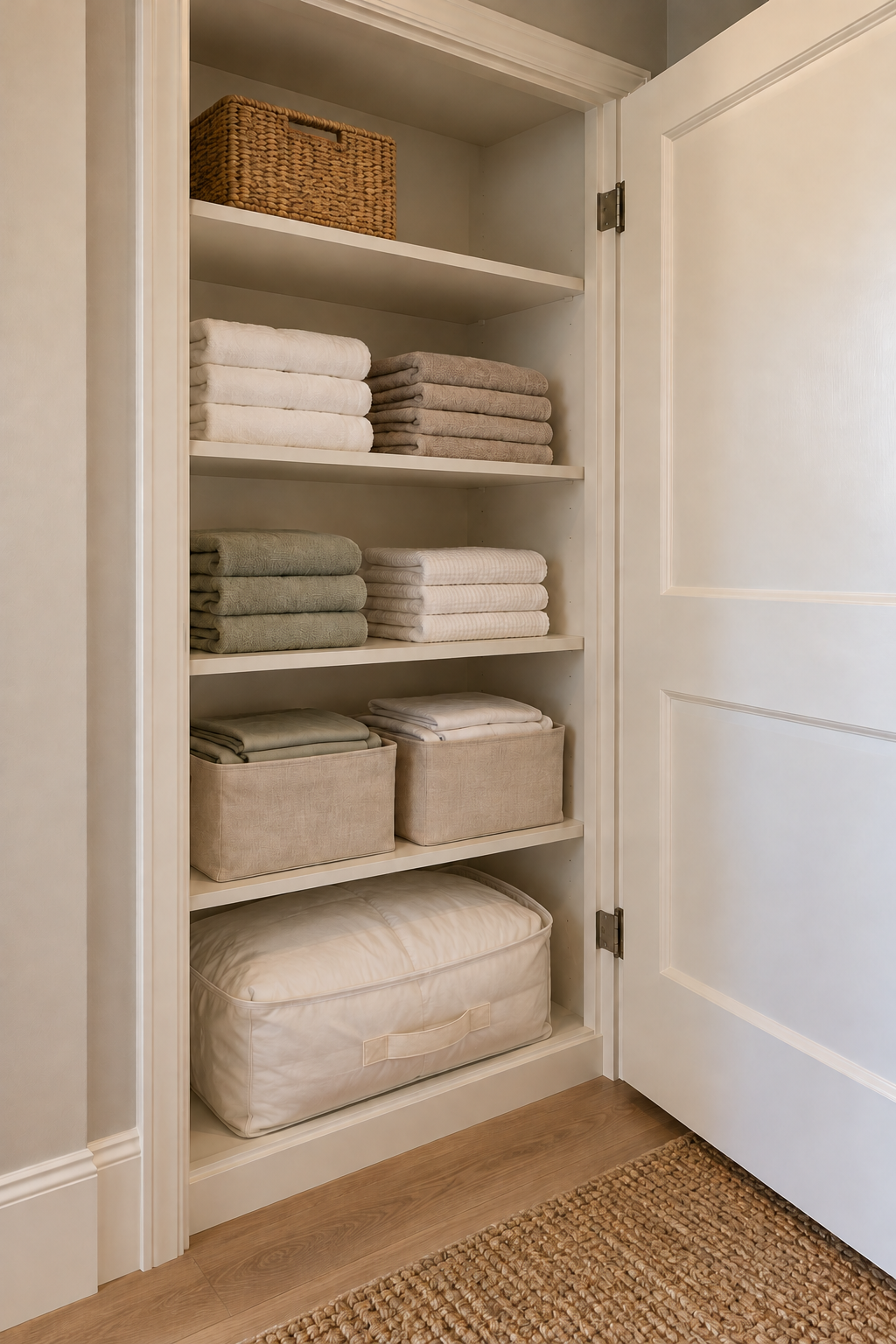
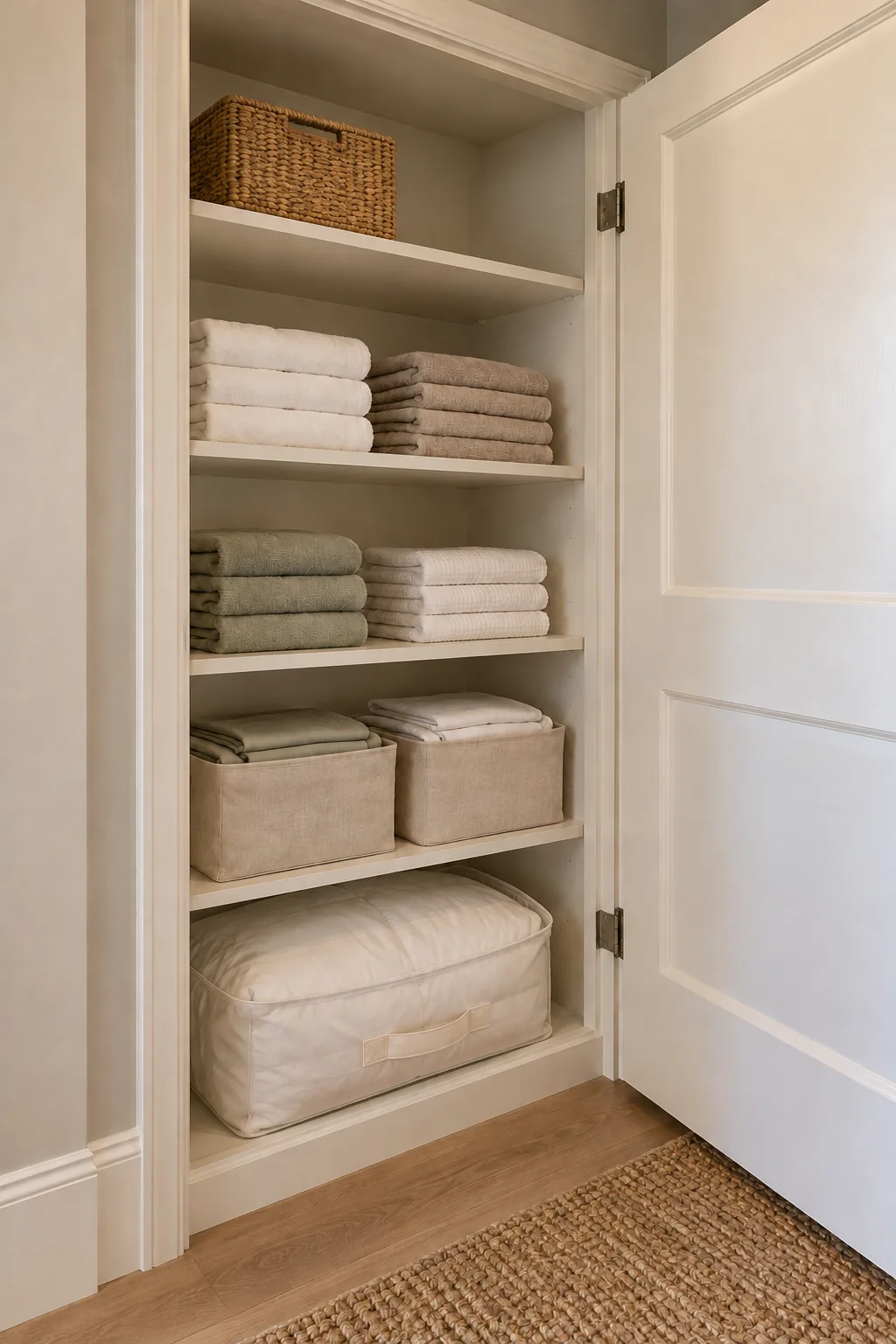
The first concept keeps regular towels on middle shelves, complete sheet sets together below them and a spare light duvet in a lower bag. Stacks are modest and visible from the front. The upper shelf holds infrequent storage rather than daily towels. No plant, cleaning chemical or damp item shares the linen space.
- Put the most frequently used linen at the heights your household can reach comfortably.
- Keep each usable bed set together in a suitable pouch or folded bundle, with its contents fully dry.
- Limit each stack to what can be removed and returned easily without disturbing neighbouring items.
Reserve a little space around the bundles so hands can grip them. Do not fill every shelf gap merely to increase capacity. If towels are squeezed against the top shelf, they are difficult to replace after laundry. Adjust shelf positions only where the actual cupboard system permits it, using its intended supports and loading information.
Arrangement: supported trays in a wider cupboard
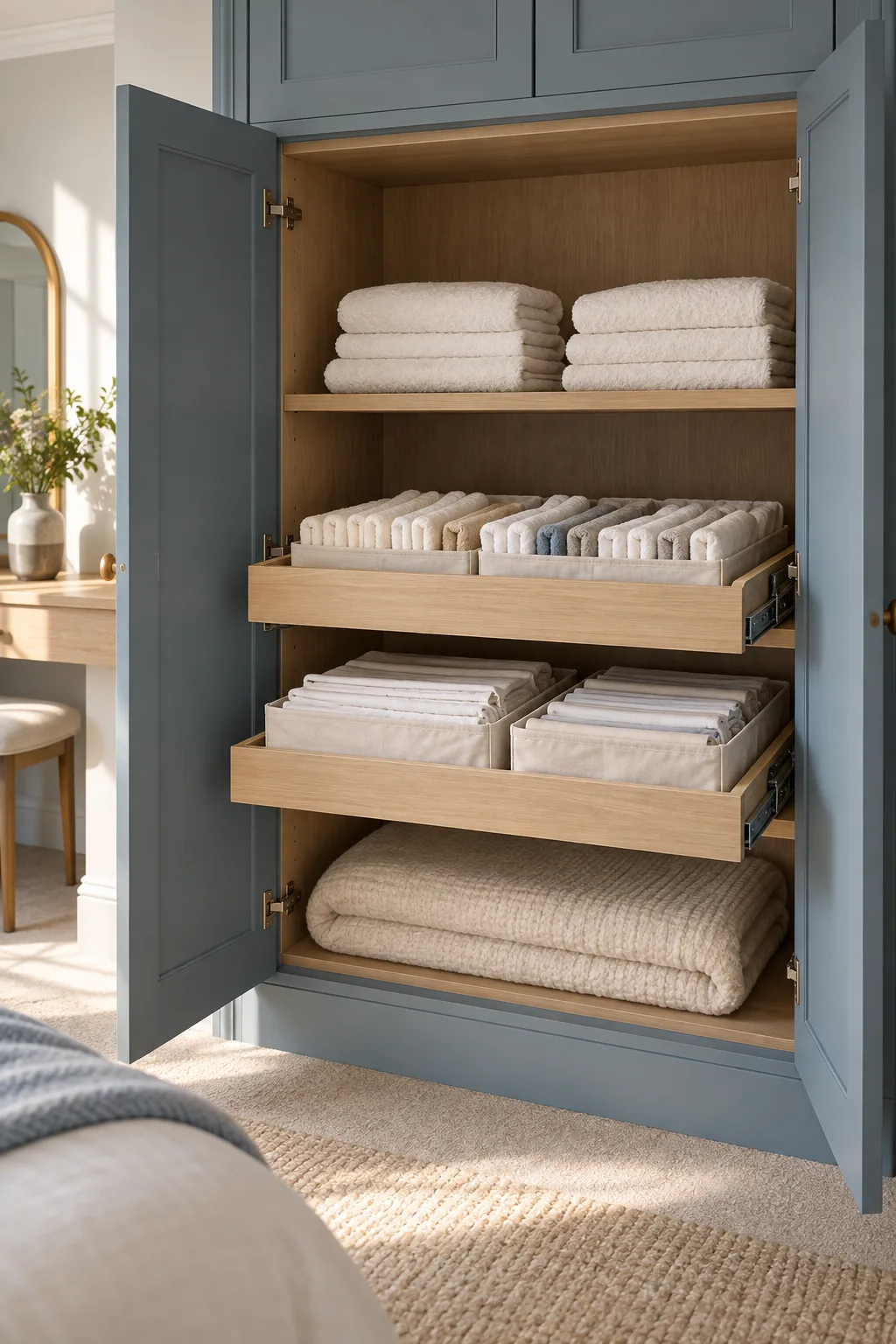
The second concept uses two shallow pull-out trays on proper runners, one for smaller towels and one for complete sheet bundles. A top shelf holds modest bath-towel stacks, with a larger folded blanket below. The trays turn a deeper space into visible groups without requiring loose back-row rummaging.
- Choose a cupboard system or permitted tray installation with suitable support, loading and opening instructions.
- Measure the full tray movement with both doors open and check the room route while using it.
- Load only the linen the tray can hold appropriately, keeping heavy items and loose catches out of its movement.
Do not add drawer runners to fixed rental joinery without permission and competent installation. An ordinary basket can be a simpler solution if it is safe to lift and remains fully supported on the shelf. Pull-out convenience is useful only when the hardware and door geometry suit the actual cupboard.
Fold for the shelf you have
Use a folding method that matches shelf depth and retrieval. A long narrow fold can work on a shallow shelf; a wider bundle may use fewer layers in a deep space. Keep towel stacks aligned without pressing them into a rigid block. The test is whether someone can take the item they need and return it without refolding the whole shelf.
For sheet sets, choose a repeatable bundle or a suitable pouch large enough for all matching pieces. Avoid tightly wedging a thick fitted sheet into an undersized container. Keep distinct bed sizes separate so a quick bedding change does not begin with unfolding several sets. Any textile bag should hold dry contents; it is not a place to finish air-drying damp laundry.
Design the laundry return around available space
Return clean linen in the same groups that leave the cupboard. Put a sheet set together before storing it, and replace a towel within the intended stack rather than building a new pile on top of the containers. Move freshly returned items into the routine in a way that helps you use the older clean items, without creating an elaborate system the household will not follow.
If washed linen stays in a basket for days, check whether the cupboard has room to accept it. Too many retained spares can make the return harder than the washing. Remove unneeded items through an appropriate reuse or disposal route after checking their condition, and keep repaired or seasonal items clearly separate from daily linen.
Keep reach, support and securing practical
Daily items should not require standing on furniture. Place bulky or awkward bundles where they can be lifted within the user's abilities, and use a suitable step aid if needed according to its instructions. Do not climb shelves or pull on a door to reach the top. Keep children from using stored boxes as steps inside the cupboard.
If using a freestanding linen cabinet rather than a built-in cupboard, follow its required wall securing and assembly instructions. CPSC's Anchor It guidance emphasises following those instructions for tip-over prevention. A rental no-drill preference does not justify omitting required securing; choose another suitable storage solution if the installation cannot be completed appropriately.
Review the cupboard during an ordinary bedding change
Take a full set, change the bed and later return the clean replacements. Can you identify the correct size without opening every bundle? Can a towel be removed without moving a duvet? Does the door close freely with no fabric trapped at its edge? These actions show whether the system works better than a styled photograph.
Begin with rearranging and folding before buying containers. One properly sized tray may solve a deep shelf; many small baskets can waste the space between them. Keep the arrangement simple enough for other household members to use. A useful small linen cupboard is one where dry complete items leave and return easily, rather than one packed so tightly that it can only stay tidy when untouched.
Planning references reviewed on 23 October 2026
- EPA: Mold, moisture and your home: Moisture control, drying items and addressing water problems; no claim that an organizer solves damp.
- CPSC: Anchor It!: Furniture tip-over prevention and following manufacturer securing instructions.
- IKEA: IDANÄS cabinet, article 204.588.23: Specific example requiring its supplied safety fitting and wall-appropriate fixings; not approval to convert this cabinet to an office.
- UK government: Small-block fire safety guide: Electricity meter and service cupboards should remain free of residents’ belongings and combustible materials.
Practical questions
Should I roll every towel to save space?
Not necessarily. Compare rolled and folded towels on your actual shelf, then test retrieval and return. Rolling can work in a tray, while modest folded stacks may suit shelves. Choose the method that stays usable after ordinary laundry, not only in a photograph.
Can vacuum bags solve a damp linen cupboard?
No. Moisture needs its source addressed, and textiles must be appropriately dry before storage. Compression may suit some items only where their care instructions permit it, but it does not make a damp or unsuitable cupboard safe for linen.
How many sheet sets should I keep?
Use the number needed for your actual beds, laundry drying time and guest routine. There is no single correct quantity for every home. Keep complete usable sets together and reassess spares that block the return of clean daily linen.
Keep the useful part.
Keep one visual reminder of this guide. The illustration suggests a direction; the practical steps and fit checks above help you adapt it to your own room.