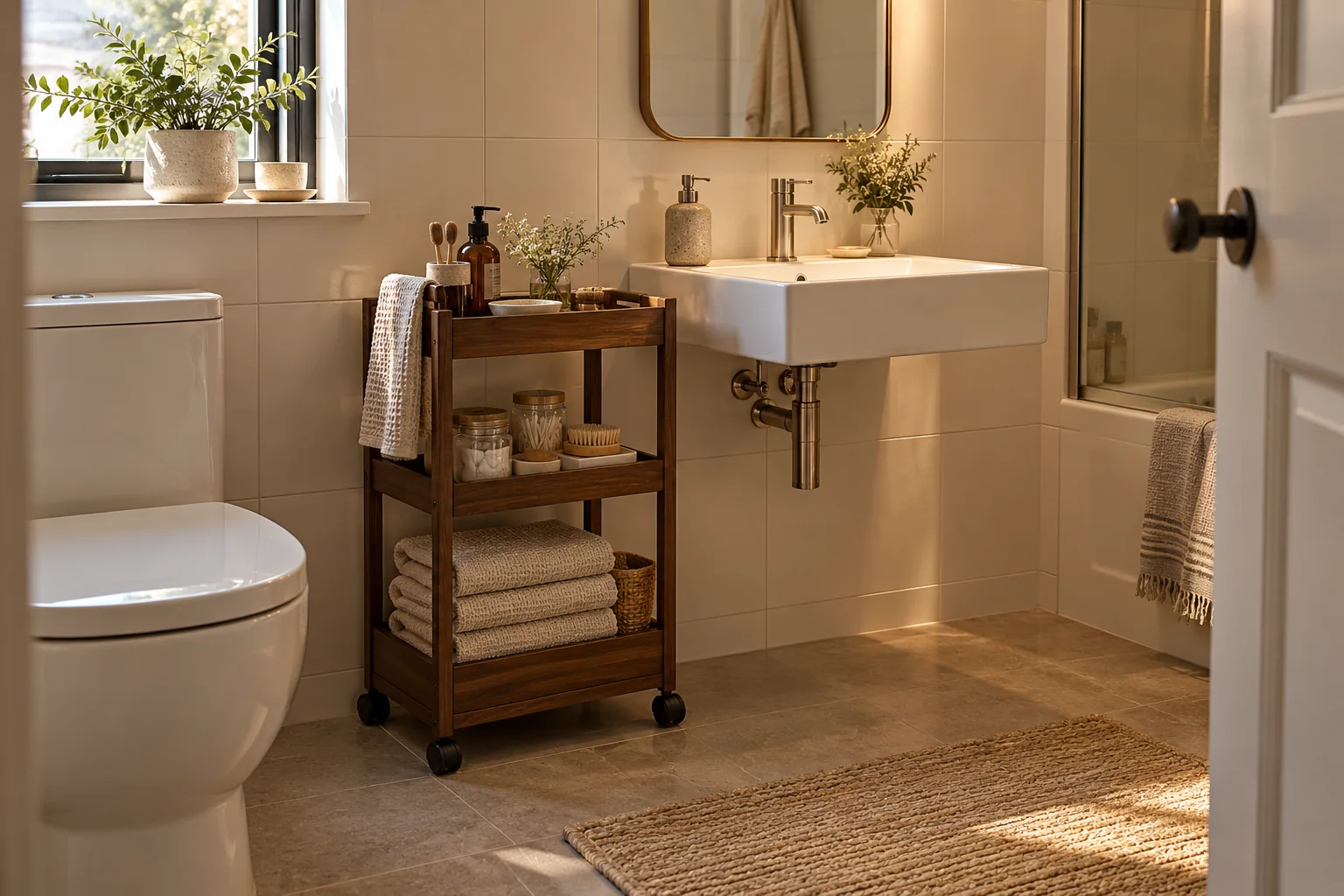
Start with an inventory, not another basket
A small bathroom often feels short of storage because daily toiletries, spare bottles, cleaning supplies and damp towels are competing for the same surface. Before choosing a new organiser, separate those jobs. The aim is to make the basin usable and the room easy to clean.
Work through one shelf or drawer at a time. Keep the products your household uses, group duplicates together and check labels for expiry or disposal instructions. Do not decant medicines or cleaning chemicals into decorative unlabelled containers. Keep those items in suitable storage according to their instructions and your household's needs.
Make three lists: daily use, occasional use and replacement stock. A spare bottle does not need the most convenient spot beside the tap. If another dry cupboard is available outside the bathroom, towels and unopened stock may be better there. Moving one category can free more useful space than adding a trolley.
Map the space you can actually use
Measure with the bathroom door, cabinet doors and shower screen in their open positions. Stand at the basin and reach for a towel. Sit and move as you normally do. Storage must fit these activities, not just the empty rectangle visible in a room photograph.
Record width, depth and height, plus obstructions such as pipes, skirting and a radiator. An under-basin cabinet needs a pipe opening that suits the actual plumbing. Avoid making storage dependent on moving or altering fittings in a rented room.
For a sample comparison, a clear 24 cm gap might accept a 20 cm trolley on paper. Its wheels, handles and movement can require more space than the shelf width. Read the complete product dimensions, check stability and test the route with a cardboard footprint before ordering. A numerical gap alone does not establish a suitable fit.
Compare the no-drill options
| Option | Useful for | Main check |
|---|---|---|
| Shallow tray | A small daily set beside the basin | Water can drain or be wiped away |
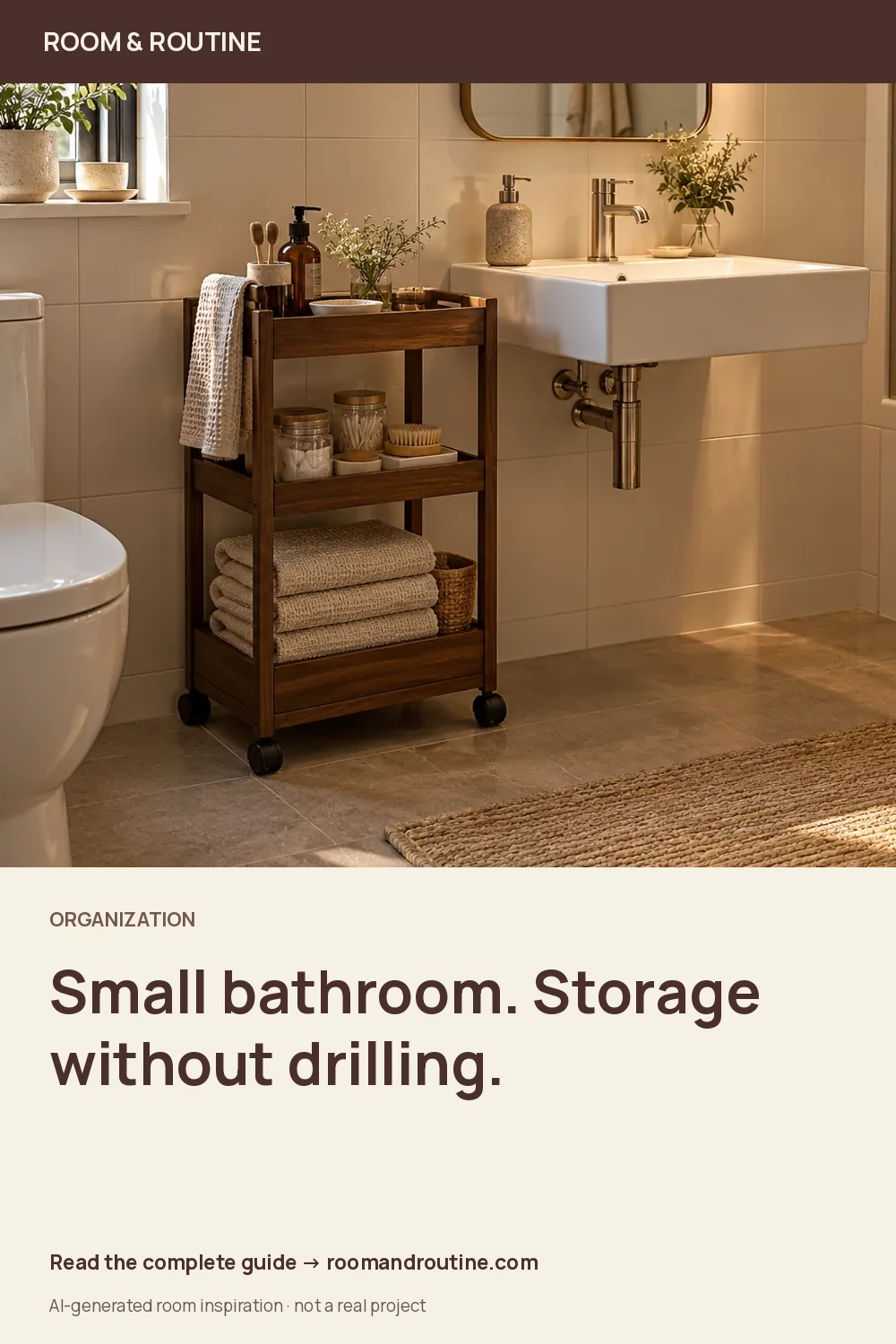
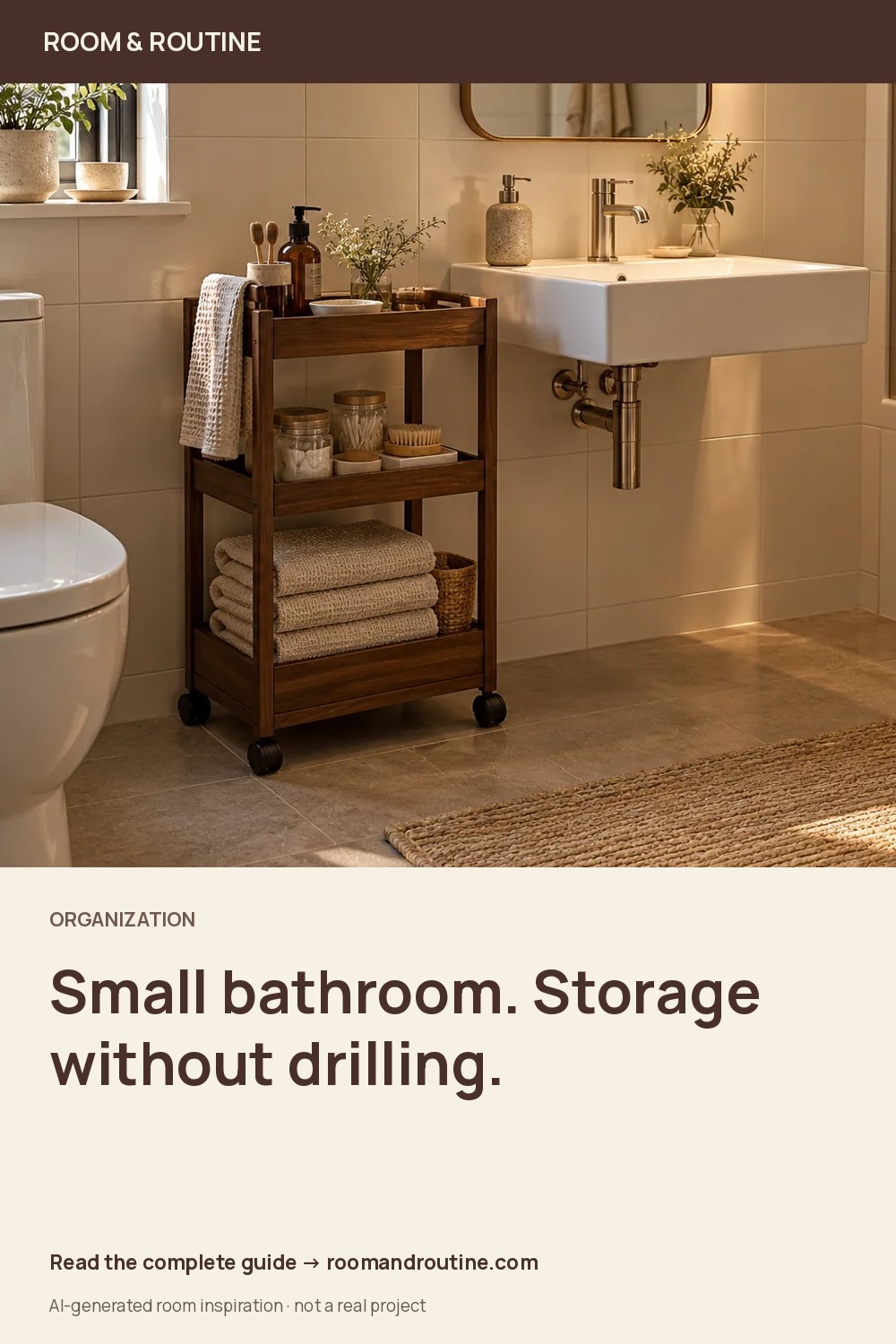
| Freestanding trolley | A narrow gap with movable storage | Stable position, brakes and cleaning access |
| Under-basin organiser | Existing cabinet space | Pipes, hinges and access to fittings |
| Over-door organiser | Light items on a suitable door | Door closes properly; hooks suit its thickness |
No-drill does not automatically mean suitable for a rental. Adhesive fixtures can mark paint, and tension systems depend on compatible surfaces and correct installation. Follow the manufacturer's load limits and removal guidance, and ask about restrictions where necessary. Do not skip a required anti-tip attachment to make a tall unit appear renter-friendly; choose a different, stable solution.
Prefer a material and finish intended for the conditions in your bathroom. A decorative wooden shelf is not necessarily suitable for repeated splashes. Keep ventilation openings, heaters and access to plumbing clear. The rental decorating guide offers more ways to make changes that can move with you.
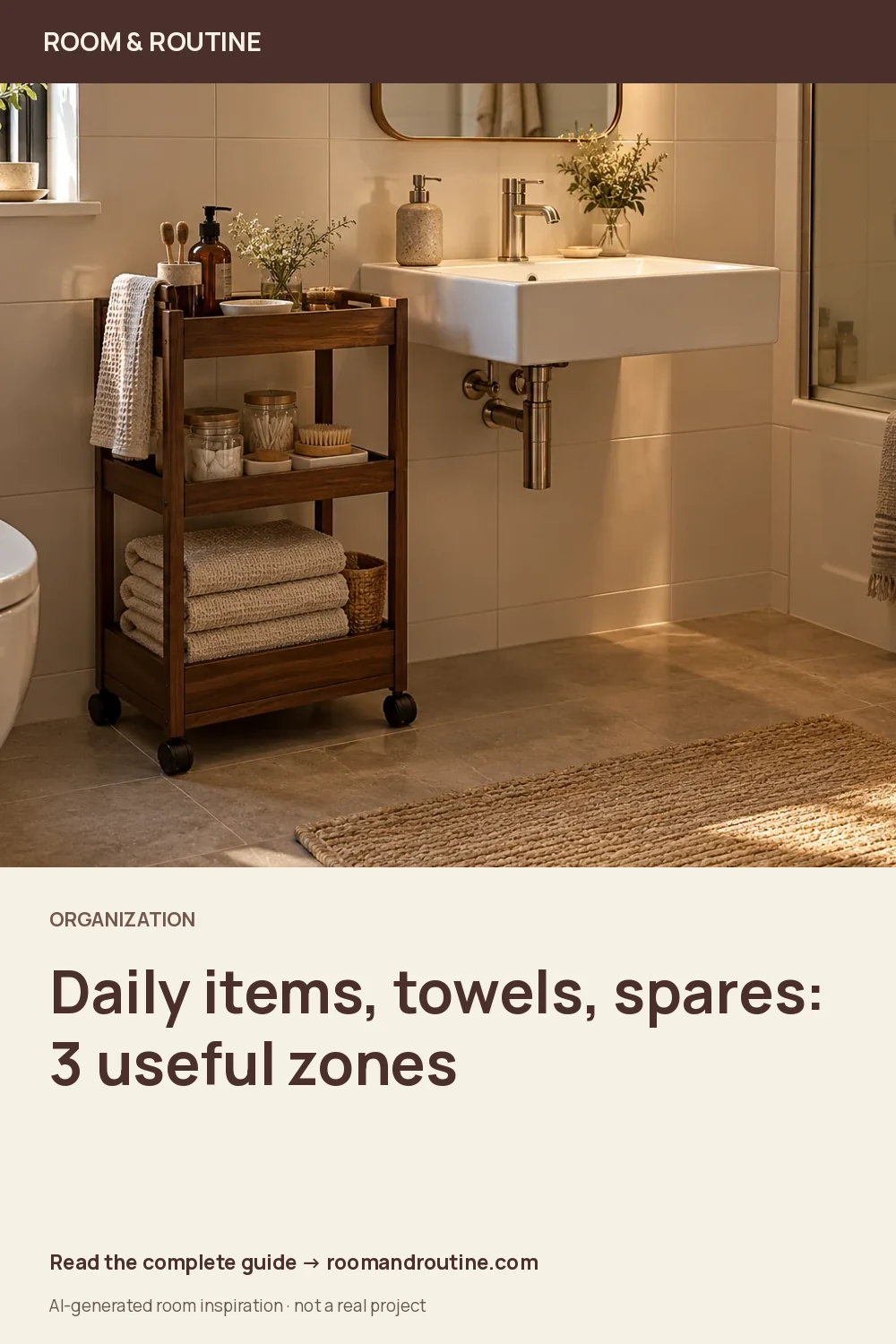
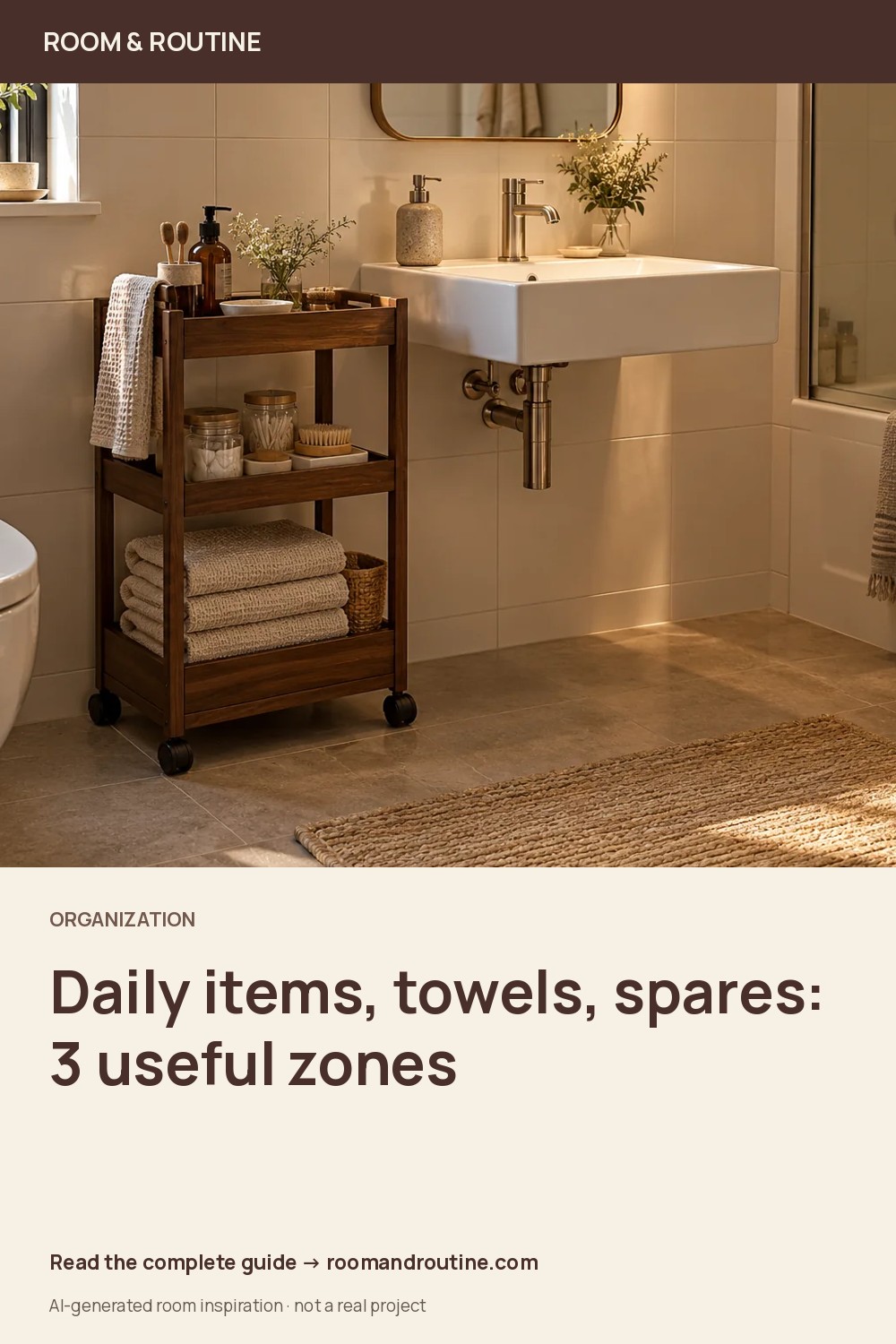
Give daily items, towels and spares separate homes
Keep the daily tray small enough to lift with one hand. Include only the products used regularly at that location. If two people have different routines, two compact trays can be easier to maintain than a large shared collection with no boundaries.
Give towels an actual drying position before planning their display. A folded stack looks tidy, but it cannot replace a place for the towel in use to dry. Store clean dry towels separately and avoid packing damp textiles into closed containers.
Place replacement stock in a labelled box or a defined cabinet section. Put the open product at the front and check the stock before shopping. The box's available space becomes the limit for that category rather than a reason to keep buying more matching boxes.
Keep cleaning easy to start
Try removing the daily tray and wiping the basin. If several individual bottles have to be moved first, edit the tray again. Choose storage with reachable corners and surfaces that can be cleaned using appropriate products.
Keep floor storage out of the splash area and make sure you can clean underneath or move it safely. A trolley is useful only if moving it does not pull towels, tip bottles or block the door. Put heavier suitable items low and avoid turning a narrow unit into a tall pile.
Run a short weekly reset
- Lift and clean the daily tray.
- Return stray items to their own category.
- Check towels are dry before storing them.
- Check replacement stock before making the shopping list.
- Remove one item that keeps crowding the basin.
Repeat the same arrangement for a week before adding storage. If the room still feels crowded, reduce the quantity kept there or move the occasional category elsewhere. The inventory-and-zone approach also works in a small kitchen, where useful access matters more than the number of organisers.
Keep the useful part.
Save the full guide to Pinterest or download a vertical graphic. Room imagery is illustrative and AI-generated, not a photographed result.