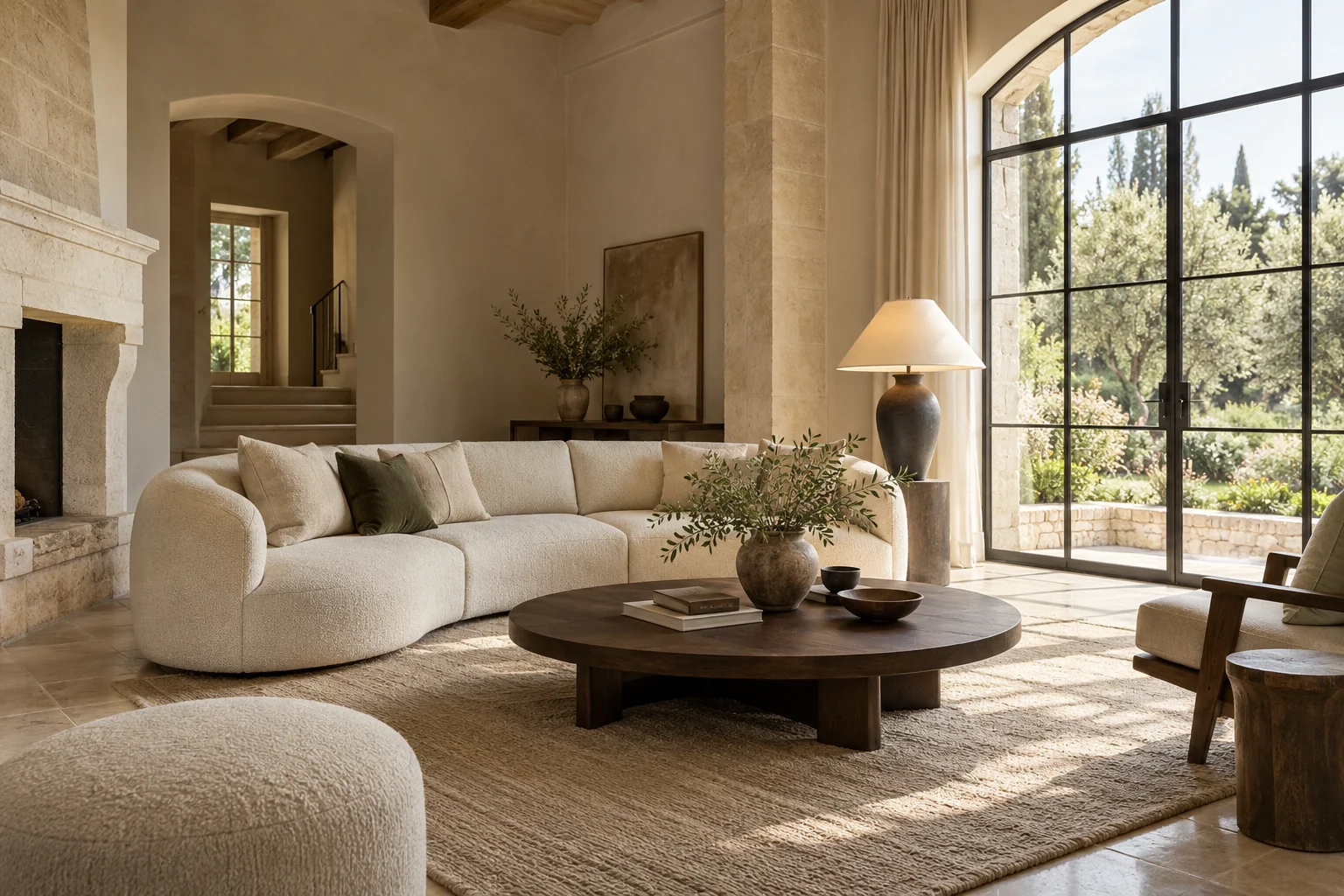
Choose what the rug needs to do
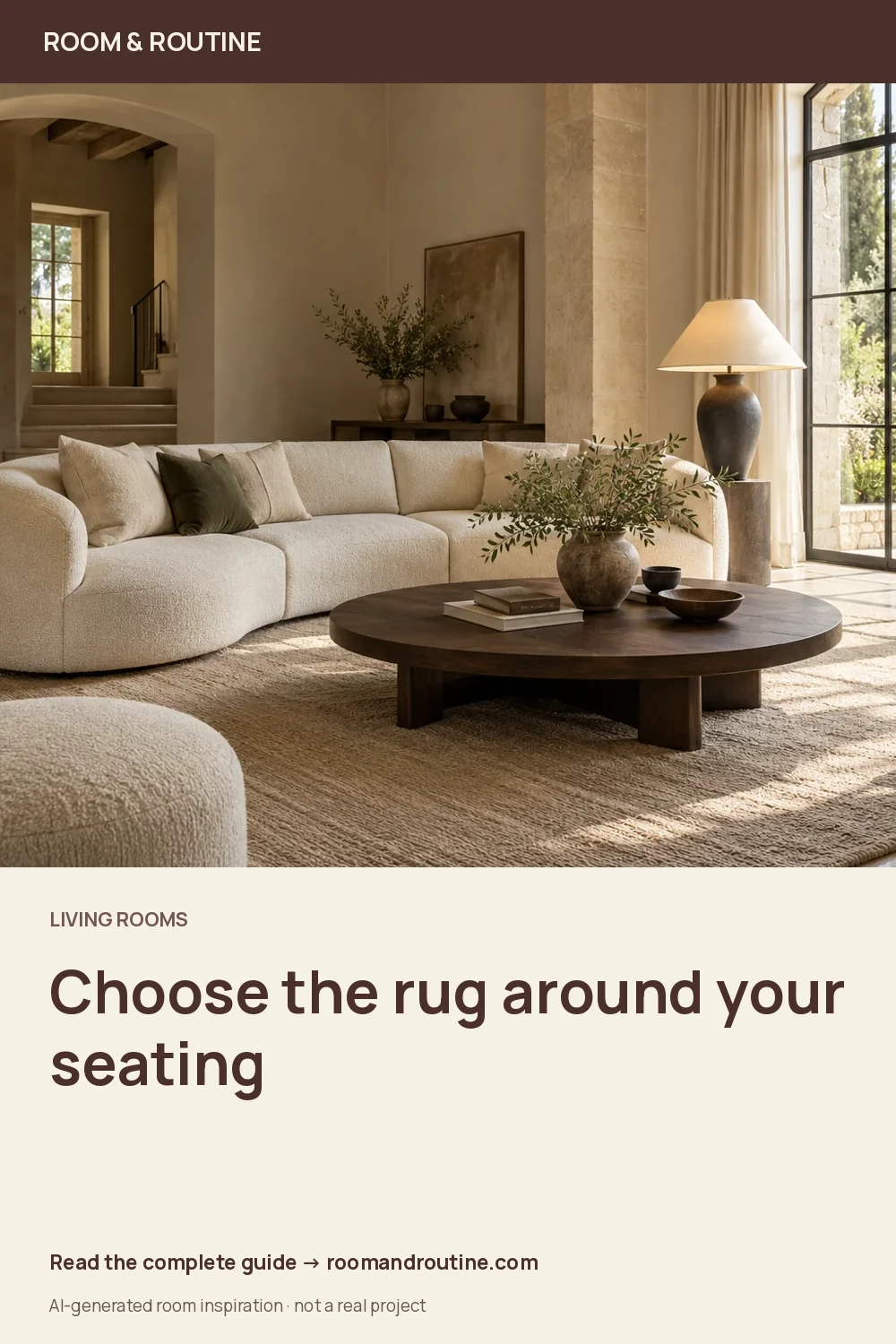
A living-room rug can connect separate seats, add softness underfoot or define a sitting area inside a larger room. Start with that job. Choosing a size from the room's total area alone can produce a rug that sits in the middle while the furniture feels unrelated to it.
Arrange the sofa and chairs first, or sketch their intended positions. Note the walking route, door movement and any floor vents. A rug belongs to that arrangement, but it should not create a new obstacle. If the seating plan is still uncertain, work through our small living-room layout guide before ordering.
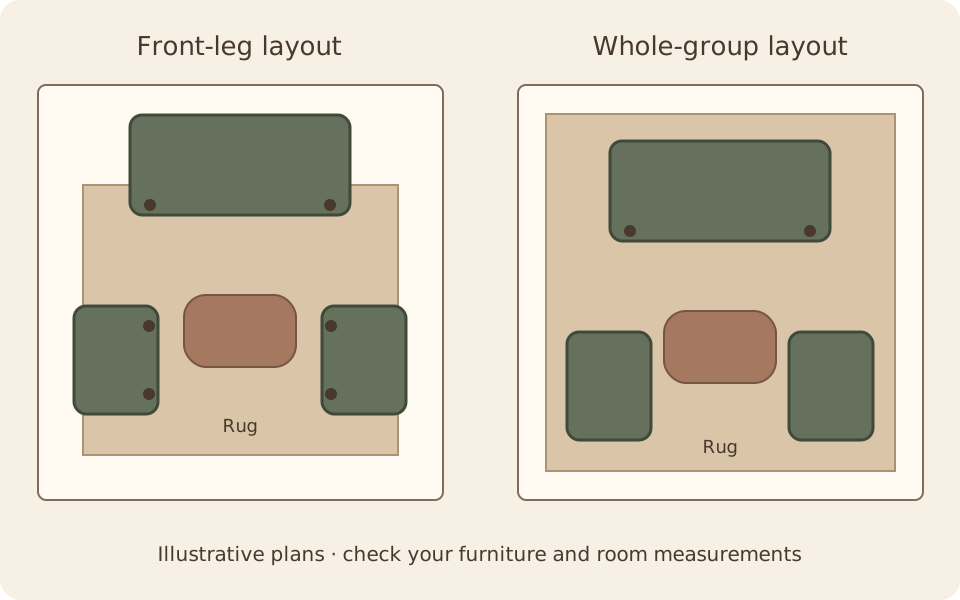
Compare front-leg and whole-group layouts
In a front-leg layout, the rug reaches beneath the front supports of the sofa and any chairs you want to connect. More floor remains visible behind the seats. This can work when a larger rug would extend into the main route or when the seating sits close to walls.
In a whole-group layout, all the seat supports sit on the rug. It gives the group a clear boundary but needs a larger rectangle. Check the back edges too: the rug should not buckle against skirting or sit partly under a door that cannot clear it.
A small rug under only the coffee table is another possible accent, but it may leave the seats visually disconnected. That is a choice to assess in your room rather than a rule that every rug must meet. Compare the layouts from the doorway and from a seated position.
Work through a measured example
Imagine a sofa 210 cm wide and a candidate rug 240 cm wide, centred on the sofa. The difference is 30 cm, leaving 15 cm on each side. That calculation tells you the side extension only. It says nothing about where a chair sits, how far the sofa legs overlap or whether the rug's depth reaches the rest of the group.
If your chair sits beyond the sofa's right side, measure the entire seating envelope. A wider rug might connect it better, but only if the available floor and route allow it. Do not buy the larger size simply because it sounds generous; test both candidates.
| Record | How to check it |
|---|---|
| Seating envelope | Outside width and depth of the group you want to connect |
| Candidate rug size | Actual listed width and length, including any sizing tolerance |
| Furniture support positions | Where each leg or base will meet the rug |
| Route and door edges | What crosses the boundary during everyday use |
Test the footprint before the purchase
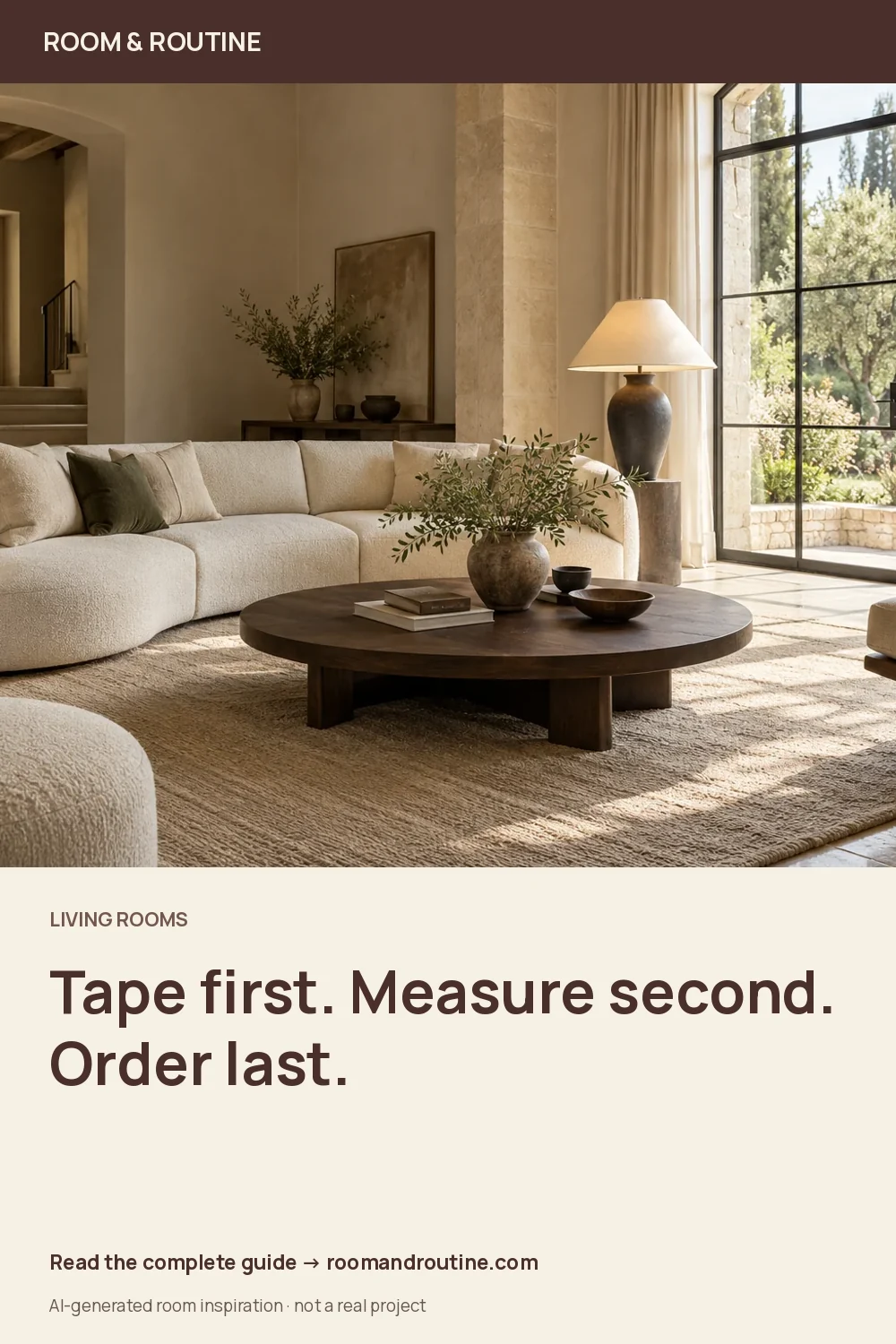
Use paper strips or removable markers compatible with the floor finish. Check removal in an inconspicuous place first. Mark a candidate rectangle and live with the outline through a normal evening: walk in, sit down, move the chair and open the door.
Look for an edge directly under a frequently moving chair leg or across a turning point in the route. Mark the second size in a different way, compare, then remove the markers. A cardboard or paper template can also show how a curved or irregular rug occupies the area.
For a saved comparison, add a rug zone in Layout Lab using the seller's dimensions. The drawing helps with placement; it cannot check a product's pile height, door clearance or resistance to slipping.
Choose for the way you use the room
Think about chair movement, pets, shoes, food and cleaning equipment. Compare care instructions before choosing a texture. A washable label may still come with machine-size, drying or temperature restrictions, and a delicate finish may need specialist cleaning.
Check whether the rug and any underlay suit the floor and any underfloor heating. Use the relevant manufacturer guidance. Doors need to clear the combined thickness, not just the visible pile. Edges should lie flat; a beautiful rug is not helpful if it repeatedly shifts into the route.
Choose colour after size and practical care. Pull one tone from the room's existing upholstery or wood, then check a sample in your light where possible. Our colour palette guide helps separate a useful room reference from an exact paint or textile match.
Check the order against your notes
- Confirm width and length in the same units as the room plan.
- Check the actual size variant selected in the basket.
- Read care, underlay and floor-compatibility guidance.
- Check delivery, return conditions and how the rug will be carried into the room.
- Keep the measurements and tested layout together.
Once it arrives, let the rug settle according to its instructions and check the edges before putting the whole room back. If the tested layout does not work with the real product, reassess it while the return option is still available.
Keep the useful part.
Save the full guide to Pinterest or download a vertical graphic. Room imagery is illustrative and AI-generated, not a photographed result.