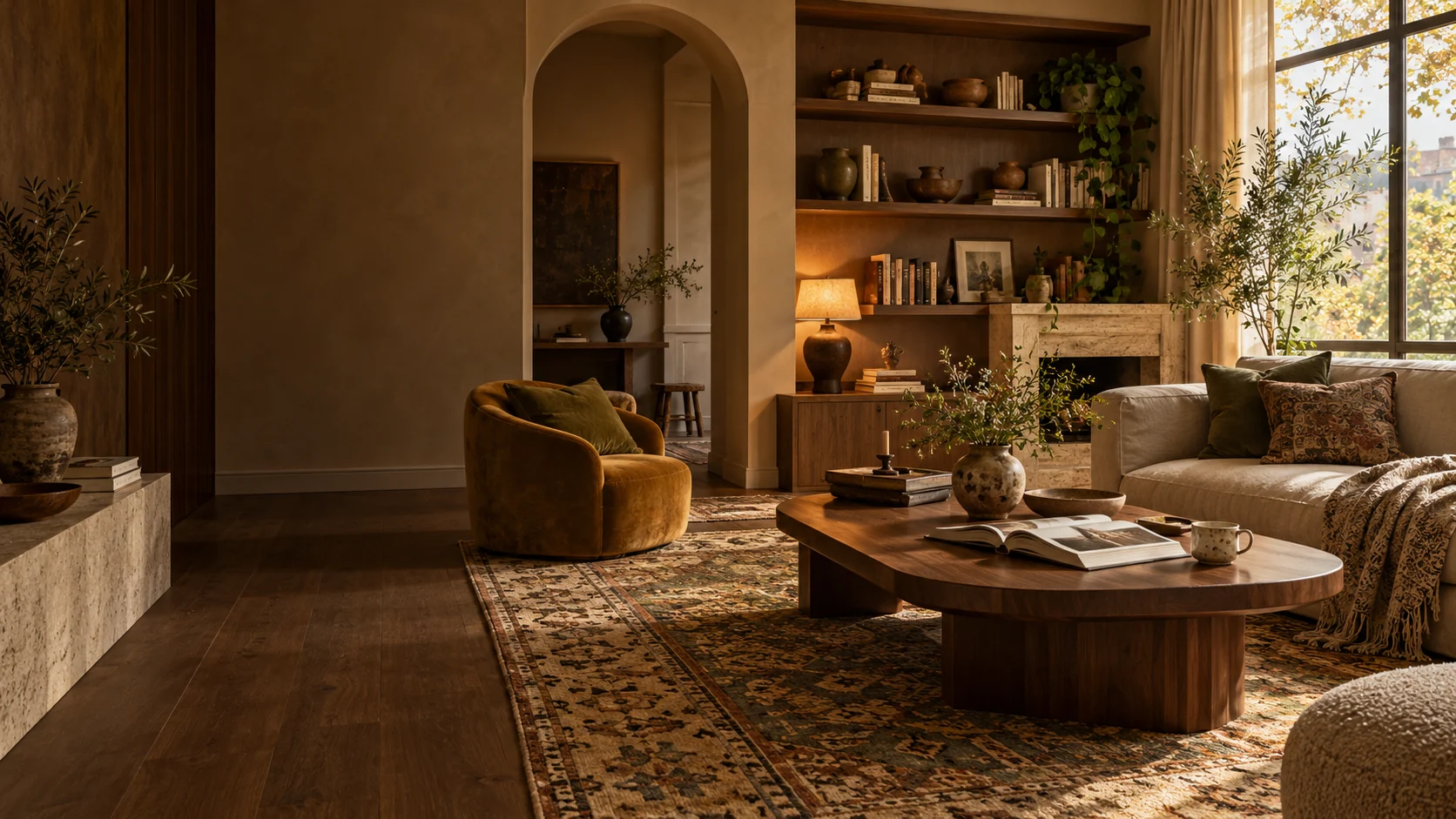
Begin with an ordinary evening
Before choosing a colour, think about the last ordinary evening you spent in your living room. Where did you sit? Where did your drink, book or phone land? Was the room comfortable for a conversation, or did everyone turn towards the same screen? These small moments tell you more about a useful room than a list of decorative trends.
Write down three things you want the room to do better. For example: somewhere comfortable to read, a clear route to the balcony, and a place for everyday clutter. Keep that list beside your measurements. It becomes a simple way to decide whether a change deserves your time or money.
Keep an anchor you already love
An existing sofa, a wood cabinet or a rug can give the room a starting point. Notice its colour, scale and shape. A dark wood cabinet may sit comfortably beside lighter textiles; a pale sofa may need a little warmth from a lamp, a rug or an earthy cushion. You do not need a room full of matching furniture.
If the anchor is staying, choose your first samples around it. Place fabric and colour references next to the actual piece in daylight and in the evening. A small sample viewed on a screen cannot tell you how a finish will look beside your furniture at home.
Test the layout before buying
Measure the room, the furniture and the openings you use. Sketch a few possible arrangements on paper, then test the useful parts with what you have. Try moving a lightweight side table or turning a chair before shifting the heaviest pieces. Keep a comfortable route through the room and check that doors and drawers can open.
For a possible new item, use tape or paper to mark its footprint. Walk around it during a normal day. Include the extra space a chair needs when someone sits down, and the route through which a larger item would be delivered. A footprint that fits on paper may still interrupt everyday movement.
Give the room more than one kind of light
Notice the places that need light for a particular task. A reading seat may need its own lamp, while the rest of the room can feel calmer with smaller pools of light. Try your existing lamps in different positions before choosing another. Look at glare from the sofa and reflections in a screen as well as how bright the room feels.
Choose a light for the job it will do. Check the fixture and bulb instructions together, and use suitable products. For any installed lighting or wiring changes, use a qualified professional. A room can become more welcoming through the placement of a movable lamp without a complete electrical project.
Let texture carry the colour story
A room with a small palette can feel rich through differences in texture. A familiar wood surface, a woven textile and a matte ceramic object each catch the light differently. Repeat one or two colours in useful places so the room feels connected without becoming a display of identical pieces.
Before buying several cushions, try a textile you own in the room. Fold a blanket over a seat, move a rug from another space, or remove a shiny object that feels distracting. These quick experiments can show whether you need a warmer colour, a softer surface or simply less visual clutter.
Make room for real-life storage
A lived-in living room needs a home for the things that arrive every day. Decide which items should stay close to a seat and which belong elsewhere. A small tray can gather reading glasses and a remote; a basket can hold a throw; a closed cabinet may suit less attractive everyday objects.
Measure the contents before buying a storage piece. A beautiful basket that cannot hold the items you need is another object to manage. Keep the things you use regularly easy to reach, and leave some clear space on surfaces rather than filling every shelf.
Spend in a useful order
An affordable refresh might begin with a no-buy layout change, then one improvement around a clear problem. A larger budget can follow the same order: establish the layout, choose the main furniture carefully, and develop the lighting and textiles around it. Decorative details come more easily once the room works.
Use budget envelopes as a planning tool, not a promise about retail prices. Compare actual local prices, delivery charges, dimensions and return terms. Keep part of the budget available for practical needs you discover along the way, rather than spending the whole amount on the first attractive arrangement.
Let the room settle
Use the room for a few ordinary evenings before making the final changes. Notice which seat you choose, whether a lamp is easy to reach, and whether a surface stays clear. A design that looks attractive in a photograph should also support the way you live.
Save a small record of your measurements, palette and reasons for the main decisions. Room Studio can help you collect a starting direction. Treat its mood images and footprint sketch as inspiration, then check every idea against your actual home. The room does not need to be finished all at once to feel better today.