Direct answer: Keep a small transition set accessible, then store clean fully dry seasonal garments by the way they need support. Use modest reachable containers, a simple inventory and separate hanging space for suitable coats rather than compressing every fabric into one large bag.
The advice starts with the existing space, item care and a real retrieval routine. The images are original AI-assisted concepts for planning, not photographs of completed projects or technical construction drawings.
Store the season, not an unresolved wardrobe
Seasonal storage is useful when it makes today's clothes easier to use and tomorrow's changeover easier to complete. It is less useful when it moves an undecided pile into a larger hidden pile. Before choosing bags or boxes, separate garments that belong to the coming season from pieces you no longer wear. Set aside repairs and alterations as a separate task with a realistic plan. A storage box should not become the place where damaged clothing waits indefinitely for a decision.
Keep a transition set outside the long-term containers. In many homes, the weather changes gradually and a single cardigan, light jacket or warm layer is still needed. Identify these pieces from your own routine rather than a fixed date. Then group the truly off-season clothing into useful sets: summer tops, winter knitwear, occasionwear or children's next-size clothing. Categories should tell you which box to retrieve. Colour sorting can look tidy but does not always help you find a garment when the weather changes overnight.
Keep seasonal categories shallow
Why this arrangement is useful
One box can be retrieved without unpacking every off-season garment.
Try the idea in your room
- Check chest lid operation, room access and product load instructions.
- Pack clean fully dry clothing in modest supported groups.
- Keep a short note of each category and its box position.
Choose the location before the container
A dry bedroom shelf, accessible storage chest or existing closet cubby is usually easier to check than a distant area. Inspect the place for signs of damp, dust and difficult access before committing clothing to it. Storage should not cover ventilation grilles or press furniture against a known moisture problem. EPA's moisture guidance explains that controlling the moisture source is central to preventing mould. A storage bag does not repair a damp room.
Measure the usable opening as well as the inside space. A box beneath a bed must slide past legs, bed-frame rails and nearby furniture. A shelf bag needs finger space above it so you can pull it out without scraping or tearing fabric. If you cannot lift a full container comfortably, split the category into two smaller units. Packing density is not the only efficiency measure: leaving some air and access space can save repeated unpacking, strained lifting and damage to garments.
| Garment situation | Starting storage choice | Tradeoff to check |
|---|---|---|
| Everyday folded cotton clothing | Small shallow box or suitable fabric bag | Keep complete categories together and avoid overfilling |
| Knitwear that may stretch on a hanger | Supported loose folding | Leave enough area to avoid forceful compression |
| Coat suitable for hanging | Appropriate broad hanger and garment cover | Rail capacity and garment-care guidance still matter |
| Fragile, valuable or historic textile | Specialist care and storage advice | Everyday household methods may be unsuitable |
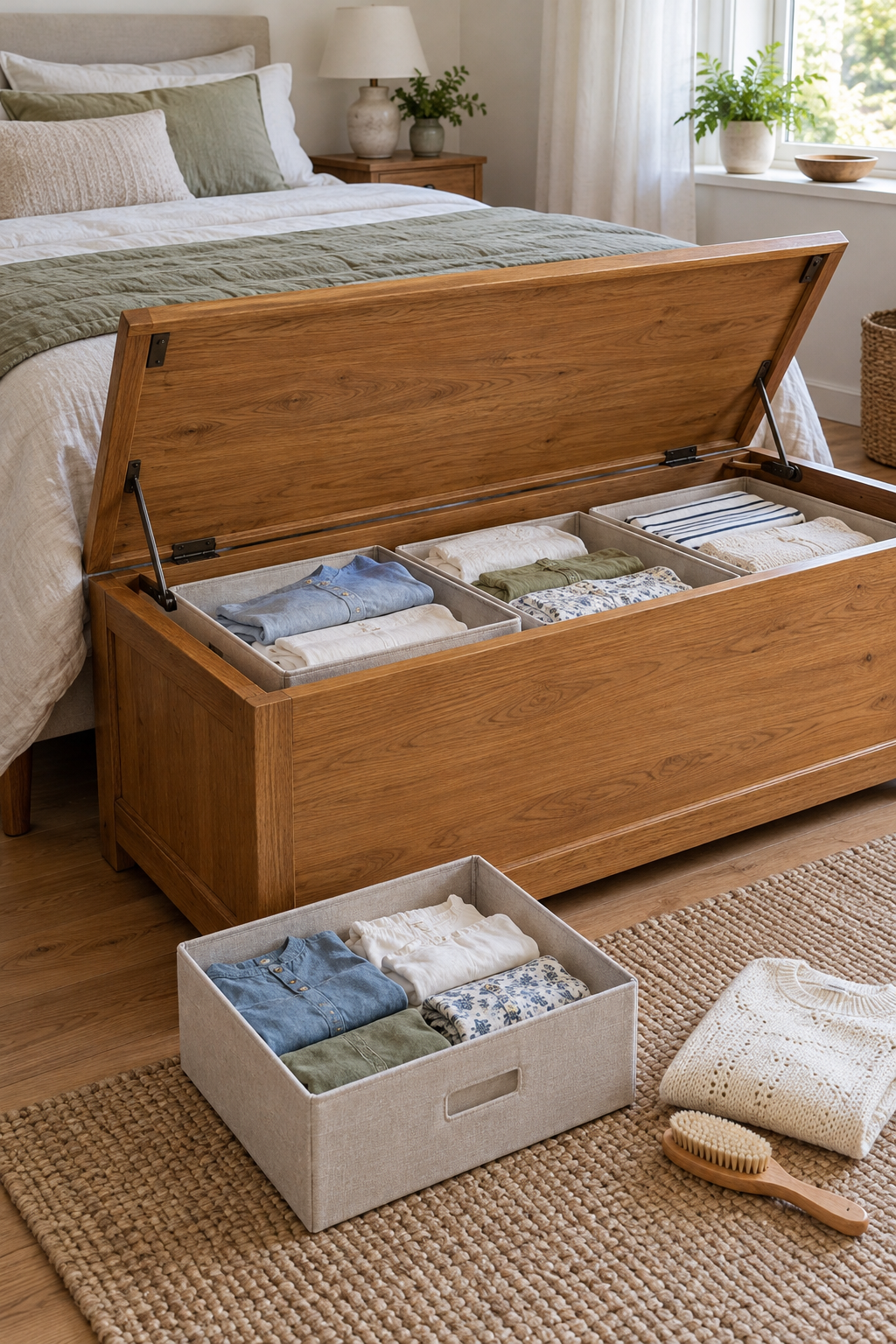
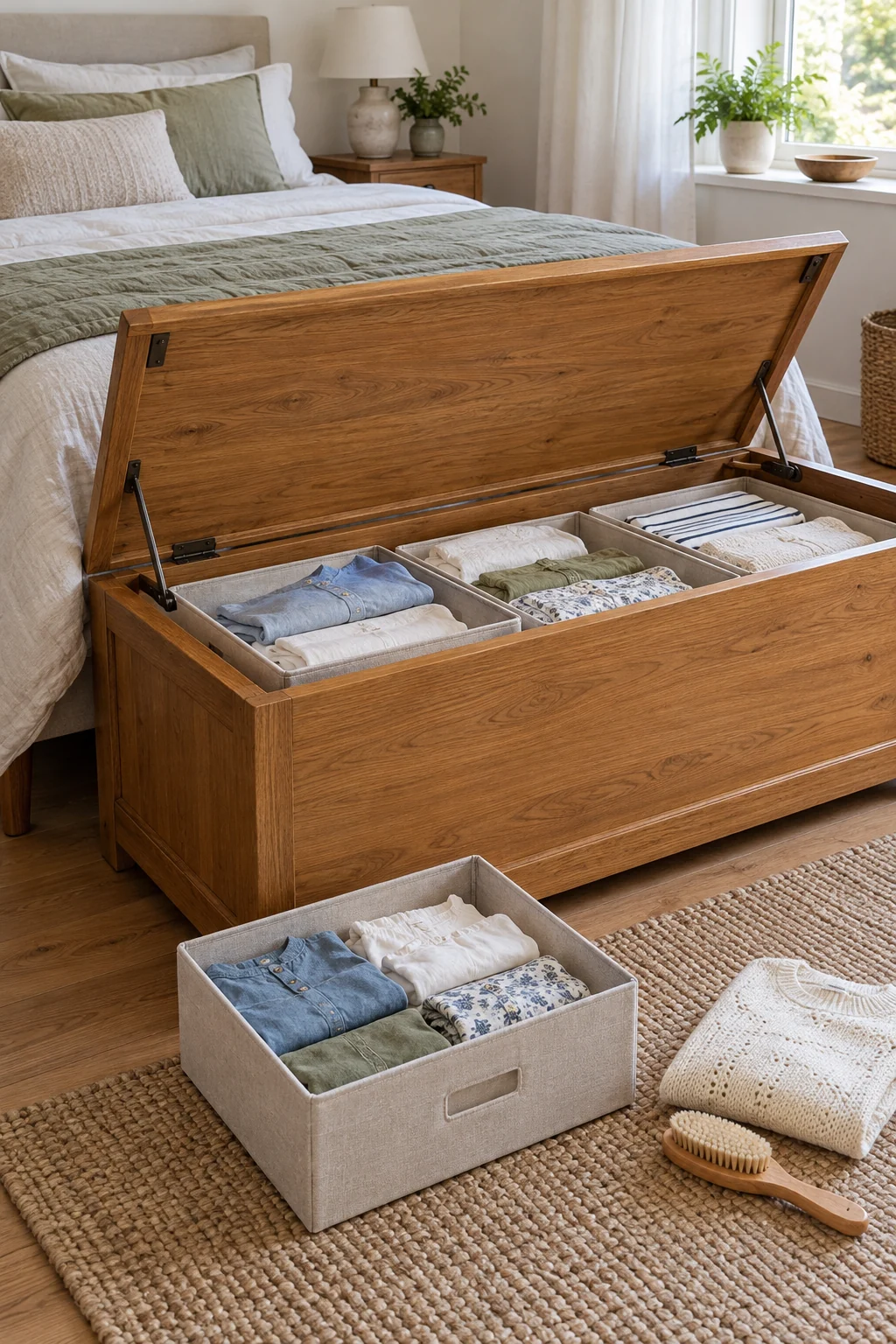
Arrangement A: shallow containers in a low storage chest
The first concept uses a low chest with separate modest fabric boxes. The benefit is support and visibility: you remove one category rather than digging through an entire season. Position the chest where its open lid and a retrieved box do not block the walking route. Follow the chest's product instructions, including any lid-safety provisions. A large open lid is part of the working footprint, and its hardware must function as designed. Do not assume a decorative trunk is suitable around children or for the weight you plan to store.
For household garments, follow their care labels and ensure they are clean and fully dry before storage. Lay clothing comfortably within each container; if the lid needs force to close, reduce the contents rather than squeezing everything tighter. Keep embellished or snag-prone garments separate from exposed fasteners. Remove items from forgotten dry-cleaner packaging where the garment-care advice requires it. A fabric storage box is not a conservation treatment, so valuable heirlooms and fragile textiles deserve advice appropriate to their condition.
Arrangement B: folded shelf groups plus suitable hanging coats
The second concept combines small shelf bags with a short coat rail. It gives folded knitwear support while allowing suitable coats to stay on appropriate hangers. Leave a spare cubby or small gap for the next transition. Without that reserve space, switching seasons requires unpacking the outgoing and incoming wardrobes onto the bed at the same time. The empty area is a working space, not unused capacity. It can also hold the small transition set for a few weeks while the weather settles.
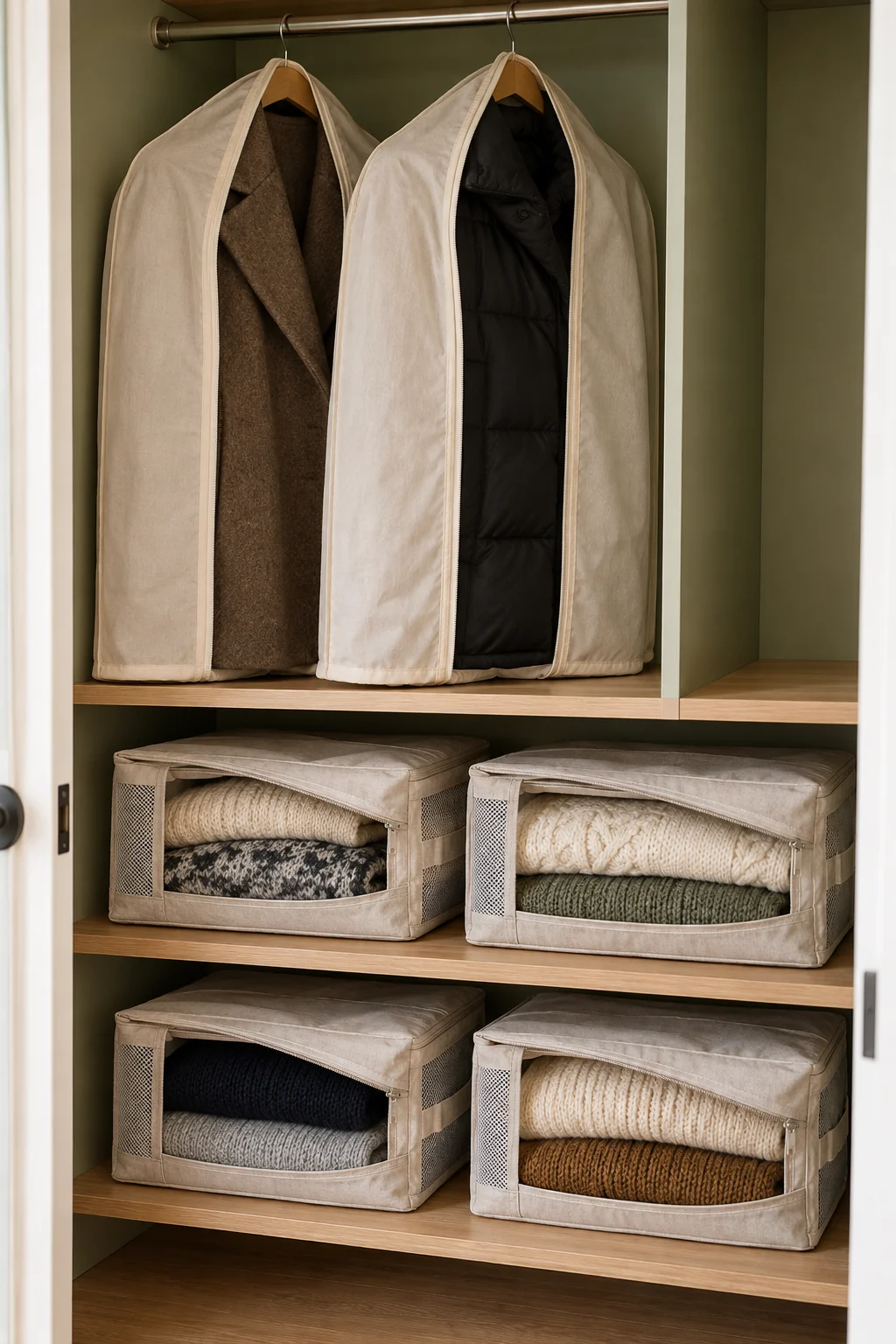
Check the rail and shelf instructions before loading them. A coat has depth beyond its hanger width, so allow room for its shoulders and sleeves without pinching it behind a closing door. Reconsider the hanging method for clothing that distorts under its own weight. Canadian Conservation Institute guidance on flat textile storage describes the importance of support and limiting sharp folds. Those principles inform this layout; its household advice is not a substitute for conservation care or a garment manufacturer's instructions.
Make an inventory that helps retrieval
List the category and a few identifying pieces on paper or in a note: for example, winter knitwear containing the grey cardigan and cream jumper. The list does not need a catalogue entry for every T-shirt. Record the actual location, such as bedroom chest, left box. If several people share storage, include the owner or size category. Ordinary labels are useful in real life even though the original images contain no readable text. Keep the wording specific enough that another household member can find the right container.
Take a quick photograph of the packed open box if that suits your routine, then store it with the inventory rather than relying on remembering a lid's colour. Keep the same categories through successive changeovers unless they no longer match the wardrobe. A small set of repeatable locations beats a new elaborate naming scheme every season. When a garment leaves the household, update the short list. When a container gains a new category, do not keep an old label just to make the stack look uniform.
A practical changeover sequence
- Choose a clear day and a place where garments can be sorted without being rushed into storage damp.
- Bring out only one stored category and compare it with the clothing you actually need now.
- Check garment condition and care needs before returning it to active use.
- Clean and fully dry outgoing garments according to their labels, then pack them in appropriate supported groups.
- Update the location note and keep the transition set accessible until the changeover is complete.
If the task takes longer than expected, leave unfinished garments in a defined temporary area rather than forcing them into the seasonal boxes. Finish one category before beginning another. In a shared home, set an agreed amount of shelf space for each person, then review categories together when the wardrobe changes. Storage cannot compensate for a collection larger than the available space. The useful decision may be keeping fewer duplicates or passing on clothing that no longer fits, not adding a tall extra unit to the bedroom.
Compression, scent and other tempting shortcuts
Vacuum bags save volume for some items but are not a universal method for all fabrics, structured garments or trims. Check the garment and storage-product guidance before compressing anything. Even an appropriate compressed bag needs a place to live and a way to identify its contents. If it will be opened repeatedly for one piece, a modest ordinary container may be more practical. Do not make the whole system depend on maximum compression if you struggle to repack it after a changeover.
Avoid adding fragrance simply to make stored clothes smell fresh. It can conceal a damp or neglected storage problem rather than resolve it, and products need to be used as directed. Keep cleaning chemicals and pest-control products away from garment storage unless their instructions specifically permit the intended use. Inspect unfamiliar marks or a persistent musty smell before moving the clothing back into the wardrobe. For valuable pieces, seek suitable specialist advice instead of applying a household cleaning or storage hack from a photograph.
Build a low-cost system that remains manageable
The first useful purchase is not a full matching set. Begin with one appropriate container for the category causing the most congestion, then check access after a week. Reuse sound existing containers where suitable, and buy smaller units when a larger one would be awkward to lift. Spend on garment support and an appropriate storage location before decorative uniformity. A box you can carry and recognise is worth more than a visually perfect stack that traps the next season at the back.
Check stored clothing when you naturally change nearby linen or reach for another seasonal item. Look for moisture, damaged containers and categories that have become crowded; investigate the cause instead of repacking more tightly. At the next changeover, ask whether the stored garments were actually used. If several pieces stayed packed through the whole season, make a decision about them. Successful seasonal storage creates breathing room in the active wardrobe and a predictable route back, rather than a growing archive you are afraid to open.
Planning references reviewed on 25 October 2026
- EPA: A Brief Guide to Mold, Moisture and Your Home: Moisture prevention and reporting leaks; storage furniture cannot repair damp conditions.
- Canadian Conservation Institute: Flat Storage for Textiles: Limited conservation principles about support, avoiding sharp folds and repositioning folds; household adaptation is editorial advice.
Practical questions
Should winter knitwear hang or be folded?
Choose according to its care guidance, weight and tendency to stretch. Supported loose folding is a useful starting point for many household knits. Fragile or valuable pieces may need specialist storage advice.
Can I use vacuum bags for all seasonal clothes?
No universal method suits every garment. Check garment and bag instructions, especially for structured clothing, delicate trims and fabrics that may be affected by compression. A small reachable box can be better for items you retrieve often.
What should remain outside seasonal storage?
Keep the transition layers you still use, plus clothing awaiting a specific care or repair task. Do not pack damp garments or hide unresolved wardrobe decisions inside the next season's containers.
Keep the useful part.
Keep one visual reminder of this guide. The illustration suggests a direction; the practical steps and fit checks above help you adapt it to your own room.