Watch the first two minutes at home
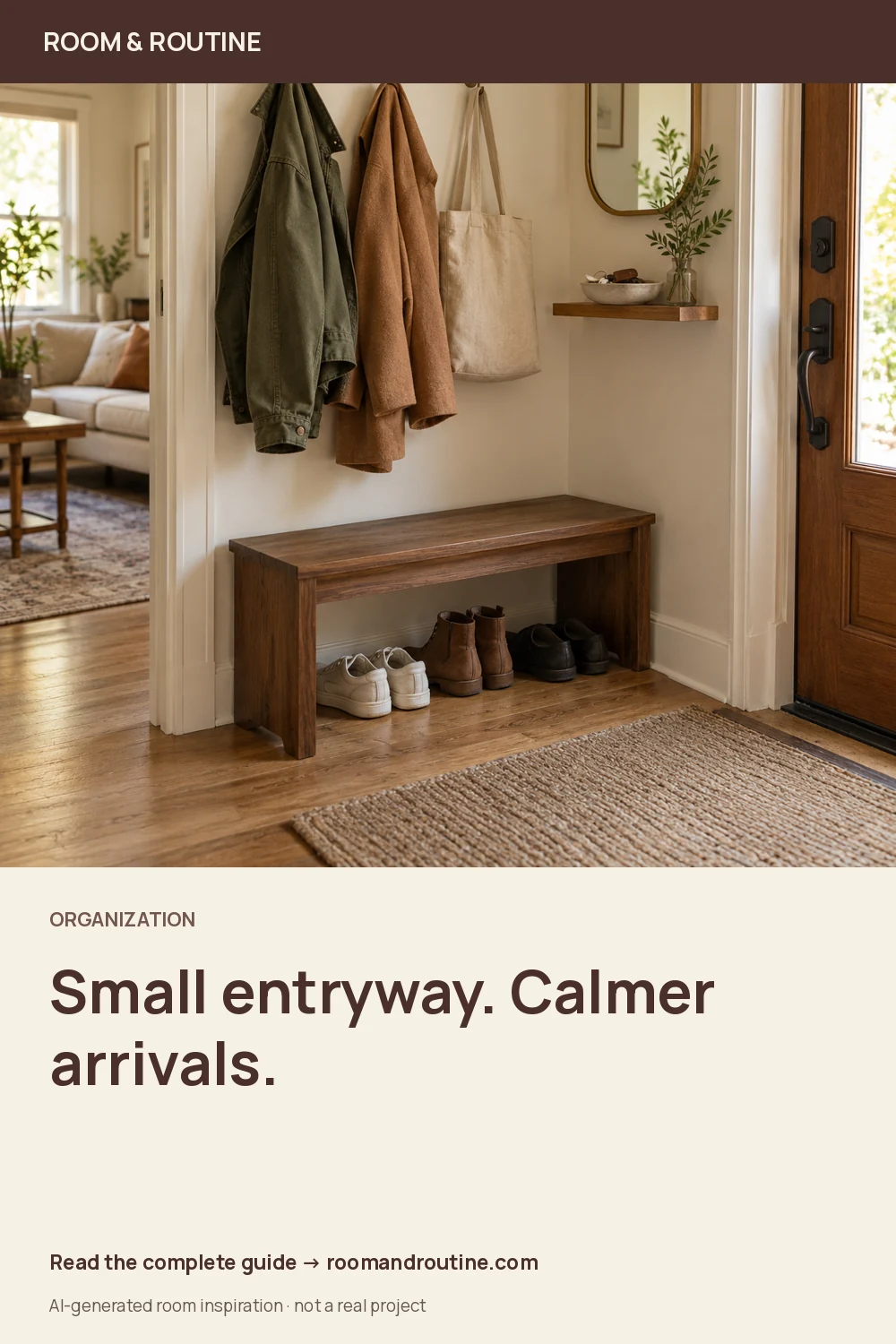
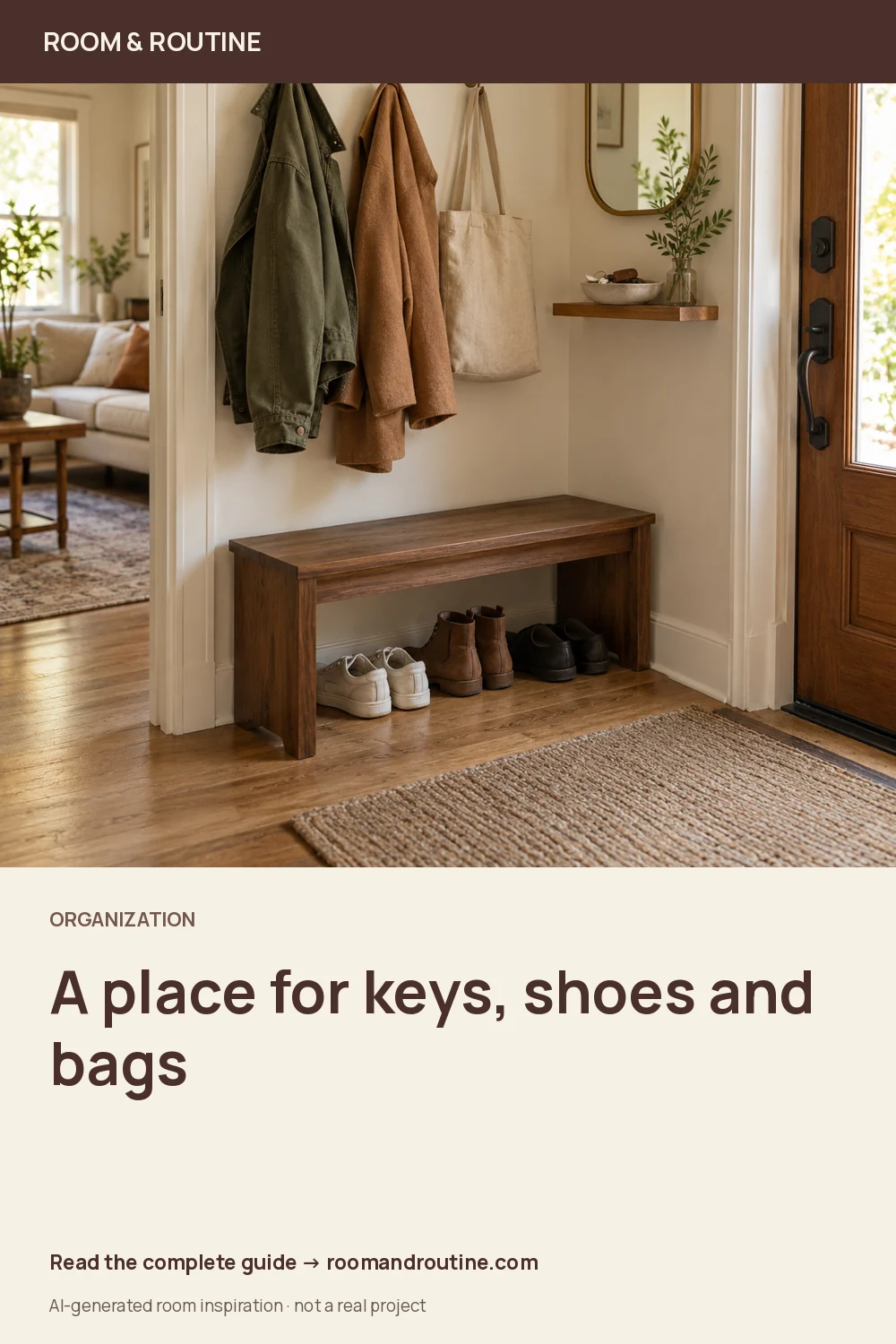
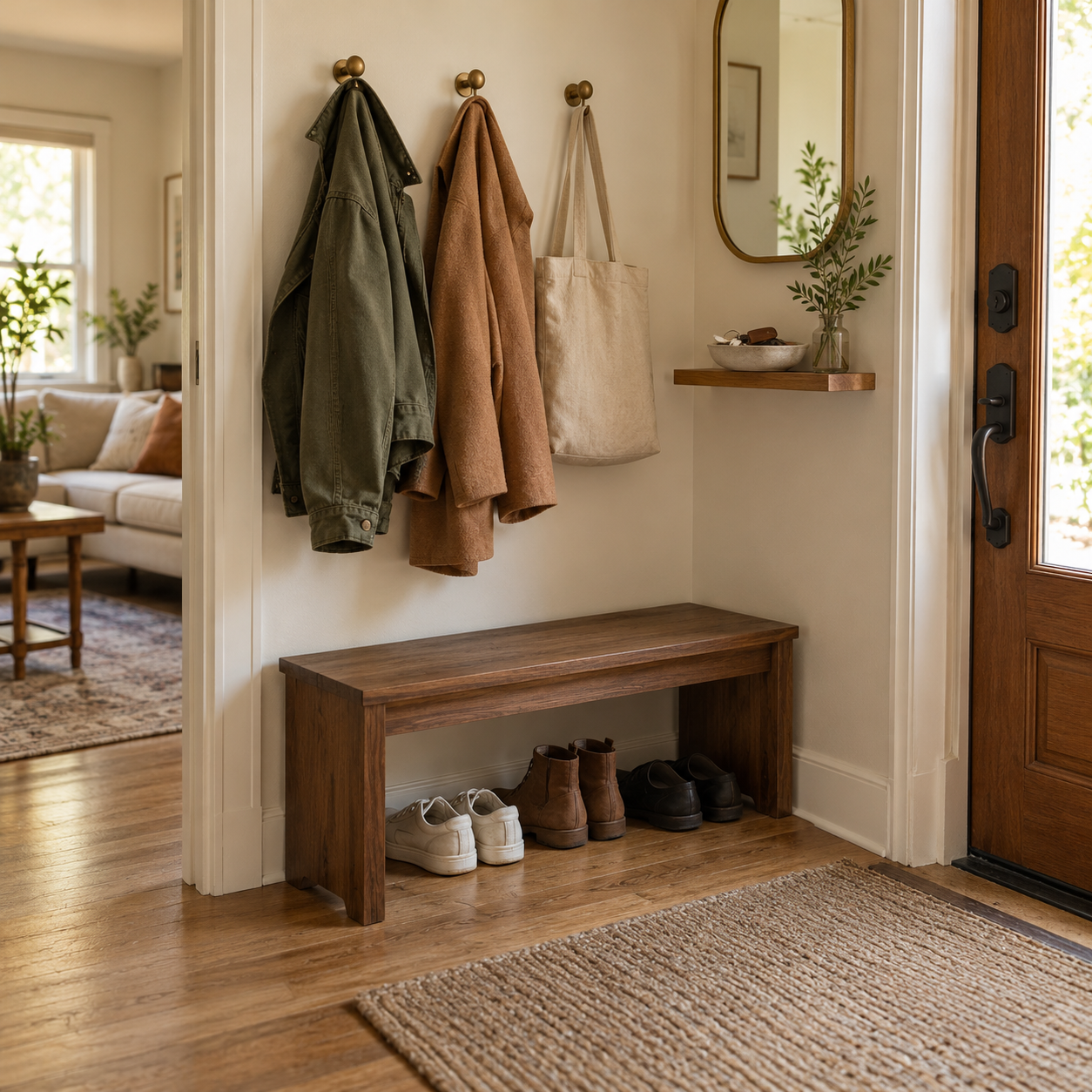
An entryway is a sequence of actions rather than a collection of hallway furniture. You open the door, take off shoes, place keys and put down a bag. Someone may also need to help a child, carry shopping or park a mobility aid. Observe where those things land now. The most useful change is often a small place for an awkward action, not another cabinet squeezed into the remaining gap.
List what arrives each day and what only appears occasionally. Count the shoes that genuinely need to stay by the entrance rather than the whole collection. Include wet coats, reusable shopping bags and post if they are part of your routine. Decide which of these belongs here and which can move into another room after arrival. This gives you a sensible storage target.
Give the opening door first priority
Measure the door's full movement and check any nearby cupboard doors. Include handles and the place a person occupies while opening them. A narrow console can still be badly positioned if it makes entering with a bag difficult. Keep emergency routes, shared building areas and required access clear; this article does not determine their legal or safety dimensions.
Make a temporary footprint for a proposed piece and walk through with your normal belongings. Use a method suitable for your floor finish. Try turning towards the next room and opening the front door from inside. If the trial feels awkward, reduce the storage footprint or find another position. Do not solve it by restricting how far an essential door can open.
Create one reliable landing spot
Choose a small surface or container for keys and other pocket items. It should be easy to reach from the entrance and stay distinct from incoming paperwork. Use a bowl or tray you own for a week. If the tray fills with unrelated objects, give those items a separate destination rather than making the tray larger.
A good landing spot is convenient for the people who use it. Check reach and visibility rather than copying a display height from a photograph. Avoid storing keys or valuables where the household's security needs make that unsuitable. You know the entrance and daily use better than an illustrative room scene; let those practical limits guide the position.
Store the daily shoes, not every shoe
Sort footwear into the pairs needed this week and the pairs that can live elsewhere. Measure the widest and tallest pair before choosing a shelf or box. Include a position for damp footwear that suits its care instructions and the floor below it. A slim cabinet photographed with small shoes may not hold the sizes your household uses.
If sitting down helps someone put shoes on, consider a suitable seat and the space needed to use it. Do not assume a storage unit is safe to sit on unless it is designed for that purpose. Tall storage can require anchoring, and load limits still apply to a small piece. Check installation requirements before committing to furniture in a rented home.
Choose appropriate homes for bags and coats
Give frequently used bags a position where they do not hang into the walkway. Freestanding storage can be useful where permanent fittings are not allowed, but it must be stable and suitable for the load. For any wall-mounted solution, check the surface, fasteners, manufacturer instructions and required permission. A removable hook is not automatically suitable for a heavy bag or every wall finish.
Leave enough space for coats to dry or hang as their material requires. If the entrance cannot hold the whole household's outerwear conveniently, move occasional items to suitable storage elsewhere. A smaller daily set is easier to manage than a dense cluster that hides the keys and narrows the route. Add a place for guests only if that need occurs regularly.
Make the reset shorter than the arrival
After a week, look at what remains on the floor or temporary surface. Is it post waiting for a decision, a bag with no assigned place or shoes that do not fit the rack? Solve that specific issue. Put paper into a manageable review routine and remove items that never needed to stay at the door. The system should make the next arrival easier without needing a long tidy-up.
Keep a sketch of the useful dimensions and try the arrangement in Layout Lab if there is room for furniture. Its footprints help compare positions, not certify an entrance or escape route. Finish with the smallest decorative detail that feels personal: perhaps a familiar textile or a photograph on an existing surface. When the arrival routine works, the space can feel welcoming without becoming crowded.
Try a measured furniture arrangement in the 3D Room atelier ↗
Keep the useful part.
Save the full guide to Pinterest or download a vertical graphic. Room imagery is illustrative and AI-generated, not a photographed result.