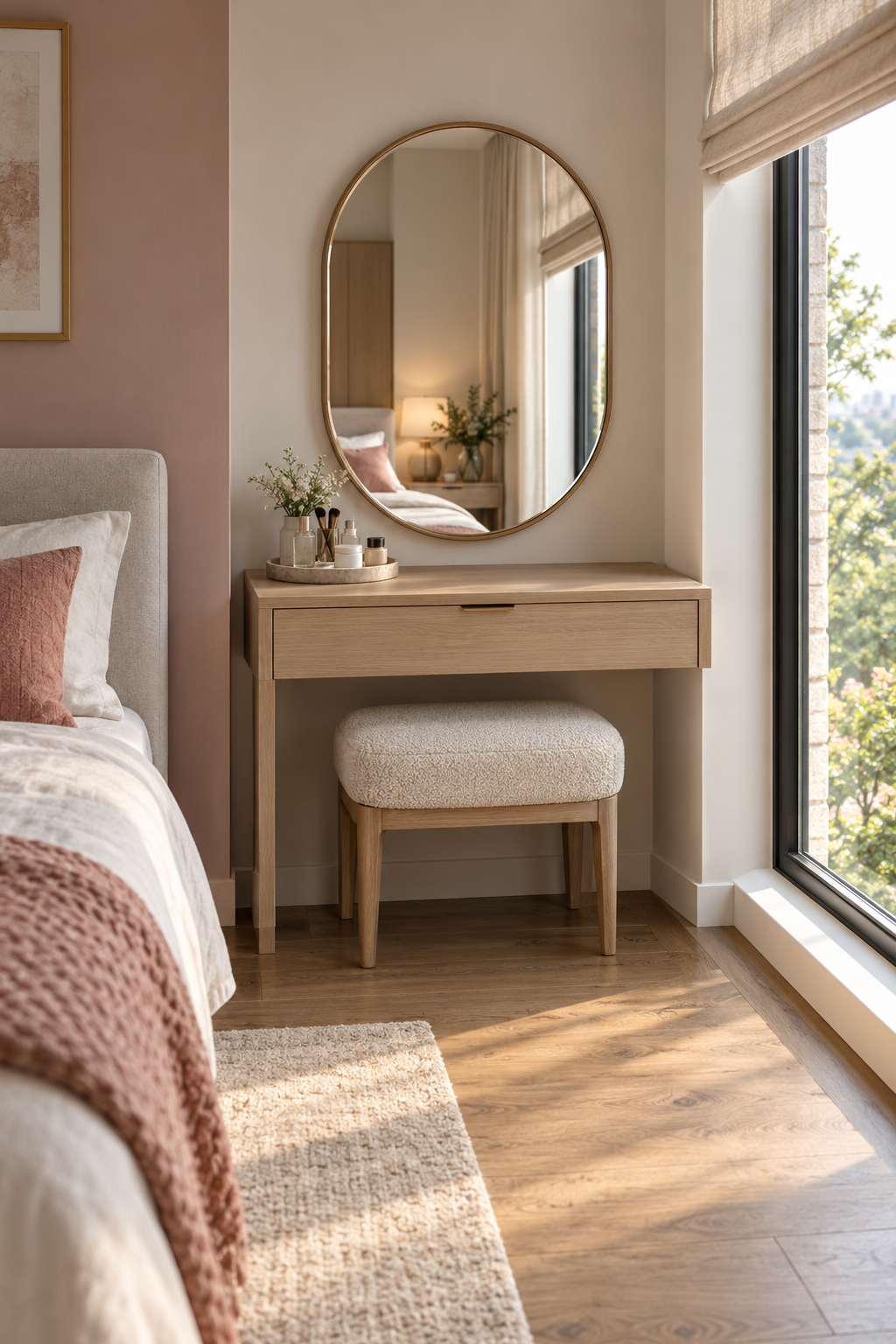
A dressing corner earns its space by making a specific routine easier: getting ready, checking an outfit or keeping a small collection of daily items organised. It does not need a large illuminated mirror, a new cabinet and a matching chair. It needs a usable position for your body and an arrangement you can clear quickly.
The two original concepts below separate seated and standing use. Choose between them before shopping. A dresser may be an excellent standing surface but uncomfortable as a seated vanity, while a shallow desk can give legroom without offering much clothes storage.
Choose a real routine for the corner
List what happens there on a normal morning. If the routine involves seated grooming, test a chair and a surface at a comfortable height for you. If the main task is checking clothes and collecting accessories, a standing mirror above existing storage may use the room more efficiently.
Keep the storage brief small. Daily essentials belong within reach; occasional products and spare supplies can have a separate closed place. A corner that holds every beauty product, handbag and piece of jewellery is likely to expand into the walking route even if the original desk was compact.
Decide whether the surface also works as a desk. If it does, give work items and dressing items distinct containers or drawers. Switching functions should mean moving one small tray, not transferring a pile of loose objects across the bed each morning.
Plan the seated dressing position around the user
Why this arrangement is useful
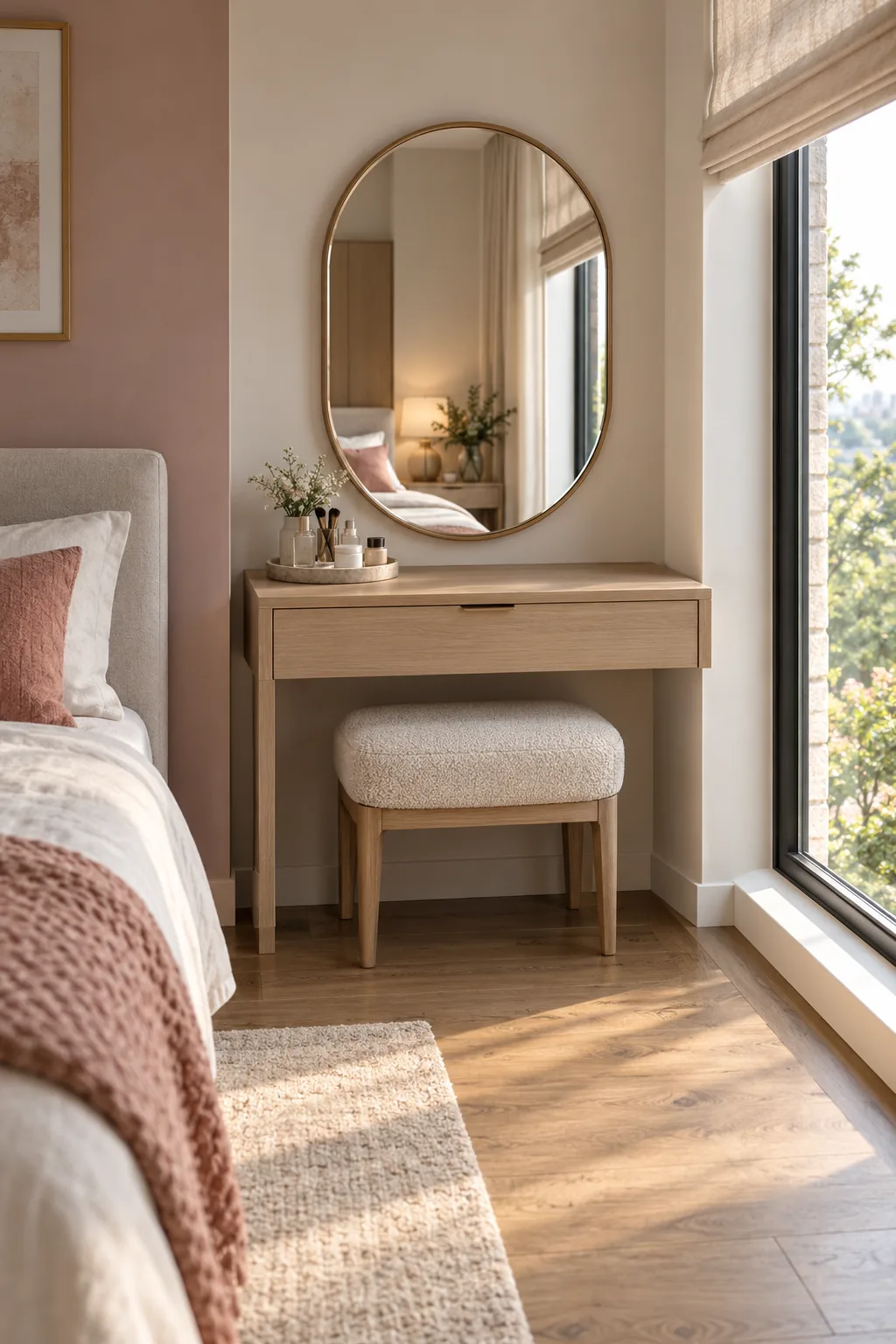
A shallow table and tucked stool provide a defined daily surface while retaining genuine knee space.
Try the idea in your room
- Try the intended stool and check knee room before choosing the table.
- Position and secure the mirror for the seated user, then test ordinary light.
- Limit daily objects to a tray and return the stool under the table after use.
Measure the user, chair and mirror together
Mark the surface footprint with tape, then sit on the intended chair. Check knee clearance, the height of the lower drawer and whether your feet can rest comfortably. The surface's outside dimensions do not reveal the usable leg opening. Read the furniture's measurements and try it in person where possible.
Pull the chair out to stand up and walk behind it. This working footprint is the part that gets omitted from many small-room plans. If the chair blocks the bedroom door whenever it is used, move the corner or choose standing use instead of expecting the chair to stay tucked away during the routine.
As an original trial, tape a surface around 75 cm wide and 40–45 cm deep, then add the actual chair's movement. Those dimensions describe a compact planning example, not an ergonomic standard or a promised fit. A user needing a wider seated position or a different reach should plan around that need.
Hold a lightweight mirror-size paper outline at the proposed position and check the view while seated or standing. The useful height follows the user, the mirror and the task. Secure the real mirror according to its instructions and wall type; do not rely on a heavy leaning mirror balanced against a small desk.
Compare seated and standing arrangements
| Your priority | First choice to test | Main compromise |
|---|---|---|
| A longer seated grooming routine | Shallow table with clear knee space | The chair's working footprint takes extra floor area |
| Quick outfit and accessory check | Mirror above an existing dresser | The surface may be too high for comfortable seated use |
| A surface that also serves work | Desk with a movable daily tray | Separate storage is needed for work materials |
| Very little floor space | Secure mirror plus a small appropriate surface | Prioritise essential tasks instead of a full vanity setup |
Arrangement one: a seated corner beside daylight
The first concept places a shallow table on a solid wall beside a window. The stool fits beneath the surface and the mirror receives light from the side. Daily items stay on one tray, leaving a working area available rather than turning the table into permanent display shelving.
Recreate it by choosing the seat before finalising the desk. Check that the stool can tuck away without striking the drawer or table braces. Put the mirror where it works from the seated position, then test the light with the coverings in their normal morning position.
Side daylight can be useful, but it changes through the day. Test an appropriate task lamp for darker mornings rather than assuming the corner is always bright enough. Position the light so your head does not put the face or task area into shadow. Keep leads away from the chair's legs and the bed route.
The tradeoff is storage. A small table with knee space may hold very little. Use its drawer for the items you need daily and store backup supplies elsewhere. Do not add deep baskets under the desk if doing so removes the reason you selected a seated arrangement.
Arrangement two: a standing surface on an existing dresser
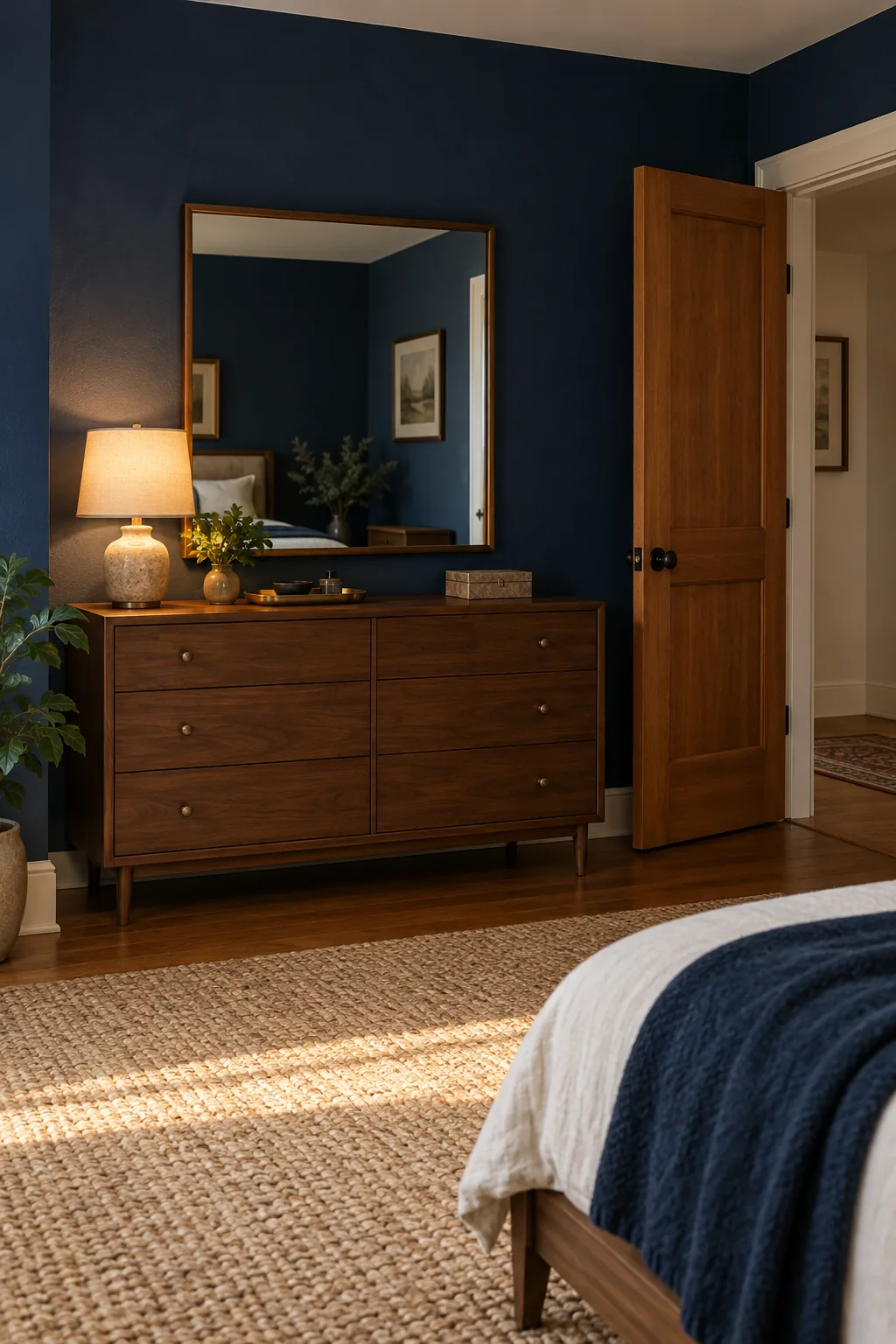
The second concept uses a dresser and a securely mounted mirror. There is no stool to pull into the room's route, making it useful for short standing tasks. A compact tray gives the daily routine a boundary, while the rest of the dresser top remains clear.
Try this with your existing furniture before buying a vanity. Stand in front, open the relevant drawer and check whether you can use the mirror while the bedroom door opens. If the dresser top is high, choose it only for tasks that remain comfortable at that height; it is not automatically suitable for every routine.
A lamp beside the mirror can support evening use, but keep its base outside the area where objects are handled. Do not position a heavy lamp on a precarious corner or route its cord across the standing space. Use electrical products as intended and follow their instructions.
Keep storage easy to see and easy to return
Group essentials by action: the items used together should be stored together. A shallow tray can be lifted for cleaning, while a small drawer divider prevents several categories mixing. Measure the drawer interior before buying inserts; a container's stated outside size may not fit its usable base.
Give items that require secure or protected storage an appropriate location outside casual reach. Do not leave medicines or sharp grooming tools on an open surface simply because they are used in the bedroom. Keep only the objects that belong in the actual routine on display.
A full outfit mirror can sit elsewhere if there is no comfortable viewing distance at the corner. The dressing position does not need to perform every function. Keeping the main mirror and accessories here while checking an outfit in another appropriate spot may use less furniture overall.
Plan the light and sockets without improvising
Use daylight as a starting observation, then test the corner on a dark morning. A single ceiling light behind the user may be insufficient for a detailed task. Try moving an existing suitable lamp before adding permanent wall fixtures.
If the routine includes heated electrical tools, follow the specific tool's operating and cooling instructions and use an appropriate heat-resistant place where required. A wood dresser, fabric mat or closed drawer is not automatically a safe resting point for a hot appliance. Keep electrical equipment away from liquid spills and arrange cables so the seat cannot snag them.
Do not make a new socket or hardwired light a do-it-yourself styling step. If the best position needs electrical work, use a qualified professional. A battery-powered mirror or portable lamp may suit some tasks, but check the actual light and maintenance needs before depending on it.
Budget and renter options
The cheapest useful version may be a cleared dresser top, an existing mirror with appropriate fixing and a tray you already own. Test it for a week. If the routine is uncomfortable, identify whether the problem is height, light or storage before replacing the entire arrangement.
For a seated option, a compact desk can be more adaptable than fitted joinery. Check its construction and knee opening, not only its category name. IKEA's BRIMNES dressing-table page is a primary example of furniture combining a dressing surface and storage; it is a planning reference, not a claim that the product fits your room.
Renters still need suitable mirror and furniture fixings. Follow required anti-tip instructions for a dresser, and ask about permitted anchoring where needed. Keep the surrounding decor reversible if that suits the tenancy, but do not substitute decorative adhesive fittings for specified safety hardware.
The five-minute dressing reset
- Return the daily items to their tray or drawer.
- Move clothing to its proper storage rather than leaving it on the stool.
- Clean the surface and mirror using the appropriate product instructions.
- Put the seat fully back in its resting position.
- Check the door route and any cable position after the corner is reset.
If the stool becomes a clothes pile, review what is missing in the bedroom's clothing routine. The shared-bedroom storage-zone guide can help when two adults are using the same corner. Adding another vanity tray will not solve a missing laundry or clothes-storage position.
Common mistakes and planning references
Avoid a stool with no knee room, a mirror positioned only for a standing visitor when you use it seated, and a chair that blocks the door whenever pulled out. Do not fill the entire top with decor or cover a window's operating space. Primary references reviewed on 16 October 2026: IKEA BRIMNES dressing table, IKEA room planners and CPSC Anchor It!. Room measurements and arrangements are original editorial trials.
Practical questions
Do I need a dedicated dressing table in a small bedroom?
No. A cleared part of an existing dresser can work for standing tasks, and a small desk with genuine knee space can suit seated tasks. Choose the arrangement from your routine and available working footprint before choosing a furniture category.
Where should the dressing mirror go?
Place it where your eyes and task are visible from the position you actually use. Test the height while seated or standing and check ordinary daylight and evening lighting. Fix the real mirror according to its instructions and the wall type.
Can the dressing corner also be a home-work desk?
Yes, if there is suitable legroom, task light and separate storage for work. Keep daily dressing items on a small movable tray so the surface clears easily. Test both functions rather than assuming a compact vanity has comfortable desk proportions.
Keep the useful part.
Keep one visual reminder of this guide. The illustration suggests a direction; the practical steps and fit checks above help you adapt it to your own room.