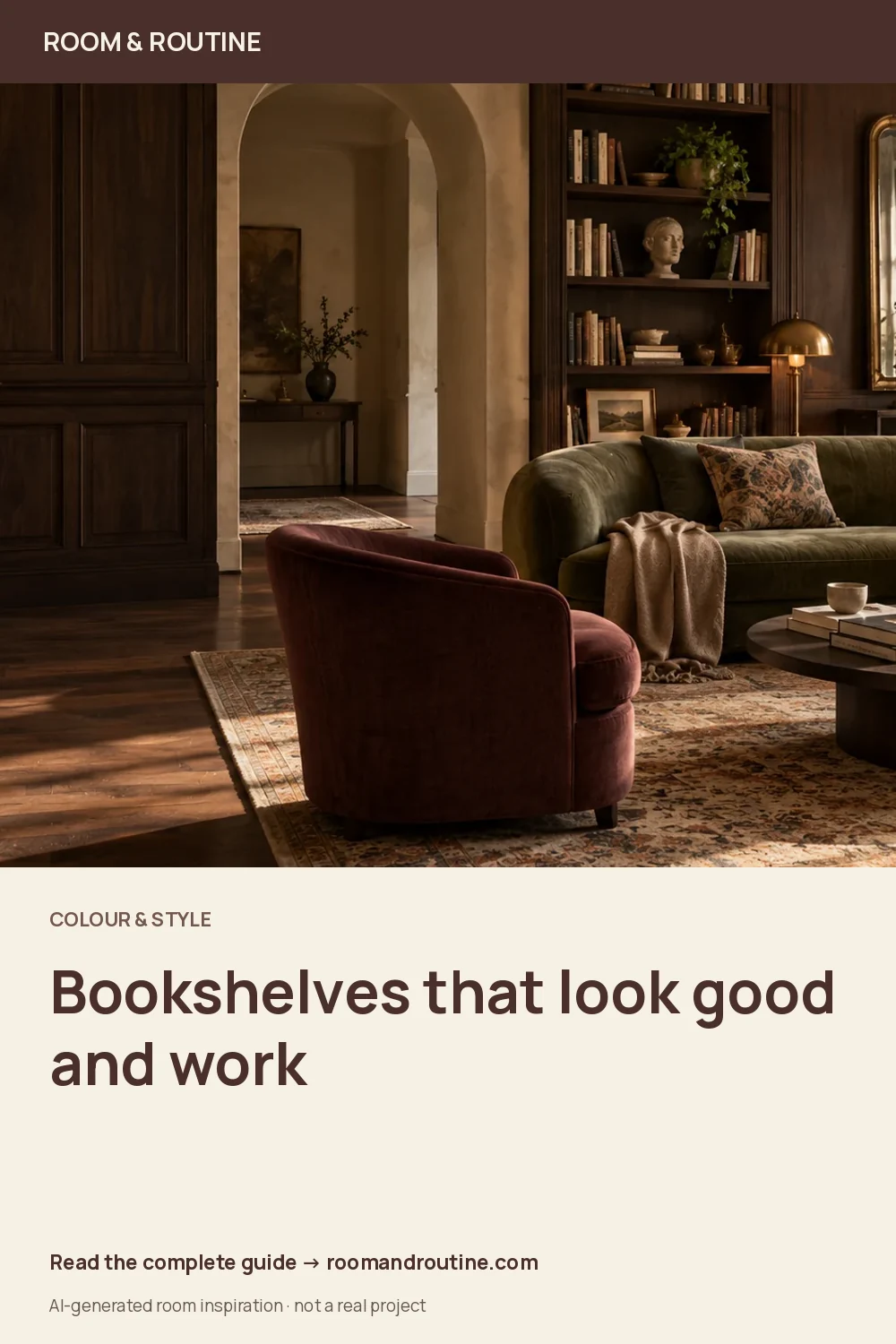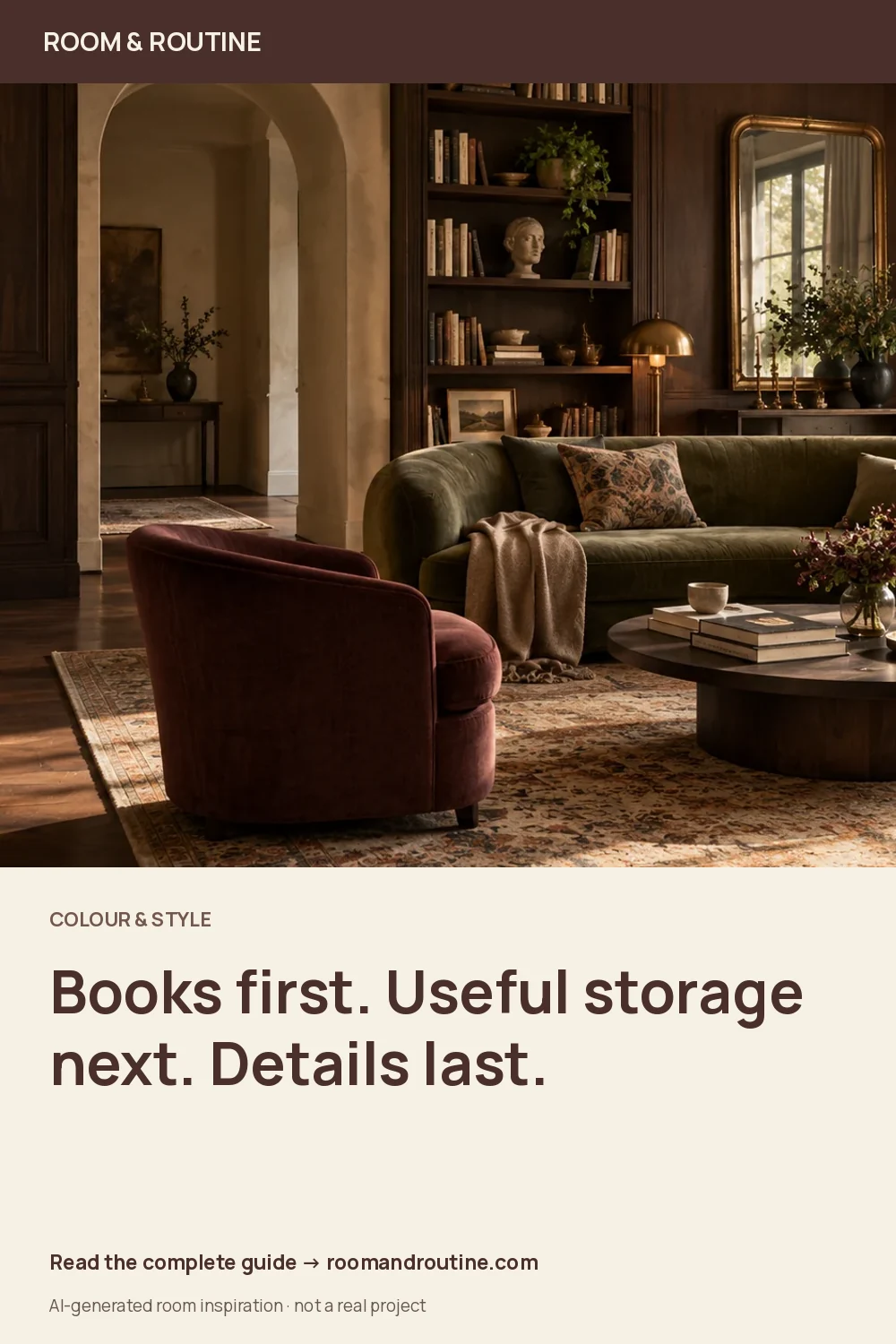
Sort the contents before styling the shelves
A useful bookshelf can hold real reading, practical storage and a few objects you enjoy. It does not need to become a display where finding a book disrupts everything. Begin with the shelf's everyday job, then build a composition around the contents you intend to keep.
Work through one shelf at a time so the whole room does not disappear beneath piles. Separate books, paperwork, household items and decorative pieces. Keep the categories distinct while you decide which belong here. Items that need privacy or specific storage conditions may need another location.
Check the unit's assembly, load and anchoring instructions before rearranging it. Heavier objects generally belong low, but that is not a substitute for a required anti-tip fixing. Do not remove an anchor or overload a shelf to achieve a particular picture.
Allocate space to real categories
Count the usable shelves and measure their clear height and depth. Include any space taken by hinges or a backing panel. A box that looks right in the shop may protrude beyond the shelf or hide the opening of a nearby cupboard.
For a sample four-shelf unit, you might reserve two shelves for books, one for everyday storage and one for a mixture of books and a small display. That is a starting allocation, not a decorating ratio. If books occupy three shelves comfortably, let them do so. Avoid hiding a large part of your collection just to create empty gaps.
| For each shelf, record | A useful question |
|---|---|
| Main category | What belongs here and what goes elsewhere? |
| Access frequency | Can the person using it reach it easily? |
| Available space | Do books, boxes and doors actually fit? |
| Reset rule | Where does a returned item go? |
Try an existing container before buying a matching set. A single labelled box for stationery may solve the problem; five decorative boxes can make you forget what is inside them. Keep a note of the category, not just the colour you want the storage to be.
Arrange books so you can find them
Choose a system that suits how you search: subject, author, a frequently used group or another familiar order. Keep titles visible. Turning every spine towards the wall creates a uniform surface but makes the collection difficult to use.
Place tall books on a shelf that supports them properly, without forcing them under the shelf above. Use stable bookends where needed. A small horizontal stack can change the shape of the arrangement, but keep it short enough that taking the bottom book is easy and the stack remains stable.
Leave room for returning a book to its group. A shelf packed so tightly that every return requires moving several volumes is likely to develop a second pile somewhere else. The practical gap belongs beside the category you actually use.
Add a few useful details
Bring in one or two objects after the books and storage have their places. A bowl can hold the small items that otherwise scatter; a framed image can mark a shelf without covering a title you reach for often. Objects should earn their space through use or meaning, rather than arriving to fill every opening.
Repeat a material or colour already in the room: warm wood, cream ceramic or a muted accent. Our room palette guide can help you select a small family of colours. You do not need every object to match, and repainting the entire unit is not the first step.
Be careful with plants and liquids around books and furniture. Use suitable containers and a watering routine that protects the shelf, and choose plants for the available light. If that routine is awkward, put the plant somewhere more practical.
Edit from the room, not only close up
Step back to the doorway and then sit in the place where you normally see the shelves. Notice where the eye stops. Several similar small objects can merge into a busy strip; grouping a few together may make the arrangement clearer.
Change one shelf, then look again. Try moving a display object away from the centre, replacing several tiny containers with the storage you actually need, or leaving a gap above a short group of books. The aim is an arrangement that looks settled while staying accessible.
Use a photograph of your own shelves to compare two versions. The Palette Lab reads local photo colours and keeps the work in your browser. Its colours are a reference for the image, not a certified match for paint or a product finish.
Keep a small reset rule
- Return books to their own group.
- Put loose practical items inside their assigned container.
- Remove objects that block access to frequently used items.
- Keep new arrivals within the category's available space.
- Clean one shelf at a time without creating a new overflow pile.
If a category keeps overflowing, change its allocation or reduce what belongs there. Do not treat a styling session as a reason to buy more decorations. For a wider room edit using existing pieces, follow the no-buy refresh plan and keep the shelves connected to the room's real routine.
Keep the useful part.
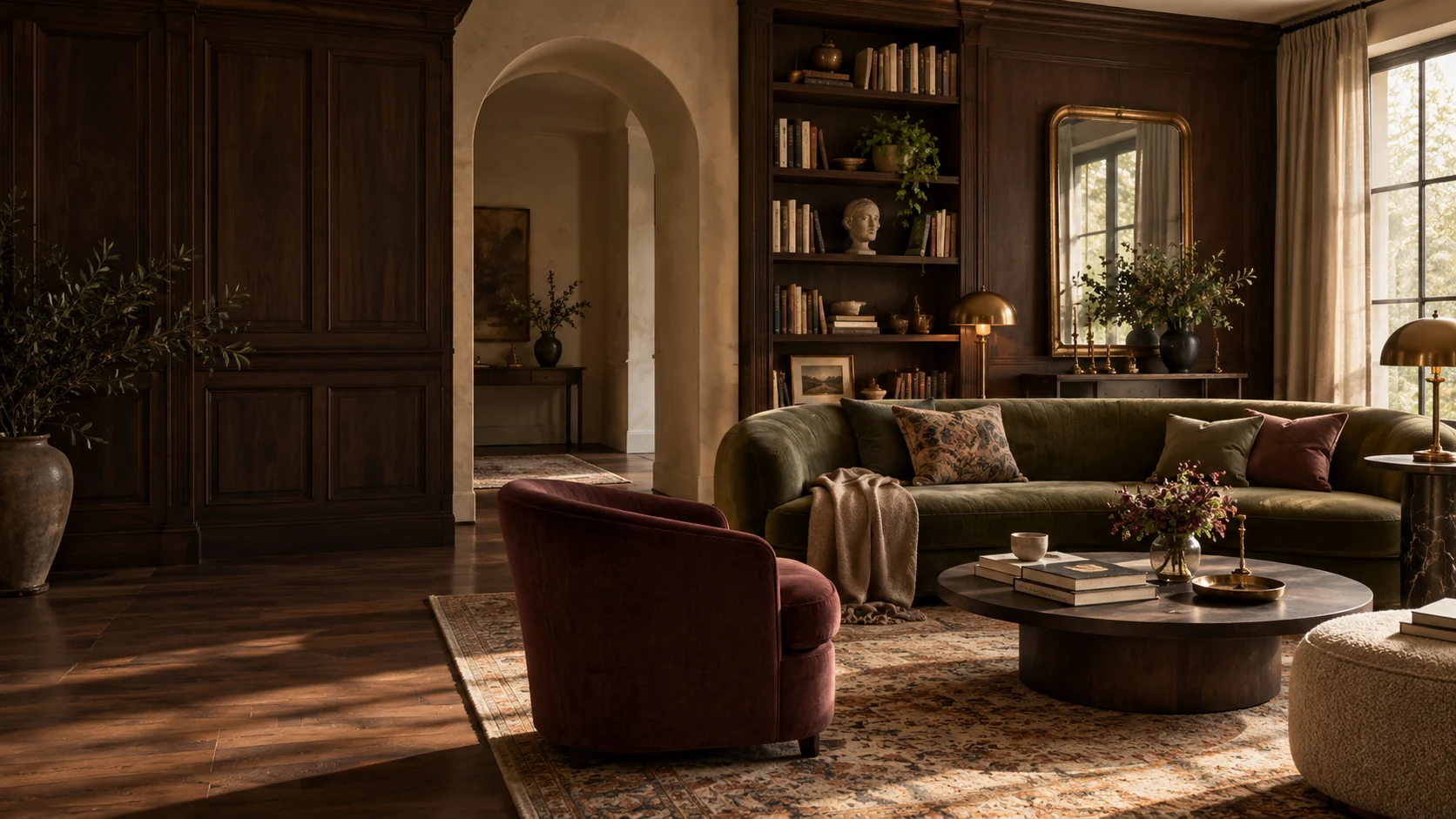
Save the full guide to Pinterest or download a vertical graphic. Room imagery is illustrative and AI-generated, not a photographed result.